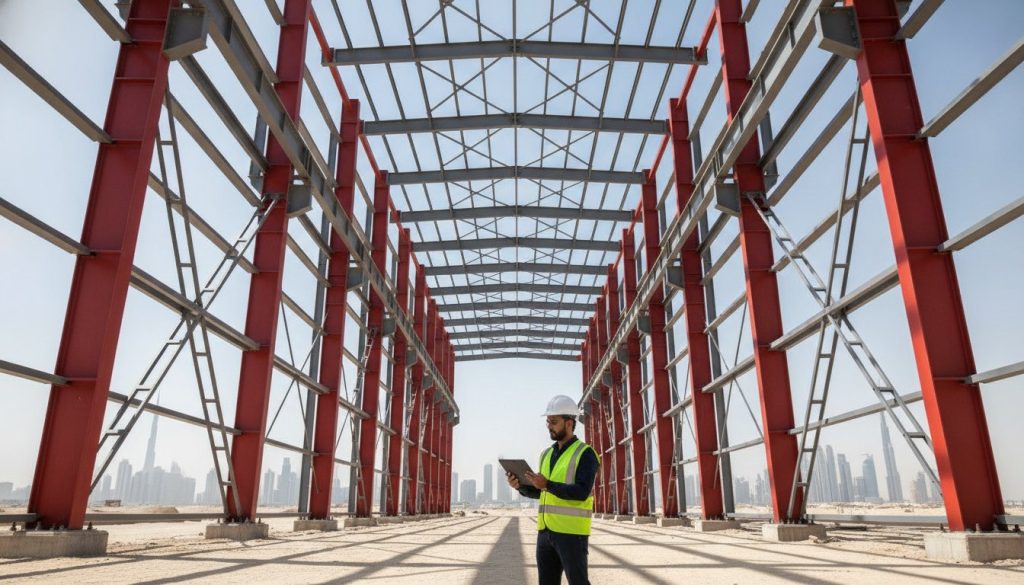
The highest possible tensile strength for a structural frame often seems like the safest engineering choice, yet it frequently leads to unnecessary welding complexities and inflated material costs. In the demanding industrial environment of the region, ASTM A572 grade 50 steel UAE has emerged as the definitive standard for balancing high-yield strength with exceptional fabrication versatility. You’re likely familiar with the challenge of meeting stringent compliance standards while optimizing strength-to-weight ratios for heavy industrial applications. It’s a delicate equilibrium where material failure isn’t an option, but over-engineering can easily stall a project’s logistical flow.
This guide provides the technical validation required to finalize your material selection with confidence. We’ll demonstrate why this high-strength low-alloy grade is the strategic choice for modern infrastructure, offering superior weldability compared to higher-grade alternatives. You’ll gain a clear understanding of its mechanical advantages in sectors like oil and gas, alongside a reliable procurement framework designed for national projects. From international grade equivalents to specific application insights, we’ve curated the essential data to support your engineering decisions throughout 2026.
Key Takeaways
- Understand the technical properties of High-Strength Low-Alloy steel and why a 50,000 psi yield strength is essential for heavy-duty infrastructure.
- Compare the mechanical advantages and cost-benefit ratios of selecting ASTM A572 grade 50 steel UAE over standard A36 for weight-sensitive projects.
- Examine the strategic role of HSLA grades in the energy sector and Pre-Engineered Buildings to ensure long-term structural endurance.
- Establish a reliable procurement framework by identifying the mandatory certifications and traceability standards required for national infrastructure compliance.
- Discover how value-added services like cut-to-size customization and surface treatments optimize on-site efficiency and project timelines.
Understanding ASTM A572 Grade 50: The High-Strength Choice
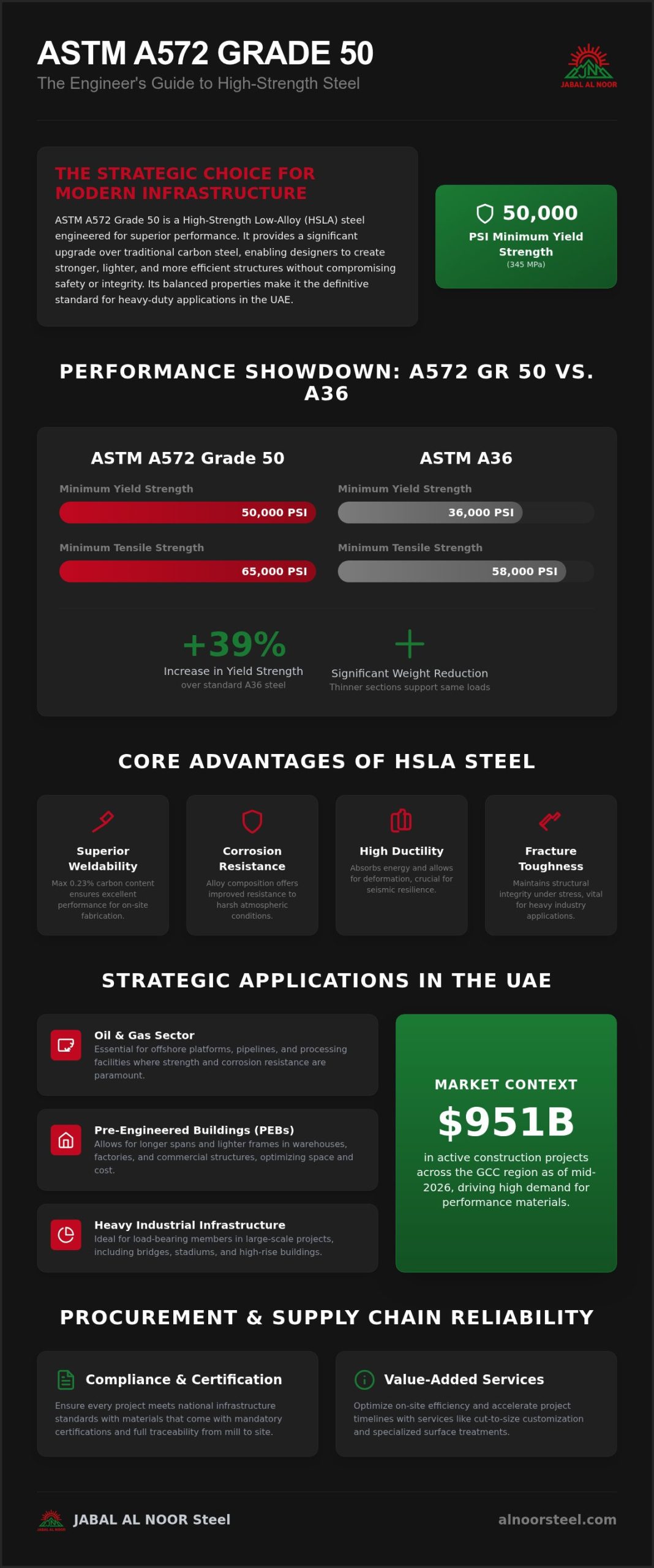
ASTM A572 Grade 50 is not just another structural material; it’s a High-Strength Low-Alloy (HSLA) columbium-vanadium steel engineered for high-performance applications. The “Grade 50” designation signifies a minimum yield strength of 50,000 psi (345 MPa). This provides a substantial upgrade over traditional carbon steel. For engineers managing large-scale projects, utilizing ASTM A572 grade 50 steel UAE allows for significant weight reduction in structural frames without compromising integrity. This efficiency is vital as the UAE continues its massive infrastructure expansion throughout 2026. Raw materials currently account for approximately 60% of total construction costs in the nation.
By choosing a material with a higher yield point, designers can specify thinner sections that support the same loads as thicker, heavier A36 beams. This reduction in mass directly translates to lower freight costs and simplified foundation requirements. As the GCC region manages nearly $951 billion in active construction projects as of mid-2026, the demand for this specific ASTM A572 steel grade remains high. It’s a foundational pillar for reliability in heavy industry.
To visualize the durability and performance of these materials in structural applications, review the technical overview below:
Chemical Composition and HSLA Benefits
The superior performance of this grade stems from its precise alloying elements. Vanadium and Columbium are added in small, controlled amounts to refine the grain structure. This increases strength without the bulk associated with standard carbon steels. With a maximum carbon content of 0.23%, the material maintains excellent weldability, a critical factor for on-site fabrication in the UAE’s industrial sectors. This chemical balance also offers improved resistance to atmospheric corrosion, ensuring that structural components endure the harsh environmental conditions characteristic of the region. You can find these high-performance materials in our online shop for your next project.
Mechanical Properties: Yield vs. Tensile Strength
The relationship between yield and tensile strength defines the safety margins of any structural project. While the yield point is set at 50 ksi, the minimum tensile strength reaches 65 ksi, providing a necessary buffer for load-bearing members. High elongation properties are equally important, as they allow the steel to absorb energy and deform slightly before failure. This ductility is indispensable for structures in high-vibration industrial zones or areas requiring seismic resilience. For procurement teams sourcing ASTM A572 grade 50 steel UAE, understanding these mechanical thresholds ensures that the selected beams and plates meet the exact safety benchmarks of national infrastructure projects. HSLA steel is a specialized structural material that maintains a minimum yield strength of at least 42,000 psi through the addition of micro-alloying elements.
Comparative Analysis: ASTM A572 Grade 50 vs. A36 and S355
Selecting the appropriate structural material requires a rigorous evaluation of mechanical performance against project budgets. While standard carbon steel has its place, the adoption of ASTM A572 grade 50 steel UAE is driven by the need for enhanced load-bearing capacity without the penalty of excessive weight. Engineers must decide when the specific properties of Grade 50 outweigh the familiarity of A36. This choice becomes critical in heavy industry sectors like Oil & Gas; structural integrity under stress is paramount. While higher tensile grades such as Grade 60 or 65 exist, Grade 50 remains the industry favorite because it preserves a high degree of fracture toughness and ease of fabrication.
ASTM A572 Grade 50 vs. ASTM A36 Steel
The most striking difference between these two materials is the 39% increase in minimum yield strength that Grade 50 provides over A36. This technical advantage allows for the design of multi-story or long-span structures with significantly thinner sections. In large-scale procurement, the return on investment occurs through reduced total tonnage. When you require fewer tons of steel to achieve the same structural performance, you lower shipping costs and simplify on-site handling. For those managing complex inventories, viewing our structural steel inventory can help identify the right specifications for these high-yield applications.
ASTM A572 Grade 50 vs. EN 10025 S355
In the UAE, projects frequently utilize international blueprints that may specify European standards. The closest equivalent to A572 Grade 50 is EN 10025 S355, specifically the S355JR or S355J2 sub-grades. However, the testing requirements differ between these two frameworks. ASTM standards emphasize chemical composition and yield points, whereas EN standards often mandate specific impact energy tests at varying temperatures. This A572 Carbon Steel guide provides further technical depth on how these standards intersect in global engineering. Procurement teams must ensure that Mill Test Certificates align with the specific standard requested by the consultant to avoid compliance issues on national infrastructure projects. Transitioning between these standards requires a knowledgeable partner who understands the nuances of material certification and regional compliance.
Structural Applications in UAE Infrastructure and Industry
The transition from material specification to structural execution is where the true value of ASTM A572 grade 50 steel UAE becomes evident. In the national construction sector, this grade is the primary choice for Pre-Engineered Buildings (PEB). These structures require high-strength components that allow for wider clear spans and reduced foundation loads. Because PEB projects often face aggressive coastal conditions, the low-alloy composition of Grade 50 provides a reliable substrate for advanced surface treatments. This ensures long-term endurance against high humidity and thermal fluctuations common in the region. For a deeper look into the regional market, consult our Structural Steel Supplier UAE 2026 guide.
Heavy Infrastructure and Transportation
National infrastructure projects, including bridge girders and highway supports, demand materials that can withstand immense dynamic loads over decades of service. Grade 50 steel is frequently specified for these applications due to its high yield point and fatigue resistance. Within logistics hubs and industrial warehouses, it serves as the backbone for heavy-duty crane rails and support columns. The ability to carry greater loads with smaller cross-sections simplifies the design of massive distribution centers. These facilities are critical to the UAE’s supply chain efficiency in 2026, especially as raw materials comprise 60% of total construction costs. Smaller, stronger sections optimize both space and material expenditure.
Oil, Gas, and Industrial Framing
In the energy sector, structural reliability is non-negotiable. ASTM A572 grade 50 steel UAE is widely utilized in the fabrication of skid-mounted equipment and offshore platforms where structural weight is a critical design constraint. These environments require a material that maintains its toughness under high-stress conditions. The weldability of this grade ensures that complex industrial frames can be assembled with high precision and structural integrity. For tubular applications such as structural bracing or support trusses, project managers often coordinate with Hollow Section Steel Suppliers in UAE to source matching Grade 50 specifications. This integrated approach to material selection ensures that every component of a heavy-duty frame meets the same rigorous quality benchmarks required for national infrastructure.
Procurement Compliance: Certifications and Quality Standards
Structural integrity hinges on verifiable quality. When procuring ASTM A572 grade 50 steel UAE, your primary safeguard against material failure is the Mill Test Certificate (MTC). This document isn’t just a formality; it’s a technical guarantee that the material meets the specific yield and tensile requirements discussed earlier. Adhering to Structural Steel Quality Standards UAE is mandatory for any project seeking national approval. In the 2026 landscape, where construction cost inflation is forecast at 2.7%, avoiding non-compliant material is a financial necessity as much as a safety one. High-stakes infrastructure often requires third-party inspections to validate these mill reports, providing independent verification of the mechanical tests performed at the source.
Verifying ASTM A572 Grade 50 Compliance
Checking an MTC requires a methodical approach to ensure the steel meets the rigorous ASTM A572 specifications. First, confirm the chemical analysis aligns with the standard’s limits, particularly for phosphorus (maximum 0.04%) and sulfur (maximum 0.05%). These elements, if uncontrolled, can compromise both weldability and fracture toughness. Every batch must have a unique heat number for full traceability. This number must be clearly stamped or stenciled on the material itself. If the number on the steel doesn’t match the MTC, the material shouldn’t be accepted on-site. Traceability allows engineers to trace the steel back to its original furnace melt, providing a transparent record of the material’s history and ensuring consistency across the entire structural frame.
UAE Regulatory and Engineering Standards
Material procurement must align with local building codes and civil defense requirements to pass final inspections. While the ASTM standard is widely accepted, some national projects may require compliance with EN 10025 Steel Grades in the UAE as well. Navigating these overlapping standards requires a reliable documentation process. Contractors should utilize a comprehensive UAE Steel Stockist Checklist to vet their suppliers before placing large-scale orders. This ensures that every beam and plate delivered to the site is accompanied by the necessary certifications, preventing costly project delays or structural re-evaluations. If you’re ready to secure certified materials for your next project, you can browse our compliant structural steel inventory to ensure your procurement meets every national benchmark.
Strategic Sourcing: Customization and Supply Chain Reliability
Reliable material procurement in the heavy industry sector requires more than just a transaction; it demands a partnership with a national-scale entity that understands the logistical complexities of large-scale infrastructure. JABAL AL NOOR Steel has established itself as a foundational pillar in the regional market, providing specialized structural solutions that go beyond standard supply. For project managers sourcing ASTM A572 grade 50 steel UAE, the ability to receive customized components is a critical factor in maintaining operational excellence. By integrating value-added services into the supply chain, we ensure that every structural member arrives ready for immediate integration into the project framework.
Value-Added Processing for Engineering Efficiency
The implementation of cut-to-size services for MS beams and plates significantly reduces on-site labor costs and material waste. When structural steel is delivered according to precise project tolerances, contractors can bypass the time-consuming process of manual cutting and preparation. This logistical efficiency is enhanced by our surface treatment capabilities, including shot blasting and priming. In the UAE’s high-humidity and high-salinity coastal environments, these treatments are essential for preventing early-stage corrosion and extending the lifespan of structural frames. Utilizing specialized primers ensures that the material is protected immediately upon delivery, maintaining the high standards required for heavy industry. Customizing long and flat products before they reach the site allows engineering teams to focus on assembly and structural integrity rather than rudimentary fabrication tasks.
Ensuring National Supply Chain Stability
Managing the bulk steel requirements for multi-year industrial contracts requires a stockist with a deep and consistent inventory. Supply chain volatility remains a significant risk for procurement teams managing the current influx of infrastructure developments. A national partner with integrated logistical support provides the stability needed to mitigate these risks. Our commitment to maintaining an extensive inventory of MS beams, channels, and hollow sections ensures that national infrastructure developments proceed without the delays associated with international shipping disruptions. This steady flow of material is vital for sectors like oil and gas, where project timelines are often rigid and high-stakes. To secure the components required for your next project, Explore our full range of ASTM A572 structural steel products and experience the reliability of a seasoned industry veteran.
Optimizing Structural Integrity for UAE Infrastructure
Engineering success in 2026 relies on making informed material choices that anticipate the rigorous demands of the local climate and structural loads. This guide has established that ASTM A572 grade 50 steel UAE provides the necessary technical edge, offering a high-yield solution that simplifies fabrication while ensuring long-term safety. By prioritizing traceability and standard compliance, procurement teams can move forward with the assurance that their infrastructure is built on a foundation of global quality. Selecting the right grade is the first step in ensuring that heavy-duty frames and industrial skids perform reliably under the most challenging conditions.
JABAL AL NOOR Steel stands as a steady, dependable partner for these large-scale industrial projects. We maintain an extensive inventory of structural steel grades supported by ISO-compliant management systems and specialized in-house processing. Our surface treatment and cut-to-size capabilities ensure that your materials arrive ready for immediate deployment, reducing on-site waste and labor requirements. We invite you to Request a Quote for ASTM A572 Grade 50 Structural Steel to finalize your material selection with a partner that values precision and operational excellence. We look forward to supporting your long-term project goals with industrial stability.
Frequently Asked Questions
What is the primary difference between ASTM A36 and A572 Grade 50?
The primary difference is the minimum yield strength; Grade 50 offers 50,000 psi compared to A36’s 36,000 psi. This 39% increase allows for the use of thinner, lighter sections while maintaining the same load-bearing capacity. While A36 is suitable for general construction, Grade 50 is preferred for high-stress applications where weight reduction is critical. This transition helps engineering teams optimize their structural designs without sacrificing durability or safety.
Is ASTM A572 Grade 50 steel weldable in extreme UAE temperatures?
Yes, ASTM A572 grade 50 steel UAE is highly weldable due to its low carbon content, which is typically capped at 0.23%. In the extreme ambient temperatures of the region, professional fabrication teams must still follow standard welding procedures, such as proper pre-heating for thicker sections. Its specific chemical composition ensures that the heat-affected zone retains structural integrity, making it a dependable choice for complex industrial frameworks and on-site assembly.
Can A572 Grade 50 be used for marine or offshore applications in the UAE?
A572 Grade 50 is frequently used in offshore platforms and skid-mounted equipment because of its superior strength-to-weight ratio. While it isn’t inherently corrosion-proof like stainless steel, its low-alloy properties provide a stable substrate for marine-grade coatings. When paired with specialized surface treatments, it delivers the endurance required for harsh maritime environments. It’s a standard material for structural members in the energy sector where reliability under high dynamic loads is essential.
What are the equivalent European grades for ASTM A572 Grade 50?
The closest European equivalent to this grade is EN 10025 S355, specifically the S355JR or S355J2 variations. Both materials share a similar minimum yield strength of approximately 345 to 355 MPa. However, engineers must verify specific testing requirements, such as Charpy V-notch impact tests, which may differ between the ASTM and EN standards. Aligning these standards is crucial for projects utilizing international blueprints to ensure full compliance with regional engineering benchmarks.
Why is A572 Grade 50 considered a High-Strength Low-Alloy (HSLA) steel?
It’s classified as High-Strength Low-Alloy steel because it utilizes small amounts of columbium and vanadium to enhance its mechanical properties. Unlike standard carbon steel, these micro-alloying elements refine the grain structure, providing higher strength without significantly increasing the carbon content. This results in a material that is stronger than carbon steel but more weldable than many high-tensile alloys. It offers a precise balance of toughness and fabrication versatility for heavy industry.
What certifications should I request when buying A572 Grade 50 in the UAE?
You should always request a comprehensive Mill Test Certificate (MTC) that specifies the chemical composition and mechanical test results for the specific batch. Ensure the MTC includes a unique heat number that matches the physical stamp on the steel. In the UAE, verifying that the material adheres to ISO-compliant quality management systems is also recommended. This documentation provides the necessary traceability and technical validation required for high-stakes national infrastructure and energy projects.
Does A572 Grade 50 steel require specific surface treatments for corrosion resistance?
Yes, the corrosive environment of the region necessitates surface treatments like shot blasting and priming to protect the steel. While Grade 50 has moderate atmospheric corrosion resistance, the high salinity and humidity levels can lead to rapid oxidation if left untreated. Applying a protective coating ensures that the structural members maintain their integrity over a multi-decade lifespan. Many industrial partners prefer sourcing pre-treated components to streamline their on-site fabrication and assembly timelines.
How does the strength-to-weight ratio of Grade 50 benefit industrial construction?
The superior strength-to-weight ratio of ASTM A572 grade 50 steel UAE allows designers to specify smaller cross-sections that support the same loads as heavier A36 beams. This reduction in total tonnage directly lowers shipping costs and simplifies foundation requirements for large-scale developments. In an environment where raw materials account for 60% of construction costs, this efficiency is vital. It enables the creation of expansive, clear-span structures without the logistical burden of excessive material weight.
No Comments yet!