Tag: Engineering Guide

Mild Steel Angle Bars: Engineering & Procurement Guide 2026

Mild Steel Angle Bars: Engineering & Procurement Guide 2026

A single oversight in material grade compliance can compromise the structural integrity of an entire national infrastructure project before the first bolt is even tightened. In the high-stakes environment of heavy industry, the reliability of your supply chain is the only safeguard against catastrophic failure and costly project delays. You likely recognize that sourcing mild steel angle bars involves much more than comparing basic dimensions; it requires a rigorous alignment with ASTM or EN standards to ensure long-term durability and safety.

This comprehensive guide provides the technical clarity needed to master specifications and procurement standards for 2026. By following these benchmarks, you can secure high-quality structural steel that meets international codes while utilizing cut-to-size customization to eliminate on-site waste. We’ll examine the critical differences between equal and unequal profiles, the operational advantages of specialized surface treatments, and the logistical frameworks required to maintain precision in large-scale industrial supply. This methodical approach ensures your procurement strategy remains a foundational pillar for engineering excellence.

Key Takeaways

  • Master the technical distinctions between ASTM A36 and S235JR to ensure your structural steel aligns with rigorous international safety and engineering protocols.
  • Learn how to select the optimal geometry between equal and unequal mild steel angle bars to maximize load-bearing efficiency in specialized frameworks.
  • Identify the critical role of high-strength, hot-rolled L-sections in national infrastructure, ranging from industrial warehouses to telecommunication towers.
  • Discover how utilizing professional cut-to-size customization reduces on-site labor and eliminates material waste in large-scale procurement.
  • Gain clarity on the manufacturing standards that ensure uniform strength and dimensional accuracy for long-term structural stability in heavy-duty projects.

Understanding Mild Steel Angle Bars in Modern Engineering

Mild steel angle bars are foundational components in structural engineering, defined by their distinctive L-shaped cross-section with two perpendicular legs. These sections provide essential bracing and support across diverse industrial frameworks, serving as the skeletal structure for everything from heavy machinery mounts to building foundations. Their primary appeal lies in the balance between structural rigidity and manufacturing precision, making them indispensable for large-scale infrastructure projects that demand high endurance.

The versatility of these components stems from their low carbon content, which ensures exceptional weldability and ease of fabrication. For a deeper context on how these materials fit into broader construction standards, Understanding Structural Steel provides a comprehensive overview of the material science involved. Engineers rely on these bars not only for their load-bearing capacity but also for their predictable performance under stress. It’s this reliability that makes them the industry standard for permanent structural connections.

To visualize the manufacturing and appearance of these structural elements, watch this brief overview:

The Manufacturing Process: Hot-Rolled vs. Cold-Formed

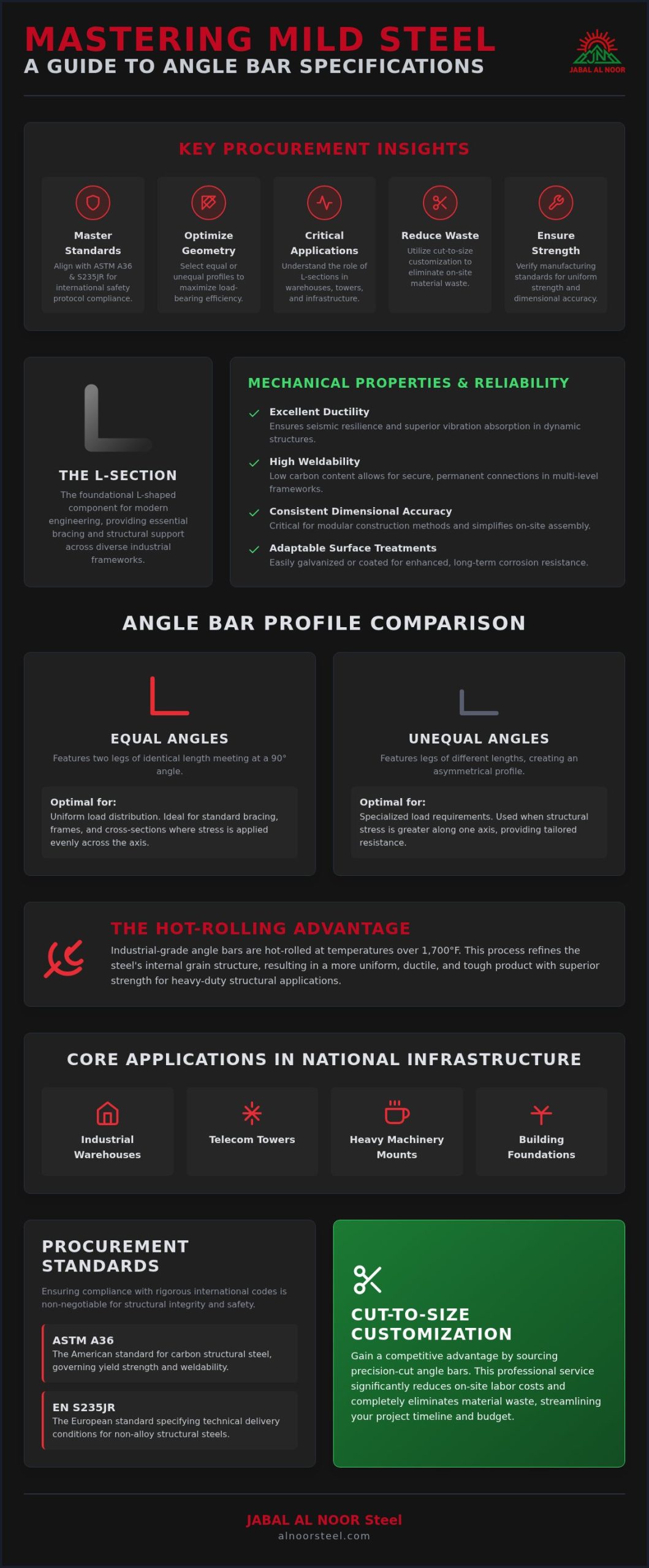
Most industrial-grade mild steel angle bars are produced through the hot-rolling process. This involves passing the steel through rollers at temperatures exceeding 1,700°F, which is above the material’s recrystallization point. This high-temperature shaping improves the internal grain structure, resulting in a more uniform and ductile product. While cold-formed sections offer tighter tolerances for smaller applications, hot-rolled angles provide the superior strength and toughness required for heavy-duty structural frames. The cooling process typically leaves a characteristic blue-grey mill scale on the surface, which serves as a protective layer and a base for further surface treatments. You can explore a wide range of these long products at alnoorsteel.com/shop to find sections that meet your specific project requirements.

Mechanical Properties and Structural Reliability

The structural reliability of MS angles is governed by their mechanical properties, specifically tensile strength and yield point. These bars offer a high weight-to-strength ratio, allowing engineers to design rigid frameworks without adding excessive mass. Their geometric 90-degree shape provides high resistance to bending in multiple directions, which is critical for maintaining the integrity of trusses and support columns. Because they don’t easily deform under heavy loads, they contribute significantly to the overall rigidity of a framework. This structural stability is enhanced by several core characteristics:

  • Excellent ductility for seismic resilience and vibration absorption
  • High weldability for secure, permanent connections in multi-level structures
  • Consistent dimensional accuracy for modular construction and easy assembly
  • Adaptability to various surface treatments, such as galvanization, for corrosion resistance

Comparing Equal and Unequal Angle Bar Profiles

Engineering precision requires a deliberate choice between equal and unequal geometries. While both variants share the same foundational L-shaped profile, their behavior under structural stress differs significantly based on leg symmetry. Procurement teams must identify these differences early to ensure that the mild steel angle bars delivered to the site align perfectly with the specific load-bearing requirements of the project blueprints.

Equal Angles: Symmetry for Uniform Load Distribution

Equal angles feature two legs of identical length, meeting at a precise 90-degree angle. This symmetry makes them the industry standard for bracing and cross-sections where the load is distributed evenly across the axis. Engineers prefer equal sections for simple frames because the identical leg dimensions simplify calculations for moment of inertia and radius of gyration. These components are commonly utilized in light-to-medium construction for roof trusses, gate frames, and general support brackets. Because the weight is distributed symmetrically, they provide a predictable and stable performance in standard structural grids.

Unequal Angles: Solutions for Eccentric Loading

In contrast, unequal angles consist of one leg longer than the other. This asymmetrical design is specifically engineered to resist bending or twisting forces in applications where the load is not centered, often referred to as eccentric loading. By utilizing a section with varying leg dimensions, engineers can optimize material usage, placing more steel exactly where the highest stress occurs. This efficiency is particularly valuable in the construction of lintels, specialized machinery supports, and complex ship-building frames where space constraints or specific loading paths dictate the geometry.

Selecting the correct leg ratio is not merely a matter of strength; it’s a strategy for logistical efficiency. For instance, using an unequal angle for a structural lintel can provide the necessary horizontal support without the unnecessary weight of a larger equal-leg section. This precision helps in managing total project mass and reducing material costs over large-scale procurement cycles. Standard identification in engineering blueprints follows a consistent nomenclature that must be strictly adhered to during the ordering process:

  • Equal Sections: L (Leg Width) x (Leg Width) x (Thickness), such as L 100x100x10.
  • Unequal Sections: L (Long Leg) x (Short Leg) x (Thickness), such as L 125x75x8.

Understanding these designations ensures that procurement remains transparent and error-free. To find the exact dimensions required for your next infrastructure project, you can browse our comprehensive range of structural steel. Each section is sourced to meet rigorous dimensional tolerances, providing the stability and endurance your engineering designs demand.

Core Applications Across National Infrastructure Projects

While small-scale retail applications often focus on simple shelving or residential gates, the true utility of mild steel angle bars is realized within the rigorous demands of national infrastructure. These sections serve as the critical connective tissue in heavy-duty engineering, providing the necessary bracing and structural reinforcement for projects that define a nation’s industrial capacity. Their ability to resist both tension and compression makes them the primary choice for engineers designing systems that must endure decades of operational stress and environmental exposure.

Industrial Warehousing and PEB Structures

In the construction of industrial warehouses and pre-engineered buildings (PEB), angle bars provide essential lateral stability. These structures often span vast areas and require robust bracing systems to resist environmental wind loads and seismic forces. By integrating these angles with larger MS Beams, engineers create a comprehensive support network that prevents frame distortion. The angles are typically utilized as “X-bracing” or “K-bracing” along the wall and roof planes, ensuring the building remains rigid even under extreme pressure. This synergy between different long products creates a foundational pillar for modern logistics hubs and manufacturing plants.

Energy and Telecommunication Infrastructure

The energy and telecommunications sectors rely heavily on the geometric efficiency of mild steel angle bars for lattice tower construction. Whether supporting high-tension power lines or housing advanced microwave equipment, these towers must maintain perfect verticality while exposed to high-altitude wind speeds. MS angles are the preferred profile here because their open L-shape prevents the accumulation of water and debris, which simplifies long-term maintenance in remote sites. Compliance with national standards for high-tension environments ensures these structures can support heavy cabling and equipment without risking fatigue or structural collapse. Their ease of assembly allows for rapid deployment across diverse geographical terrains, supporting the steady expansion of national utility networks.

Beyond these primary structures, angle bars are indispensable for industrial safety and mechanical support systems. You’ll find them in the fabrication of:

  • Industrial Staircases and Walkways: Providing the structural frame and nosing for heavy-duty steel gratings in oil and gas refineries.
  • Mechanical Support Brackets: Securing HVAC systems, piping networks, and electrical conduits in large-scale commercial complexes.
  • Safety Guardrails: Offering high-impact resistance along elevated platforms and industrial perimeter fencing.

This wide-ranging utility underscores the importance of sourcing material that meets precise technical proficiency. When procurement teams prioritize high-grade MS angles, they aren’t just buying steel; they’re ensuring the long-term endurance of the nation’s most vital assets.
Mild Steel Angle Bars: Engineering & Procurement Guide 2026

Procurement Standards: ASTM A36 and S235JR Compliance

In the context of large-scale infrastructure, procurement precision starts with material grade compliance. Selecting the correct standard for mild steel angle bars ensures that the structural integrity of the project matches the engineer’s design intent. While several international standards exist, ASTM A36 and S235JR remain the most prevalent benchmarks for structural carbon steel. ASTM A36 is the North American standard, valued for its excellent weldability and balanced mechanical properties. Conversely, S235JR, governed by the European EN 10025 standard, is a general-purpose construction grade with a minimum yield strength of 235 MPa.

Choosing between these grades often depends on the specific project requirements and the regional engineering codes in effect. Material certification is not merely a formality; it’s a critical component of project safety and insurance underwriting. Verification of chemical composition and mechanical testing results protects the asset owner from material fatigue or catastrophic failure. Rigorous documentation ensures that every section used in the framework can withstand the calculated loads and environmental pressures.

Navigating International Steel Grades

Engineers must distinguish between ASTM, EN, and JIS standards to ensure global compatibility. For instance, while ASTM A36 is a standard for carbon steel, the S235JR grade includes a specific “JR” designation indicating longitudinal Charpy V-notch impact strength. Understanding how Structural Steel Quality Standards impact procurement allows teams to select the appropriate grade for specific load-bearing requirements. This technical proficiency reduces confusion during the sourcing phase and ensures that the materials delivered to the site perform as expected under the nation’s unique environmental conditions.

Dimensional Tolerances and Quality Certification

Beyond material grade, dimensional accuracy is paramount for seamless on-site assembly. Quality control involves checking for straightness, leg length, and thickness accuracy against specified tolerances. Every batch of mild steel angle bars must be accompanied by a Mill Test Certificate (MTC). This document serves as the official record of the steel’s origin, verifying its chemical properties and mechanical performance. A comprehensive MTC will detail the following critical parameters:

  • Chemical Composition: Precise levels of carbon, manganese, phosphorus, and sulfur.
  • Mechanical Performance: Verified tensile strength, yield strength, and elongation percentages.
  • Heat Number: Traceability back to the specific furnace batch.

Ensuring compliance with national building codes and safety regulations is impossible without this documentation. Rigorous certification processes protect the supply chain from inconsistent material quality. To secure certified structural materials that meet these exacting benchmarks, you can source your industrial steel inventory here. By prioritizing documented quality, procurement managers maintain the high standards required for national energy and infrastructure projects.

Sourcing Precision-Cut Angle Bars from JABAL AL NOOR Steel

JABAL AL NOOR Steel has served as a foundational pillar for national infrastructure since 2010. We maintain a comprehensive inventory of long products designed to meet the high-volume demands of the construction and energy sectors. Our robust supply chain ensures that premium mild steel angle bars are readily available for complex projects, providing the material consistency required for rigorous engineering benchmarks. This steady availability allows project managers to plan with confidence, knowing their structural requirements are backed by a reliable regional expert.

Value-Added Services: Cut-to-Size and Finishing

Operational efficiency in heavy industry is often achieved by reducing on-site labor and minimizing material waste. Utilizing Cut-to-Size Steel Services allows procurement managers to receive sections that are prepared for immediate structural integration. This level of customization lowers transport costs and removes the logistical burden of managing excess material at the project site. It’s a methodical approach that prioritizes precision over traditional, wasteful fabrication methods.

To combat the corrosive effects of high-humidity environments, we offer industrial surface treatments such as shot blasting and priming. Shot blasting effectively removes mill scale and surface contaminants, providing an ideal profile for protective finishes. Applying an industrial-grade primer immediately after this process ensures that the mild steel angle bars remain protected during transport and on-site storage. This proactive approach to material maintenance is essential for preserving the long-term endurance of structural frameworks in challenging climates.

Streamlining Procurement for National Contracts

Reliable partnerships are the bedrock of successful national infrastructure and energy projects. JABAL AL NOOR Steel supports these large-scale initiatives through methodical logistics and a commitment to technical proficiency. We function as a seasoned veteran of the industry, offering transparent sourcing and a steady supply of structural materials for national contracts. Our logistics network is optimized for delivery to major industrial hubs, ensuring that bulk orders arrive on schedule and in accordance with project milestones.

Engineering and procurement teams can access our online inventory to facilitate real-time sourcing of essential structural sections. This digital platform streamlines the ordering process and ensures that project timelines are maintained without the risk of material shortages. By integrating a vast physical stock with in-house industrial processing, we provide a reliable and professionally curated service for our national collaborators. This commitment to operational excellence ensures that every project we support is built on a foundation of quality and logistical efficiency.

Securing the Future of National Infrastructure

Precision in structural engineering begins with the rigorous selection of material grades and geometric profiles. By mastering the technical distinctions between ASTM and EN standards, procurement teams ensure that every framework meets the highest safety benchmarks for 2026. Integrating value-added services like cut-to-size customization and industrial surface treatments further optimizes project timelines while reducing on-site waste.

JABAL AL NOOR Steel remains a foundational pillar for the industry. Since our establishment in 2010, we’ve focused on providing a consistent supply of premium mild steel angle bars backed by full material certification. Our national supply capacity ensures that even the most complex infrastructure projects receive the technical support and logistical efficiency they require. We prioritize transparency and reliability in every partnership, ensuring your material needs are met with professional expertise.

When you prioritize verified quality and professional processing, you secure the long-term endurance of your engineering assets. We invite you to Request a Quote for Bulk Mild Steel Angle Bars to streamline your next procurement cycle. Your commitment to precision today builds the resilient infrastructure of tomorrow.

Frequently Asked Questions

What is the difference between hot-rolled and cold-rolled mild steel angle bars?

Hot-rolled sections are forged at high temperatures, which creates a more ductile and uniform internal structure suitable for heavy loads. Cold-rolled bars are shaped at room temperature to achieve precise dimensions and a polished surface finish. For industrial-scale projects, hot-rolled mild steel angle bars are the standard choice due to their superior structural toughness. These sections are specifically designed to withstand the compressive stresses found in large-scale frames and infrastructure.

Which steel grade is better for structural construction: ASTM A36 or S235JR?

The choice between ASTM A36 and S235JR depends on the specific engineering code governing your project. ASTM A36 is the North American benchmark for carbon steel, offering a minimum yield strength of 36,000 psi and excellent weldability. S235JR is the European equivalent (EN 10025), providing a minimum yield of 235 MPa. Both grades provide reliable performance, but A36 is often preferred for its slightly higher tensile properties in heavy-duty structural applications.

Can mild steel angle bars be used in marine or highly corrosive environments?

Yes, but mild steel angle bars require specialized protective coatings to endure marine or high-salinity environments. Without protection, the low carbon content of the steel remains vulnerable to rapid oxidation. We recommend using hot-dip galvanization or high-build epoxy primers to create a physical barrier against salt and moisture. These treatments ensure the structural integrity of the steel remains intact even when exposed to the harsh conditions of national coastal sites.

What are the standard lengths for MS angle bars available in the national market?

Standard stock lengths for MS angle bars in the national market are typically 6 meters or 12 meters. These lengths facilitate efficient transport and align with standard architectural modules. However, many projects require unique dimensions to minimize on-site labor and material waste. We provide precision cut-to-size services to deliver sections that match your exact specifications, ensuring that your procurement strategy supports a more streamlined and efficient construction timeline.

How do I calculate the weight of a mild steel angle bar for my project?

To calculate the weight of an angle bar, use the formula: Weight (kg) = [Leg 1 + Leg 2 – Thickness] * Thickness * Length * 0.00785. This calculation uses the standard density of carbon steel (7,850 kg/m³). For instance, an equal angle measuring 75x75x6 mm at a length of 6 meters weighs approximately 41.5 kg. Accurate weight calculations are essential for managing logistics, crane lifting capacities, and the overall load-bearing design of the framework.

What is the primary difference between equal and unequal angle profiles?

The fundamental difference is the symmetry of the legs. Equal angles feature two legs of identical length, which simplifies load-bearing calculations and provides uniform strength along both axes. Unequal angles consist of one leg longer than the other, allowing engineers to place more material exactly where it’s needed to resist bending or twisting. This geometry is particularly useful in lintels or machinery supports where the load is not centered on the section.

Does JABAL AL NOOR Steel provide material certification for all long products?

Yes, JABAL AL NOOR Steel provides comprehensive Mill Test Certificates (MTC) for all long products in our inventory. These documents verify the material’s chemical composition and mechanical properties, ensuring every section meets international standards like ASTM or EN. Our commitment to providing full material certification ensures that procurement teams can satisfy rigorous quality benchmarks and national building codes, maintaining the high safety standards required for heavy industrial projects.

What surface treatments are recommended for MS angle bars used outdoors?

For outdoor use, we recommend a combination of shot blasting and industrial priming or hot-dip galvanization. Shot blasting removes mill scale and creates an ideal surface profile for paint adhesion, which is critical for long-term protection. Galvanization provides a sacrificial zinc layer that prevents rust even if the surface is scratched. These treatments are vital for preserving the endurance of structural steel in the national climate, ensuring the framework remains secure for decades.
Chequered Steel Plates: A 2026 Industrial Reference for National Infrastructure

Chequered Steel Plates: A 2026 Industrial Reference for National Infrastructure

Did you know that steel plate accounts for over 32% of total global structural steel consumption in 2026? For infrastructure leaders and project engineers, selecting the right chequered steel plates is no longer just a matter of routine procurement. It is a critical decision that impacts long-term structural safety, skid resistance, and maintenance cycles. You likely understand the immense pressure of balancing immediate load-bearing requirements with the persistent threat of corrosive industrial environments. It is often difficult to navigate the technical nuances between ASTM A36 and EN S235JR while ensuring every millimetre of thickness meets rigorous national standards and 2026 regulatory benchmarks.

This reference guide provides the technical clarity you need to eliminate sourcing risks and select the optimal material for your specific industrial application. We will examine the mechanical properties of Mild Steel, Stainless Steel, and Galvanized Iron, detail the evolving international standards, and provide a clear framework for calculating load-bearing capacities. By the end of this technical overview, you will have the expertise to source compliant materials from reliable national suppliers capable of precise customization for large-scale infrastructure projects.

Key Takeaways

  • Distinguish between Mild Steel, Stainless Steel, and Galvanized Iron grades to ensure long-term material resilience in diverse industrial environments.
  • Master the technical specifications of chequered steel plates, including thickness ranges from 1.2mm to 12mm and their specific load-bearing capacities.
  • Ensure project compliance by understanding the international standards, such as ASTM A36 and EN S235JR, that govern structural steel quality.
  • Identify how value-added services like shot blasting and cut-to-size customization can optimize your supply chain and reduce on-site labor requirements.
  • Evaluate the performance of industrial tread plates across various infrastructure sectors, including heavy-machinery platforms and high-traffic transportation flooring.

Understanding Chequered Steel Plates: Patterns and Functionality

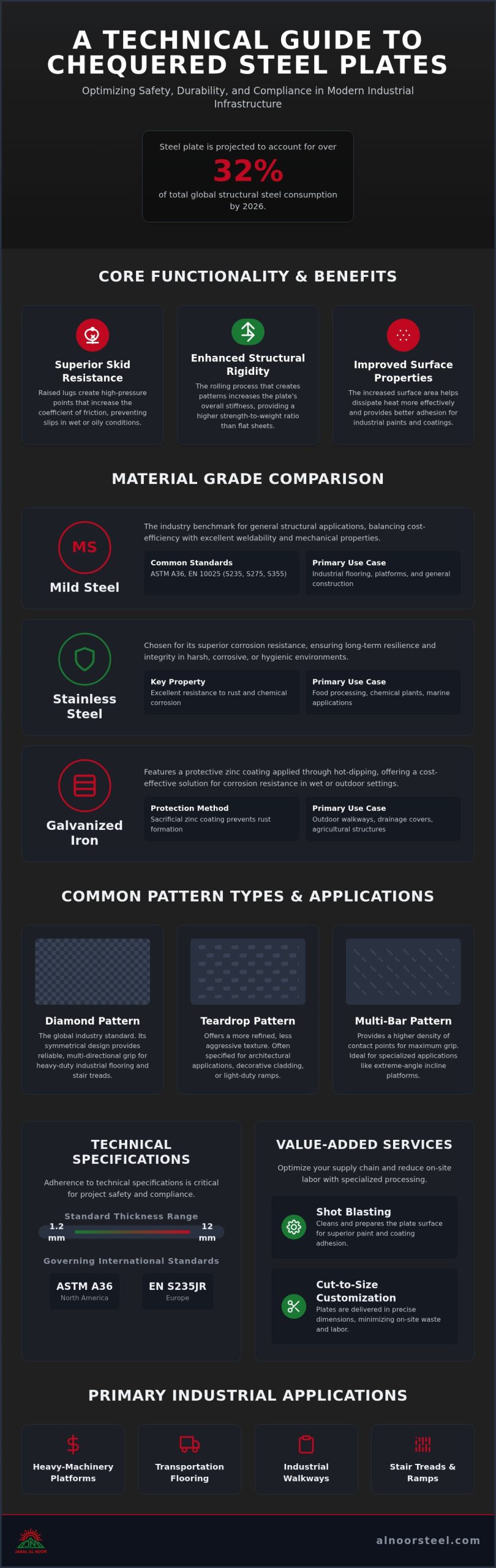
Chequered steel plates, commonly referred to as Tread plate or checker plates, are industrial-grade flat products characterized by a regular pattern of raised lugs on one side. These plates provide an essential safety layer in environments where moisture, oil, or debris create hazardous footing conditions. Beyond their primary safety function, they offer significant mechanical advantages. The rolling process used to create the patterns increases the plate’s overall rigidity, providing a higher strength-to-weight ratio compared to standard flat sheets. This added structural integrity makes them a preferred choice for load-bearing surfaces in heavy industry.

The increased surface area created by these raised patterns also helps dissipate heat and provides better adhesion for industrial coatings. For engineers managing national infrastructure projects, selecting the correct pattern isn’t merely an aesthetic choice; it’s a technical requirement for ensuring operational longevity and worker safety. Chequered steel plates serve as the foundational floor for the modern industrial landscape, combining durability with practical risk mitigation.

To better understand the manufacturing and visual profile of these materials, watch this helpful overview:

The Mechanics of Slip Resistance

The functionality of chequered steel plates relies on the interaction between the raised lugs and the contact surface of industrial footwear or machinery tires. These protrusions create localized high-pressure points that bite into rubber soles, significantly increasing the coefficient of friction. Proper pattern spacing is vital. It allows for the efficient drainage of fluids like water or lubricants, preventing the “hydroplaning” effect that often leads to industrial slips. When evaluating skid resistance for high-traffic pedestrian walkways, engineers must consider the lug height. A taller lug provides more aggressive grip but may pose a trip hazard if not specified correctly for the intended traffic type.

Pattern Types and Aesthetic Considerations

While several variations exist, the diamond pattern remains the global industry standard for heavy-duty industrial flooring and stair treads. Its symmetrical design provides multi-directional grip, making it ideal for large platforms where traffic moves in various paths. In contrast, teardrop patterns offer a more refined appearance. Architects often specify these for decorative cladding or lighter ramps where aesthetic appeal is as important as functionality. For specialized applications like extreme-angle incline platforms, multi-bar patterns provide a higher density of contact points, ensuring stability for both personnel and heavy equipment under challenging gradients.

Material Grades and Standards for Industrial Tread Plates

Selecting the correct material grade is a fundamental step in ensuring the endurance of national infrastructure projects. While chequered steel plates are ubiquitous across industrial landscapes, their performance varies significantly based on their specific chemical composition and the manufacturing standards they uphold. A project’s success often rests on the ability to match material resilience with the environmental stresses of the site.

Mild Steel (MS) and Carbon Steel Grades

ASTM A36 remains the industry benchmark for general structural applications due to its excellent weldability and balanced mechanical properties. It’s the primary choice for industrial flooring where high-strength requirements must be met with cost-efficiency. In European contexts, EN 10025 standards govern grades like S235, S275, and S355. The numerical value in these grades indicates the minimum yield strength in MPa, providing engineers with a predictable performance metric for load calculations. These hot-rolled plates are highly workable, allowing for seamless integration into complex structural frameworks. For engineers designing load-carrying applications, referencing the North American Specification for the Design of Cold-Formed Steel Structural Members provides a rigorous framework for ensuring safety and compliance across various jurisdictions. For energy and infrastructure projects that also require tubular carbon steel components, our guide on carbon steel pipe suppliers UAE offers a detailed comparison of grades and procurement strategies for 2026.

Stainless Steel for Harsh Environments

When projects face persistent corrosive threats, Grade 304 stainless steel offers a dependable standard for indoor industrial flooring and food processing facilities. It provides the necessary hygiene and oxidation resistance required in regulated environments. However, for offshore or coastal infrastructure, Grade 316 provides essential marine-grade protection. This specific grade includes molybdenum, which significantly enhances resistance to chloride-induced pitting and crevice corrosion. You can find more details on these material properties and their industrial applications in our Stainless Steel 316 Pipe Supplier Reference. Depending on the architectural requirements, these plates are available in mill finishes or polished variants to meet specific aesthetic and sanitation standards.

Galvanized Iron (GI) plates provide a practical, cost-effective alternative for outdoor environments where humidity is a constant factor. The hot-dip galvanizing process creates a metallurgical bond that shields the base metal from corrosive elements, extending the service life of the installation. In specialized scenarios where weight is the primary engineering constraint, aluminum variants are preferred. These offer a high strength-to-weight ratio, which is vital for mobile platforms, transport applications, and portable ramps. To ensure your project utilizes the correct grade for its specific demands, you can review our comprehensive inventory of graded flat and long products. Choosing the right material for chequered steel plates isn’t just about immediate utility; it’s about securing the long-term value and safety of the infrastructure.

Primary Industrial Applications of Checker Plates in Modern Infrastructure

The versatility of chequered steel plates makes them a staple in heavy industry, where operational safety and structural resilience are non-negotiable. These plates function as more than just a surface; they’re an integrated safety solution for environments that demand high friction and mechanical endurance. From power plants to coastal refineries, the application of these plates ensures that personnel and equipment can move securely across complex industrial landscapes. Their ability to withstand high-impact loads while providing consistent slip resistance makes them essential for maintaining operational continuity.

Infrastructure and Utility Applications

National infrastructure projects frequently utilize these plates for critical access points and pedestrian safety. Trench covers are a primary example, providing a secure passage for vehicles and personnel over sensitive utility lines while allowing for easy maintenance access. On bridge walkways, the raised patterns provide a reliable surface that remains effective even during periods of high humidity or rainfall. Ensuring these materials meet the BS EN 10025-2 steel standards is vital for verifying their mechanical properties in such high-stakes environments. These plates are often integrated with other structural components, a topic we explore further in our Hollow Section Steel Suppliers in UAE Guide.

Logistics and Commercial Transport

In the logistics sector, the durability of chequered steel plates is leveraged to reinforce transport assets. Truck bed liners and trailer flooring utilize these plates to protect the vehicle chassis from the heavy impact of shifting cargo and industrial equipment. This reinforcement extends the service life of the fleet and reduces maintenance costs. Within warehouse facilities, mezzanine flooring constructed from checker plates allows for the vertical expansion of storage capacity. These elevated platforms must support significant weight while ensuring that forklift operators and warehouse staff have a stable, anti-slip surface for loading and unloading operations. Loading dock ramps also rely on these plates to provide the necessary traction for pallet jacks navigating steep inclines.

Beyond these heavy-duty uses, checker plates are fundamental to structural safety systems. They’re the industry standard for stair treads on emergency exits and fire escapes, where consistent grip is critical during rapid evacuations. Architecturally, these plates are often applied as protective wall cladding in high-traffic industrial corridors. This application shields the underlying structure from mechanical wear and tear while providing a clean, professional aesthetic that reflects the high standards of a modern industrial facility. Whether used for utility access or architectural protection, the choice of plate must always align with the specific technical demands of the environment.

Chequered Steel Plates: A 2026 Industrial Reference for National Infrastructure

Technical Specifications: Sizing, Thickness, and Load-Bearing Factors

Precise engineering requires an exact understanding of material dimensions. Chequered steel plates are available in a broad spectrum of thicknesses, ranging from 1.2mm for architectural cladding to 12mm or more for heavy industrial flooring. Standard configurations typically include 1000 x 2000mm, 1220 x 2440mm, and 1500 x 6000mm dimensions. Choosing the correct size minimizes material waste and reduces the number of weld joints required on-site, which directly impacts the structural integrity of the final installation.

Calculating the weight per square meter is a vital step for structural load budgeting. Engineers must factor in the base plate thickness alongside the additional mass of the raised pattern. This calculation ensures that supporting beams and columns aren’t overstressed by the flooring weight. Adhering to international thickness and flatness tolerances also prevents alignment issues during large-scale fabrication. This precision is what separates a reliable industrial installation from one prone to premature wear or safety hazards.

Selecting the Right Thickness

Material thickness must be matched to the expected traffic and impact levels of the environment. Light-duty plates, ranging from 1.2mm to 3mm, are ideal for decorative interior elements, cabinet lining, or light pedestrian paths where weight saving is prioritized. For standard warehouse flooring, mezzanine platforms, and truck bed liners, medium-duty plates between 4mm and 6mm provide the necessary durability. Heavy-duty applications, involving plates of 8mm to 12mm and above, are reserved for heavy machinery platforms and high-impact industrial zones that experience constant mechanical stress and heavy equipment movement.

Procurement Logistics and Inventory Management

National-scale infrastructure demands a robust logistical framework. Sourcing bulk quantities requires a partner capable of maintaining consistent inventory levels across diverse grades and sizes. Every structural plate must be accompanied by a Mill Test Certificate (MTC) to verify compliance with chemical and mechanical specifications. This documentation is essential for project audits and long-term liability management. For detailed insights on managing these requirements, refer to our Structural Steel Supplier UAE 2026 Procurement Guide. To secure high-quality materials for your next project, you can browse our full inventory of chequered steel plates and other flat products.

Processing and Surface Treatments for Enhanced Durability

Raw steel is rarely ready for immediate installation in high-stakes infrastructure projects. To ensure chequered steel plates perform over decades, they must undergo rigorous processing and surface treatments. These value-added services reduce the logistical burden on construction sites and provide the necessary chemical defense against atmospheric corrosion. It’s a fundamental step that transforms a basic flat product into a specialized industrial component ready for the most demanding environments.

Precision Customization Services

Factory-level customization is a strategic choice for large-scale projects. By utilizing precision cutting, engineers receive plates that fit structural frameworks exactly, which eliminates the need for hazardous on-site modifications. This process significantly reduces material waste and labor costs. Beyond simple sizing, professional edge finishing is a critical safety requirement. Deburring and smoothing the edges of heavy plates ensures safe handling for installation teams and prevents mechanical interference with adjacent structural members. You can explore the technical advantages of these processes in our Cut-to-Size Steel Service Reference. Receiving customized plates allows for a methodical and steady construction pace, mirroring the planned nature of the engineering sector.

Surface Treatments for Longevity

Surface preparation is the most influential factor in a coating’s lifespan. Shot blasting to SA 2.5 standards is the industry benchmark for removing mill scale, rust, and contaminants. This process creates a specific surface profile that ensures optimal adhesion for industrial-grade primers and paints. For plates destined for humid or chemically aggressive environments, applying a high-performance primer immediately after blasting is essential to prevent flash rusting. This proactive approach ensures the material’s endurance and maintains the rigorous quality benchmarks required for national infrastructure.

When long-term outdoor resilience is the primary goal, hot-dip galvanization provides the most robust protection. This metallurgical process creates zinc-iron alloy layers that shield the base metal from moisture and oxidation. Choosing the right finish depends on the project’s environmental exposure:

  • Black (Uncoated): Suitable for indoor, dry environments or where the client will apply specialized coatings on-site.
  • Primed: Ideal for temporary protection during transit and as a base for final industrial topcoats.
  • Galvanized: The standard for coastal infrastructure, bridge walkways, and any application exposed to the elements.

Implementing these treatments ensures that the chequered steel plates maintain their structural integrity and slip-resistant properties throughout their intended service life. By integrating these services at the procurement stage, project managers secure a more efficient, safer, and durable outcome for critical assets. It’s about providing long-term value and unwavering stability for every collaborator involved in the project.

Securing Long-Term Structural Integrity for National Infrastructure

Choosing the right chequered steel plates is a foundational decision that impacts the safety and longevity of every large-scale project. We’ve explored how balancing mechanical skid resistance with rigorous material standards like ASTM and EN ensures that industrial surfaces withstand the pressures of modern infrastructure. By prioritizing technical precision in thickness selection and utilizing professional surface treatments like shot blasting, you can significantly reduce maintenance cycles and on-site labor. It’s about ensuring every component meets the highest benchmarks for durability and performance.

Reliability in the supply chain is equally critical. Accessing a national distribution network with in-house cut-to-size capabilities allows for a more methodical and secure procurement process. Whether your project requires the corrosion resistance of Stainless Steel 316 or the structural stability of hot-rolled carbon steel, maintaining high standards is the key to operational excellence. Our commitment to global quality benchmarks and logistical efficiency makes us a steady partner for your construction needs.

View Our Full Inventory of Chequered Steel Plates to find the exact specifications for your next project. We look forward to supporting your industrial goals with dependable, high-quality steel solutions.

Frequently Asked Questions

What is the difference between chequered plate and tread plate?

Chequered plate and tread plate are synonymous terms used to describe the same industrial product. While “chequered” is more common in European and Commonwealth markets, “tread plate” is frequently used in North America. Both refer to a flat steel product featuring a raised pattern on one side for skid resistance. Other industry terms include checker plate and floor plate. Regardless of the nomenclature, the technical specifications and safety functions remains identical across global standards.

Which material is best for outdoor chequered plates in the UAE climate?

For outdoor environments characterized by high humidity and salinity, Galvanized Iron (GI) or Stainless Steel Grade 316 are the most resilient choices. The hot-dip galvanizing process provides a sacrificial zinc layer that protects the base steel from oxidation. In coastal areas where chemical aggression is higher, SS 316 is the superior option due to its molybdenum content. These materials ensure that chequered steel plates maintain their structural integrity despite the harsh atmospheric conditions.

How is the thickness of a chequered steel plate measured?

The thickness of a chequered plate is always measured based on the “on-the-flat” dimension, which is the thickness of the base metal excluding the raised pattern. When engineers specify a 6mm plate, they’re referring to the flat sheet’s gauge. The raised lugs or diamonds add extra height, but this additional dimension isn’t included in the nominal thickness used for load-bearing calculations. This distinction is vital for ensuring precise structural fitment and compliance with international standards.

Can chequered steel plates be welded easily?

Yes, chequered steel plates can be welded using standard industrial methods, though the process varies by material. Mild steel plates (ASTM A36) offer excellent weldability for structural frameworks. When working with galvanized plates, the zinc coating must be removed from the weld area to prevent brittle joints and hazardous fumes. Stainless steel variants require compatible filler rods and specialized techniques to preserve the material’s corrosion resistance at the heat-affected zone during fabrication.

What are the standard sizes available for mild steel checker plates?

Standard dimensions for mild steel checker plates typically include 1000 x 2000 mm, 1220 x 2440 mm, and 1500 x 3000 mm. Larger configurations like 1500 x 6000 mm are also available for extensive industrial platforms to minimize the number of required joints. These standardized sizes allow for efficient logistical planning and inventory management. Most national suppliers also provide customization services to cut these plates to specific project dimensions, reducing on-site labor and material waste.

How do I calculate the load-bearing capacity of a chequered plate?

Calculating load-bearing capacity requires evaluating the base plate thickness, the span between structural supports, and the material’s yield strength. Engineers utilize standard deflection formulas to determine how much weight the plate can support without permanent deformation. It’s important to factor in both static loads, like machinery, and dynamic loads, such as forklift traffic. Referencing standards like EN 10025-2 provides the necessary mechanical data to perform these calculations accurately for safety-critical infrastructure.

Is stainless steel chequered plate worth the extra cost?

Stainless steel is a worthwhile investment when the long-term cost of maintenance and replacement outweighs the initial procurement price. While mild steel is cost-effective for dry indoor areas, it requires frequent painting or coating in corrosive settings. Stainless steel (SS 304 or 316) provides inherent resistance to rust and chemical exposure, making it essential for food processing, marine, or chemical plants. The reduced downtime and extended service life often provide superior value for high-stakes projects.

What surface treatments are recommended for industrial flooring?

For industrial flooring, the most effective surface treatments involve shot blasting followed by high-performance coatings. Shot blasting to SA 2.5 standards removes mill scale and creates a surface profile that ensures maximum adhesion for primers. Depending on the environment, you might choose an epoxy coating for chemical resistance or hot-dip galvanization for outdoor durability. These treatments protect the steel from atmospheric corrosion while maintaining the essential slip-resistant properties of the raised pattern over its service life.

ASTM A572 Grade 50 Steel in the UAE: A Comprehensive Comparison and Engineering Guide

ASTM A572 Grade 50 Steel in the UAE: A Comprehensive Comparison and Engineering Guide

The highest possible tensile strength for a structural frame often seems like the safest engineering choice, yet it frequently leads to unnecessary welding complexities and inflated material costs. In the demanding industrial environment of the region, ASTM A572 grade 50 steel UAE has emerged as the definitive standard for balancing high-yield strength with exceptional fabrication versatility. You’re likely familiar with the challenge of meeting stringent compliance standards while optimizing strength-to-weight ratios for heavy industrial applications. It’s a delicate equilibrium where material failure isn’t an option, but over-engineering can easily stall a project’s logistical flow.

This guide provides the technical validation required to finalize your material selection with confidence. We’ll demonstrate why this high-strength low-alloy grade is the strategic choice for modern infrastructure, offering superior weldability compared to higher-grade alternatives. You’ll gain a clear understanding of its mechanical advantages in sectors like oil and gas, alongside a reliable procurement framework designed for national projects. From international grade equivalents to specific application insights, we’ve curated the essential data to support your engineering decisions throughout 2026.

Key Takeaways

  • Understand the technical properties of High-Strength Low-Alloy steel and why a 50,000 psi yield strength is essential for heavy-duty infrastructure.
  • Compare the mechanical advantages and cost-benefit ratios of selecting ASTM A572 grade 50 steel UAE over standard A36 for weight-sensitive projects.
  • Examine the strategic role of HSLA grades in the energy sector and Pre-Engineered Buildings to ensure long-term structural endurance.
  • Establish a reliable procurement framework by identifying the mandatory certifications and traceability standards required for national infrastructure compliance.
  • Discover how value-added services like cut-to-size customization and surface treatments optimize on-site efficiency and project timelines.

Understanding ASTM A572 Grade 50: The High-Strength Choice

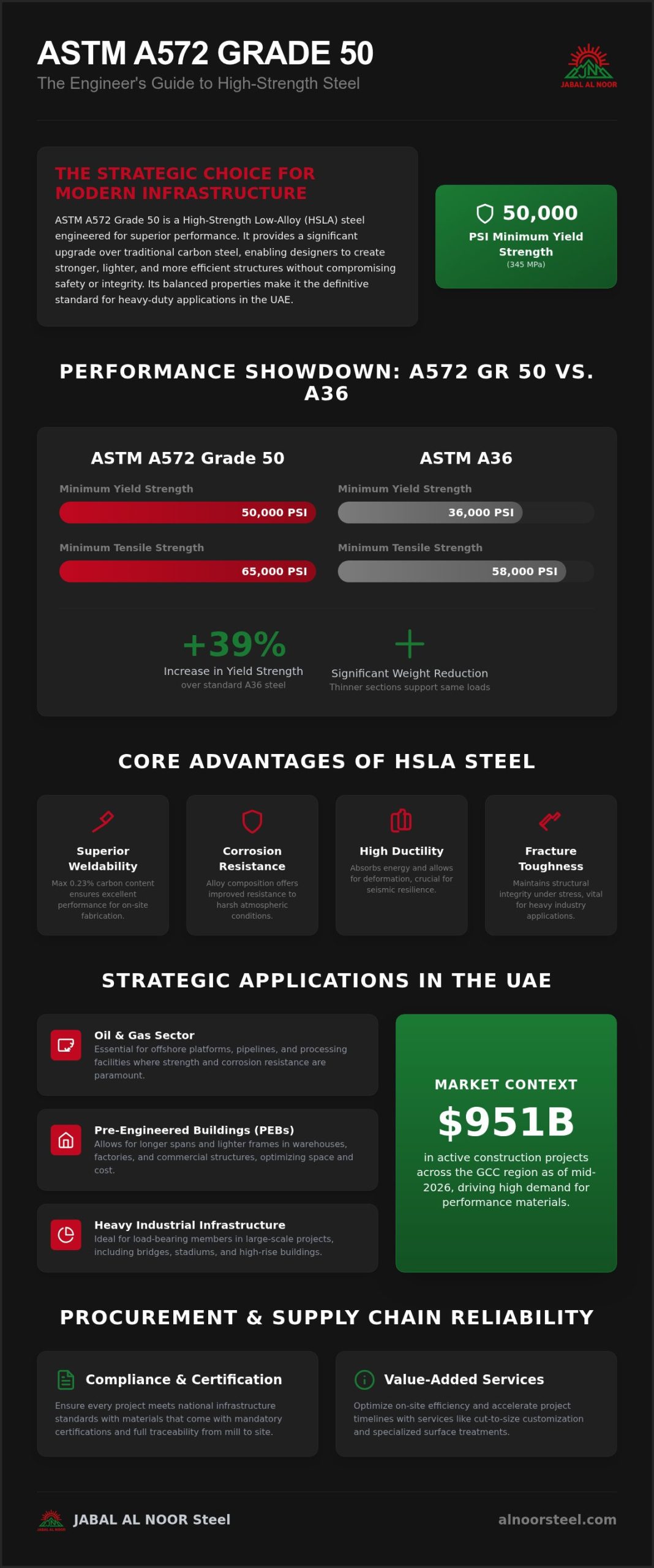
ASTM A572 Grade 50 is not just another structural material; it’s a High-Strength Low-Alloy (HSLA) columbium-vanadium steel engineered for high-performance applications. The “Grade 50” designation signifies a minimum yield strength of 50,000 psi (345 MPa). This provides a substantial upgrade over traditional carbon steel. For engineers managing large-scale projects, utilizing ASTM A572 grade 50 steel UAE allows for significant weight reduction in structural frames without compromising integrity. This efficiency is vital as the UAE continues its massive infrastructure expansion throughout 2026. Raw materials currently account for approximately 60% of total construction costs in the nation.

By choosing a material with a higher yield point, designers can specify thinner sections that support the same loads as thicker, heavier A36 beams. This reduction in mass directly translates to lower freight costs and simplified foundation requirements. As the GCC region manages nearly $951 billion in active construction projects as of mid-2026, the demand for this specific ASTM A572 steel grade remains high. It’s a foundational pillar for reliability in heavy industry.

To visualize the durability and performance of these materials in structural applications, review the technical overview below:

Chemical Composition and HSLA Benefits

The superior performance of this grade stems from its precise alloying elements. Vanadium and Columbium are added in small, controlled amounts to refine the grain structure. This increases strength without the bulk associated with standard carbon steels. With a maximum carbon content of 0.23%, the material maintains excellent weldability, a critical factor for on-site fabrication in the UAE’s industrial sectors. This chemical balance also offers improved resistance to atmospheric corrosion, ensuring that structural components endure the harsh environmental conditions characteristic of the region. You can find these high-performance materials in our online shop for your next project.

Mechanical Properties: Yield vs. Tensile Strength

The relationship between yield and tensile strength defines the safety margins of any structural project. While the yield point is set at 50 ksi, the minimum tensile strength reaches 65 ksi, providing a necessary buffer for load-bearing members. High elongation properties are equally important, as they allow the steel to absorb energy and deform slightly before failure. This ductility is indispensable for structures in high-vibration industrial zones or areas requiring seismic resilience. For procurement teams sourcing ASTM A572 grade 50 steel UAE, understanding these mechanical thresholds ensures that the selected beams and plates meet the exact safety benchmarks of national infrastructure projects. HSLA steel is a specialized structural material that maintains a minimum yield strength of at least 42,000 psi through the addition of micro-alloying elements.

Comparative Analysis: ASTM A572 Grade 50 vs. A36 and S355

Selecting the appropriate structural material requires a rigorous evaluation of mechanical performance against project budgets. While standard carbon steel has its place, the adoption of ASTM A572 grade 50 steel UAE is driven by the need for enhanced load-bearing capacity without the penalty of excessive weight. Engineers must decide when the specific properties of Grade 50 outweigh the familiarity of A36. This choice becomes critical in heavy industry sectors like Oil & Gas; structural integrity under stress is paramount. While higher tensile grades such as Grade 60 or 65 exist, Grade 50 remains the industry favorite because it preserves a high degree of fracture toughness and ease of fabrication.

ASTM A572 Grade 50 vs. ASTM A36 Steel

The most striking difference between these two materials is the 39% increase in minimum yield strength that Grade 50 provides over A36. This technical advantage allows for the design of multi-story or long-span structures with significantly thinner sections. In large-scale procurement, the return on investment occurs through reduced total tonnage. When you require fewer tons of steel to achieve the same structural performance, you lower shipping costs and simplify on-site handling. For those managing complex inventories, viewing our structural steel inventory can help identify the right specifications for these high-yield applications.

ASTM A572 Grade 50 vs. EN 10025 S355

In the UAE, projects frequently utilize international blueprints that may specify European standards. The closest equivalent to A572 Grade 50 is EN 10025 S355, specifically the S355JR or S355J2 sub-grades. However, the testing requirements differ between these two frameworks. ASTM standards emphasize chemical composition and yield points, whereas EN standards often mandate specific impact energy tests at varying temperatures. This A572 Carbon Steel guide provides further technical depth on how these standards intersect in global engineering. Procurement teams must ensure that Mill Test Certificates align with the specific standard requested by the consultant to avoid compliance issues on national infrastructure projects. Transitioning between these standards requires a knowledgeable partner who understands the nuances of material certification and regional compliance.

Structural Applications in UAE Infrastructure and Industry

The transition from material specification to structural execution is where the true value of ASTM A572 grade 50 steel UAE becomes evident. In the national construction sector, this grade is the primary choice for Pre-Engineered Buildings (PEB). These structures require high-strength components that allow for wider clear spans and reduced foundation loads. Because PEB projects often face aggressive coastal conditions, the low-alloy composition of Grade 50 provides a reliable substrate for advanced surface treatments. This ensures long-term endurance against high humidity and thermal fluctuations common in the region. For a deeper look into the regional market, consult our Structural Steel Supplier UAE 2026 guide.

Heavy Infrastructure and Transportation

National infrastructure projects, including bridge girders and highway supports, demand materials that can withstand immense dynamic loads over decades of service. Grade 50 steel is frequently specified for these applications due to its high yield point and fatigue resistance. Within logistics hubs and industrial warehouses, it serves as the backbone for heavy-duty crane rails and support columns. The ability to carry greater loads with smaller cross-sections simplifies the design of massive distribution centers. These facilities are critical to the UAE’s supply chain efficiency in 2026, especially as raw materials comprise 60% of total construction costs. Smaller, stronger sections optimize both space and material expenditure.

Oil, Gas, and Industrial Framing

In the energy sector, structural reliability is non-negotiable. ASTM A572 grade 50 steel UAE is widely utilized in the fabrication of skid-mounted equipment and offshore platforms where structural weight is a critical design constraint. These environments require a material that maintains its toughness under high-stress conditions. The weldability of this grade ensures that complex industrial frames can be assembled with high precision and structural integrity. For tubular applications such as structural bracing or support trusses, project managers often coordinate with Hollow Section Steel Suppliers in UAE to source matching Grade 50 specifications. This integrated approach to material selection ensures that every component of a heavy-duty frame meets the same rigorous quality benchmarks required for national infrastructure.

ASTM A572 Grade 50 Steel in the UAE: A Comprehensive Comparison and Engineering Guide

Procurement Compliance: Certifications and Quality Standards

Structural integrity hinges on verifiable quality. When procuring ASTM A572 grade 50 steel UAE, your primary safeguard against material failure is the Mill Test Certificate (MTC). This document isn’t just a formality; it’s a technical guarantee that the material meets the specific yield and tensile requirements discussed earlier. Adhering to Structural Steel Quality Standards UAE is mandatory for any project seeking national approval. In the 2026 landscape, where construction cost inflation is forecast at 2.7%, avoiding non-compliant material is a financial necessity as much as a safety one. High-stakes infrastructure often requires third-party inspections to validate these mill reports, providing independent verification of the mechanical tests performed at the source.

Verifying ASTM A572 Grade 50 Compliance

Checking an MTC requires a methodical approach to ensure the steel meets the rigorous ASTM A572 specifications. First, confirm the chemical analysis aligns with the standard’s limits, particularly for phosphorus (maximum 0.04%) and sulfur (maximum 0.05%). These elements, if uncontrolled, can compromise both weldability and fracture toughness. Every batch must have a unique heat number for full traceability. This number must be clearly stamped or stenciled on the material itself. If the number on the steel doesn’t match the MTC, the material shouldn’t be accepted on-site. Traceability allows engineers to trace the steel back to its original furnace melt, providing a transparent record of the material’s history and ensuring consistency across the entire structural frame.

UAE Regulatory and Engineering Standards

Material procurement must align with local building codes and civil defense requirements to pass final inspections. While the ASTM standard is widely accepted, some national projects may require compliance with EN 10025 Steel Grades in the UAE as well. Navigating these overlapping standards requires a reliable documentation process. Contractors should utilize a comprehensive UAE Steel Stockist Checklist to vet their suppliers before placing large-scale orders. This ensures that every beam and plate delivered to the site is accompanied by the necessary certifications, preventing costly project delays or structural re-evaluations. If you’re ready to secure certified materials for your next project, you can browse our compliant structural steel inventory to ensure your procurement meets every national benchmark.

Strategic Sourcing: Customization and Supply Chain Reliability

Reliable material procurement in the heavy industry sector requires more than just a transaction; it demands a partnership with a national-scale entity that understands the logistical complexities of large-scale infrastructure. JABAL AL NOOR Steel has established itself as a foundational pillar in the regional market, providing specialized structural solutions that go beyond standard supply. For project managers sourcing ASTM A572 grade 50 steel UAE, the ability to receive customized components is a critical factor in maintaining operational excellence. By integrating value-added services into the supply chain, we ensure that every structural member arrives ready for immediate integration into the project framework.

Value-Added Processing for Engineering Efficiency

The implementation of cut-to-size services for MS beams and plates significantly reduces on-site labor costs and material waste. When structural steel is delivered according to precise project tolerances, contractors can bypass the time-consuming process of manual cutting and preparation. This logistical efficiency is enhanced by our surface treatment capabilities, including shot blasting and priming. In the UAE’s high-humidity and high-salinity coastal environments, these treatments are essential for preventing early-stage corrosion and extending the lifespan of structural frames. Utilizing specialized primers ensures that the material is protected immediately upon delivery, maintaining the high standards required for heavy industry. Customizing long and flat products before they reach the site allows engineering teams to focus on assembly and structural integrity rather than rudimentary fabrication tasks.

Ensuring National Supply Chain Stability

Managing the bulk steel requirements for multi-year industrial contracts requires a stockist with a deep and consistent inventory. Supply chain volatility remains a significant risk for procurement teams managing the current influx of infrastructure developments. A national partner with integrated logistical support provides the stability needed to mitigate these risks. Our commitment to maintaining an extensive inventory of MS beams, channels, and hollow sections ensures that national infrastructure developments proceed without the delays associated with international shipping disruptions. This steady flow of material is vital for sectors like oil and gas, where project timelines are often rigid and high-stakes. To secure the components required for your next project, Explore our full range of ASTM A572 structural steel products and experience the reliability of a seasoned industry veteran.

Optimizing Structural Integrity for UAE Infrastructure

Engineering success in 2026 relies on making informed material choices that anticipate the rigorous demands of the local climate and structural loads. This guide has established that ASTM A572 grade 50 steel UAE provides the necessary technical edge, offering a high-yield solution that simplifies fabrication while ensuring long-term safety. By prioritizing traceability and standard compliance, procurement teams can move forward with the assurance that their infrastructure is built on a foundation of global quality. Selecting the right grade is the first step in ensuring that heavy-duty frames and industrial skids perform reliably under the most challenging conditions.

JABAL AL NOOR Steel stands as a steady, dependable partner for these large-scale industrial projects. We maintain an extensive inventory of structural steel grades supported by ISO-compliant management systems and specialized in-house processing. Our surface treatment and cut-to-size capabilities ensure that your materials arrive ready for immediate deployment, reducing on-site waste and labor requirements. We invite you to Request a Quote for ASTM A572 Grade 50 Structural Steel to finalize your material selection with a partner that values precision and operational excellence. We look forward to supporting your long-term project goals with industrial stability.

Frequently Asked Questions

What is the primary difference between ASTM A36 and A572 Grade 50?

The primary difference is the minimum yield strength; Grade 50 offers 50,000 psi compared to A36’s 36,000 psi. This 39% increase allows for the use of thinner, lighter sections while maintaining the same load-bearing capacity. While A36 is suitable for general construction, Grade 50 is preferred for high-stress applications where weight reduction is critical. This transition helps engineering teams optimize their structural designs without sacrificing durability or safety.

Is ASTM A572 Grade 50 steel weldable in extreme UAE temperatures?

Yes, ASTM A572 grade 50 steel UAE is highly weldable due to its low carbon content, which is typically capped at 0.23%. In the extreme ambient temperatures of the region, professional fabrication teams must still follow standard welding procedures, such as proper pre-heating for thicker sections. Its specific chemical composition ensures that the heat-affected zone retains structural integrity, making it a dependable choice for complex industrial frameworks and on-site assembly.

Can A572 Grade 50 be used for marine or offshore applications in the UAE?

A572 Grade 50 is frequently used in offshore platforms and skid-mounted equipment because of its superior strength-to-weight ratio. While it isn’t inherently corrosion-proof like stainless steel, its low-alloy properties provide a stable substrate for marine-grade coatings. When paired with specialized surface treatments, it delivers the endurance required for harsh maritime environments. It’s a standard material for structural members in the energy sector where reliability under high dynamic loads is essential.

What are the equivalent European grades for ASTM A572 Grade 50?

The closest European equivalent to this grade is EN 10025 S355, specifically the S355JR or S355J2 variations. Both materials share a similar minimum yield strength of approximately 345 to 355 MPa. However, engineers must verify specific testing requirements, such as Charpy V-notch impact tests, which may differ between the ASTM and EN standards. Aligning these standards is crucial for projects utilizing international blueprints to ensure full compliance with regional engineering benchmarks.

Why is A572 Grade 50 considered a High-Strength Low-Alloy (HSLA) steel?

It’s classified as High-Strength Low-Alloy steel because it utilizes small amounts of columbium and vanadium to enhance its mechanical properties. Unlike standard carbon steel, these micro-alloying elements refine the grain structure, providing higher strength without significantly increasing the carbon content. This results in a material that is stronger than carbon steel but more weldable than many high-tensile alloys. It offers a precise balance of toughness and fabrication versatility for heavy industry.

What certifications should I request when buying A572 Grade 50 in the UAE?

You should always request a comprehensive Mill Test Certificate (MTC) that specifies the chemical composition and mechanical test results for the specific batch. Ensure the MTC includes a unique heat number that matches the physical stamp on the steel. In the UAE, verifying that the material adheres to ISO-compliant quality management systems is also recommended. This documentation provides the necessary traceability and technical validation required for high-stakes national infrastructure and energy projects.

Does A572 Grade 50 steel require specific surface treatments for corrosion resistance?

Yes, the corrosive environment of the region necessitates surface treatments like shot blasting and priming to protect the steel. While Grade 50 has moderate atmospheric corrosion resistance, the high salinity and humidity levels can lead to rapid oxidation if left untreated. Applying a protective coating ensures that the structural members maintain their integrity over a multi-decade lifespan. Many industrial partners prefer sourcing pre-treated components to streamline their on-site fabrication and assembly timelines.

How does the strength-to-weight ratio of Grade 50 benefit industrial construction?

The superior strength-to-weight ratio of ASTM A572 grade 50 steel UAE allows designers to specify smaller cross-sections that support the same loads as heavier A36 beams. This reduction in total tonnage directly lowers shipping costs and simplifies foundation requirements for large-scale developments. In an environment where raw materials account for 60% of construction costs, this efficiency is vital. It enables the creation of expansive, clear-span structures without the logistical burden of excessive material weight.

IPE and HEB Beams: A 2026 Engineering Guide to Comparison and Selection

IPE and HEB Beams: A 2026 Engineering Guide to Comparison and Selection

Selecting the wrong steel profile isn’t just a minor calculation error; it’s a decision that can compromise the structural integrity of a multi-million dirham project and lead to severe regulatory penalties under the 2026 Dubai Building Quality and Safety Law. While IPE and HEB beams might look similar on a preliminary blueprint, their performance under axial and bending stress is fundamentally different. You’re likely familiar with the pressure of optimizing weight-to-strength ratios while ensuring every component meets EN 10025 standards for harsh industrial environments. It’s a complex balancing act that requires more than just a cursory glance at a load table.

This guide clarifies the technical distinctions between these two critical profiles to help you maximize load-bearing efficiency and streamline your procurement process. We’ll explore the specific applications where HEB’s broader flanges outperform IPE’s lightweight efficiency, especially within the UAE’s evolving regulatory landscape. You’ll also learn which material grades are essential for local infrastructure and how to identify a dependable national partner for bulk structural steel supply.

Key Takeaways

  • Distinguish between the narrow-flange geometry of IPE and the heavy-duty H-section profile of HEB to ensure precise structural alignment.
  • Compare the specific weight-to-strength ratios and torsional resistance of IPE and HEB beams to optimize lateral stability in multi-story frameworks.
  • Select appropriate steel grades, such as S355J2, and specialized surface treatments to combat the corrosive effects of the UAE’s saline coastal environments.
  • Allocate profiles effectively by utilizing HEB for primary load-bearing columns and IPE for secondary rafters or purlins to maximize material efficiency.
  • Streamline project logistics and minimize material waste through advanced cut-to-size customization and strategic bulk procurement strategies.

Understanding IPE and HEB Beam Geometry and Standards

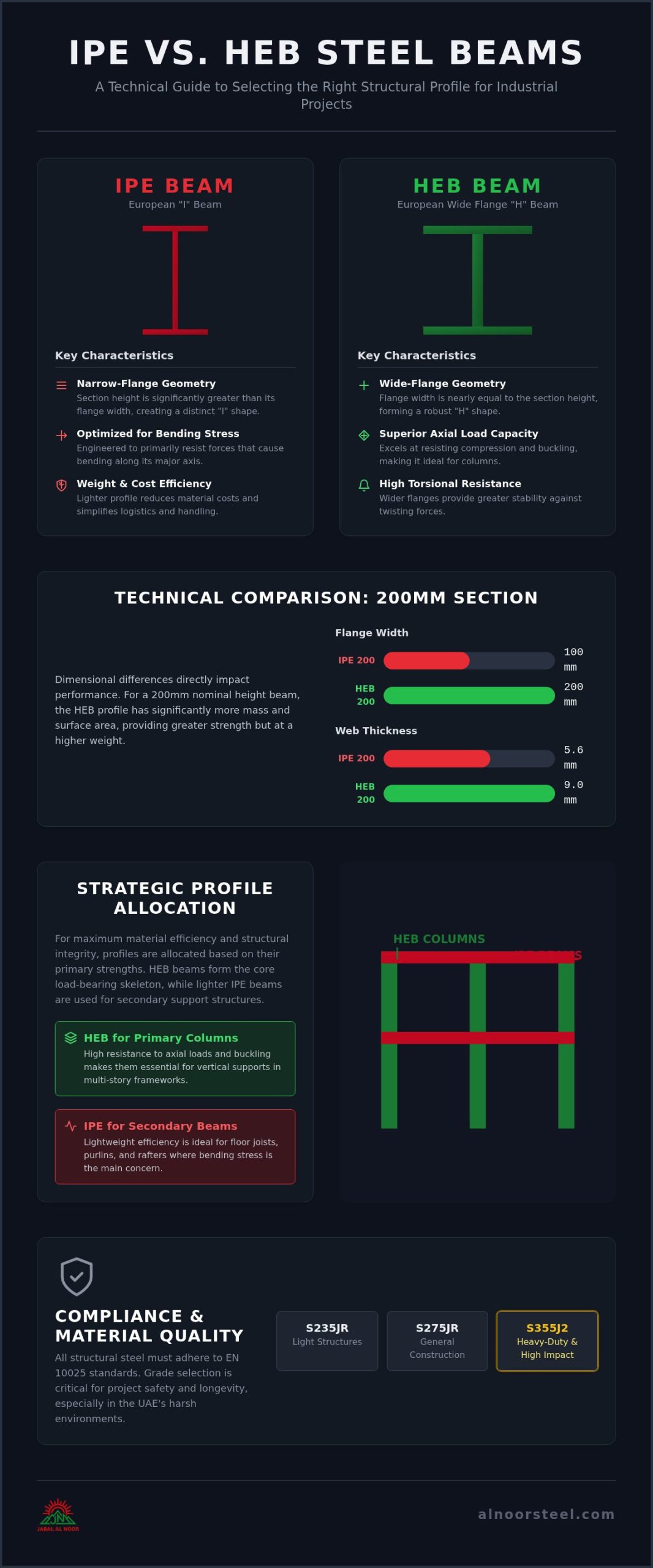
Structural integrity in heavy industry relies on the precise selection of profiles that can withstand immense stress. IPE beams, commonly known as European I-beams, feature a narrow-flange design where the height of the section significantly exceeds the width of the flanges. These are engineered primarily for applications where bending occurs about the major axis. In contrast, HEB beams, or European Wide Flange Beams, are categorized as heavy-duty H-sections. Their geometry is more equilateral; the flange width is often nearly equal to the total height, providing superior resistance to axial loads and buckling.

These profiles aren’t manufactured in a vacuum. The European I-beam standards, specifically EN 10365, govern the precise dimensions and tolerances for IPE and HEB beams. Adhering to these standards ensures that structural engineers can calculate load distributions with absolute certainty when specifying these components for complex assemblies. Within the UAE’s industrial sector, these profiles form the backbone of modern infrastructure, from oil and gas refineries to massive logistics hubs in Jebel Ali.

Anatomy of a Structural Beam: Flanges and Webs

The physical performance of a beam is dictated by its geometric distribution of material. The vertical center plate, known as the web, serves the critical function of resisting shear forces. In an IPE profile, the web is relatively thin, prioritizing weight efficiency. The horizontal components, or flanges, are responsible for resisting bending moments. While an IPE profile resembles a tall, slender “I,” an HEB profile looks like a robust “H.” This wider flange geometry in HEB sections allows for a much higher second moment of area, making them indispensable for columns that must support significant vertical weight without lateral deflection when comparing IPE and HEB beams for specific engineering applications.

Standard Specifications and EN 10025 Compliance

In the UAE, material compliance isn’t optional; it’s a safety mandate. All structural sections must meet EN 10025 standards, which define the technical delivery conditions for hot-rolled products. Engineers typically specify grades like S235JR for light structures, S275JR for general construction, and S355J2 for heavy-duty industrial applications requiring high impact toughness. Selecting the correct grade is as vital as choosing the right profile shape. For a deeper look at sourcing these materials locally, consult our structural steel supplier UAE 2026 procurement guide to ensure your project meets the latest safety regulations and operational benchmarks.

IPE vs. HEB: A Technical Comparison of Wide and Narrow Flange Profiles

Engineering precision dictates that IPE and HEB beams are not interchangeable, despite their shared classification as structural steel. IPE sections, which range from 80mm to 600mm in height, feature a narrow-flange profile that prioritizes weight efficiency. For example, an IPE 80 weighs approximately 6 kg/m, while an IPE 600 reaches 122 kg/m. In contrast, HEB sections provide much higher mass; an HEB 600 can exceed 212 kg/m. This disparity in weight-per-meter significantly impacts logistical planning, as specifying HEB beams often necessitates higher-capacity cranes and more robust transport solutions, increasing the initial procurement and handling costs.

Dimensional Differences and Weight Factors

The geometric variance between these profiles is most evident when comparing sections of the same nominal height. An IPE 200 beam has a web thickness of 5.6 mm and a flange width of 100 mm. An HEB 200, however, features a 9 mm web and a 200 mm flange width. This broader flange surface on HEB beams is critical for multi-bolt connections in heavy industrial joints, providing a more stable and wider interface for secondary framing or bracing. While IPE beams are more space-efficient for floor joists where vertical clearance is a priority, HEB sections provide the necessary web thickness to prevent buckling under extreme vertical loads.

Structural Performance Under Stress

Selecting the correct profile requires an evaluation of its Load-Bearing Capacities under specific environmental stressors. IPE beams are the optimal choice for bending stress in one plane, making them excellent candidates for roof rafters and secondary structural frameworks where the load is primarily vertical. HEB beams are the superior choice for axial compression and columns. Their H-shape geometry provides exceptional torsional resistance, allowing them to withstand twisting forces that occur during high-wind events or seismic activity. For a comprehensive look at how these shapes integrate into larger assemblies, engineers should refer to our technical guide on universal beams and columns UAE.

A strategic cost-benefit analysis often leads to a hybrid design. Using lighter IPE sections for purlins and rafters reduces the total tonnage of the project without sacrificing safety, while HEB beams provide the foundational stability required for primary columns. When your project demands high-precision materials that meet strict EN standards, you should consult a reliable supplier to ensure your inventory matches your specific design requirements.

Load-Bearing Capacities and Structural Applications in 2026 Projects

In 2026, structural engineering in the UAE focuses on systemic efficiency and material optimization. The strategic deployment of IPE and HEB beams allows for the construction of expansive industrial halls that maintain high safety margins without unnecessary weight. HEB sections serve as the primary load-bearing pillars, providing the necessary cross-sectional area to support multi-story industrial mezzanine floors. These robust H-sections are often integrated with hot rolled steel channels to create rigid frames that resist both vertical compression and lateral displacement.

The trend toward Pre-Engineered Buildings (PEB) has solidified the use of standardized European profiles across the region. By utilizing IPE beams for purlins and rafters, engineers achieve significant weight reduction in roof structures. This reduction in the dead load of the upper framework allows for larger clear spans in warehouse environments. This systemic approach ensures that every gram of steel serves a calculated purpose, aligning with the 2026 focus on sustainable and cost-effective infrastructure. It’s a method that balances technical proficiency with logistical reality.

Industrial and Warehouse Construction

Heavy machinery platforms require the exceptional stiffness provided by HEB profiles. Their broad flanges offer a superior contact area for mounting vibrating equipment, which minimizes fatigue on the structural joints. For mezzanine supports, HEB beams act as the primary girders, while IPE sections are frequently used as secondary floor joists. This combination optimizes the floor depth while maintaining the required stiffness for industrial traffic. Long-span warehouse designs rely on this hierarchy to ensure stability under the specific environmental pressures of the UAE. Using IPE and HEB beams in tandem provides a reliable framework for large-scale logistics hubs.

Infrastructure and Heavy Engineering

Infrastructure projects, particularly bridge engineering and support trestles, demand the high-performance characteristics of wide-flange HEB beams. These sections provide the foundational strength needed for temporary support structures and permanent bridge girders. To achieve maximum structural rigidity, these beams are integrated with mild steel angle bars for cross-bracing and lateral reinforcement. Government-led projects in 2026 strictly enforce compliance with these configurations to ensure long-term durability in the region’s harsh climate. This rigorous adherence to standards protects the investment and ensures the safety of public infrastructure over its entire lifecycle.

IPE and HEB Beams: A 2026 Engineering Guide to Comparison and Selection

Material Grades and Surface Treatments for UAE Industrial Environments

The structural integrity of IPE and HEB beams is only as permanent as the protection applied to their surfaces. In the UAE, coastal proximity and high relative humidity accelerate oxidation, which can lead to pitting and structural failure if left unaddressed. JABAL AL NOOR Steel addresses these challenges through a methodical approach to surface preparation and coating. By providing high-grade materials combined with advanced value-added services, we ensure that structural components survive the rigorous demands of heavy industry and the aggressive saline atmosphere common in the region’s industrial zones.

Selecting the correct material grade is the first step in ensuring a project’s long-term viability. While standard construction might utilize lower grades, high-stakes infrastructure requires the enhanced mechanical properties of S355J2 steel. This grade offers superior yield strength and impact toughness, making it the preferred choice for heavy-load sections in oil and gas refineries and large-scale manufacturing plants. Ensuring your supply chain provides verified Mill Test Certificates (MTC) is essential for maintaining compliance with the 2026 Dubai Building Quality and Safety Law.

Corrosion Resistance and Longevity

Surface preparation is the foundation of effective corrosion control. Shot blasting is the industry-standard process used to remove mill scale, rust, and contaminants from the steel surface before any coating is applied. This creates a clean, profiled surface that ensures maximum adhesion for protective layers. For most structural applications, applying a red-oxide or zinc-rich primer immediately after shot blasting provides a robust barrier against moisture. In environments with extreme saline exposure, such as offshore terminals or coastal warehouses, hot-dip galvanization is often specified to extend the life cycle of IPE and HEB beams by decades.

Selecting the Right Steel Grade

Engineering specifications usually dictate the choice between S235JR, S275JR, and S355J2. S235JR is suitable for secondary structural frameworks where loads are minimal. However, for primary columns and heavy-duty mezzanine supports, S355J2 is the standard for 2026 engineering projects. This grade provides the necessary chemical composition and mechanical resistance to withstand axial compression and bending moments without excessive material thickness. Verifying the authenticity of these grades through rigorous testing and documentation is a non-negotiable aspect of modern procurement. To secure high-performance materials for your next project, you can browse our inventory of treated structural steel to ensure your site requirements are met with precision.

Strategic Sourcing: Procuring Quality IPE and HEB Beams in the UAE

Sourcing structural steel in the UAE requires a partner that understands the logistical complexities of large-scale infrastructure. While some focus solely on the per-tonne price, seasoned project managers know that the true value lies in the supplier’s inventory depth and their ability to provide pre-processed materials. Procurement of IPE and HEB beams is a strategic decision that affects the entire fabrication lifecycle. A reliable supplier ensures that every section meets EN 10025 standards while managing the bulk logistics necessary to keep a project on schedule. This level of oversight is essential for maintaining the rigorous safety benchmarks required by the 2026 Dubai Building Quality and Safety Law.

Value-Added Processing Services

On-site fabrication often leads to significant material waste and increased labor costs. By utilizing precision cut-to-size customization, contractors receive beams that are ready for immediate assembly. This pre-processing reduces the need for heavy cutting equipment at the project site and ensures that dimensional tolerances are strictly maintained according to engineering specifications. Integrating surface treatments like shot blasting and priming directly into the supply chain further streamlines operations. It’s an interconnected approach that allows for a faster transition from procurement to installation, which is critical for meeting the tight deadlines of modern industrial contracts. Reducing on-site waste isn’t just an environmental goal; it’s a logistical necessity for operational efficiency.

Inventory and National Delivery

Maintaining a comprehensive range of structural sections is essential for supporting the diverse needs of the UAE’s construction sector. From small-scale rafters to massive primary columns, having immediate access to a variety of sizes from stock prevents costly project delays. JABAL AL NOOR Steel provides a robust logistical network that ensures timely delivery across all emirates, supporting infrastructure development from Abu Dhabi to Fujairah. Our commitment to operational excellence means that every order is handled with the precision required for high-stakes energy and infrastructure projects. You can browse our full catalog and explore our diverse range of long products at the JABAL AL NOOR Steel Shop to find the exact specifications for your next build.

Choosing a veteran partner like JABAL AL NOOR Steel provides the industrial stability needed for long-term success. We don’t just supply steel; we provide a foundation of trust and technical proficiency. Our role as a steady pillar in the local landscape allows us to offer transparent and reliable bulk supply solutions that prioritize precision and long-term value for our collaborators. By combining extensive inventory with specialized customization, we help our partners navigate the complexities of modern structural engineering with unwavering confidence. This measured pace of service ensures that every project, regardless of scale, receives the professional curation it deserves.

Optimizing Structural Integrity for 2026 and Beyond

Structural excellence in the UAE’s heavy industry depends on the precise alignment of profile geometry with specific mechanical requirements. You’ve seen how the technical distinctions between IPE and HEB beams allow for a hybrid design approach that balances weight reduction with foundational stability. By integrating high-performance steel grades with advanced surface treatments, engineers can ensure long-term durability against the region’s aggressive environmental stressors. This methodical approach to material selection defines the next generation of industrial infrastructure.

JABAL AL NOOR Steel supports these high-stakes requirements with national UAE delivery for all heavy structural sections. Our operations prioritize EN compliance and red-dot quality standards to provide the industrial stability your projects demand. With specialized in-house cut-to-size and surface treatment services, we help you minimize site waste and accelerate your fabrication timelines. We’re ready to serve as the dependable partner your next structural milestone deserves. We look forward to helping you build a more resilient and efficient future for your industrial operations.

Request a Quote for IPE and HEB Beams

Frequently Asked Questions

What is the main difference between IPE and HEB beams?

The primary distinction lies in the flange-to-height ratio and material distribution. IPE profiles feature narrow flanges and are designed primarily for bending resistance about the major axis. HEB profiles have wider flanges that offer superior stability against axial compression and buckling. This makes HEB sections significantly heavier than IPE sections of the same nominal height, which influences both structural capacity and logistical planning for industrial builds.

Which beam is better for columns: IPE or HEB?

HEB beams are the preferred choice for vertical columns due to their wide-flange geometry. This design provides a larger second moment of area and enhanced torsional resistance, which are critical for preventing lateral-torsional buckling under heavy axial loads. While IPE beams are efficient for rafters and purlins where bending is the primary concern, they don’t offer the same load-bearing stability required for primary structural pillars.

Are IPE and HEB beams compatible with ASTM standards?

IPE and HEB are manufactured according to European (EN) standards, though they can often be cross-referenced with American ASTM A6 standards for specific project requirements. While dimensions differ from US wide-flange shapes, engineers frequently use equivalence tables to ensure structural compliance. It’s essential to verify that any substitution meets the specific yield strength and impact toughness requirements defined in the original design specifications.

Can IPE and HEB beams be customized to specific lengths?

Yes, both IPE and HEB beams can be customized through precision cut-to-size services to meet exact project dimensions. Utilizing pre-processed beams at the procurement stage reduces on-site labor costs and minimizes material waste. This logistical advantage is particularly valuable for large-scale infrastructure projects where precision and speed are essential for maintaining strict construction timelines across the UAE’s industrial zones.

What steel grades are most common for IPE beams in the UAE?

The most common material grades for structural sections in the UAE are S275JR and S355J2, in accordance with the EN 10025 standard. S355J2 is particularly favored for heavy industry and energy projects because it offers high yield strength and superior impact toughness. These grades ensure that structural components can withstand the mechanical stressors and environmental conditions typical of the region’s large-scale manufacturing and refinery sectors.

How does the price of HEB compare to IPE beams?

HEB beams typically command a higher price per linear meter compared to IPE beams of the same height because they possess significantly more mass. Since structural steel is often traded by weight, the heavier flanges and thicker webs of the HEB profile result in a higher total tonnage for the same length of material. Procurement managers should account for this weight difference when calculating total project costs and logistical requirements.

What surface treatments are recommended for structural steel beams?

Recommended surface treatments include shot blasting to remove mill scale, followed by the application of red-oxide or zinc-rich primers. For outdoor or coastal installations in the UAE, hot-dip galvanization is the standard for long-term corrosion resistance. These treatments protect the steel from saline air and high humidity, significantly extending the life cycle of the structural framework and reducing long-term maintenance costs for the facility.

Is EN 10025 the standard for IPE and HEB profiles?

EN 10025 is the technical delivery standard that governs the material grades and mechanical properties of IPE and HEB beams. The dimensional tolerances and profile shapes themselves are specifically defined by the EN 10365 standard. Adherence to both standards ensures that the steel sections meet the rigorous quality benchmarks required for industrial stability and safety in heavy-duty construction projects across the region.