Tag: UAE Construction

Hot Rolled Steel Channels: A Comprehensive Guide to Structural Applications

Hot Rolled Steel Channels: A Comprehensive Guide to Structural Applications

In a market where structural steel lead times can now extend beyond 20 weeks, the success of your next UAE infrastructure project depends less on the blueprint and more on the precision of your procurement strategy. You’re likely aware that selecting an incompatible material grade or facing a sudden logistical delay isn’t just a minor setback. These issues represent a genuine risk to structural integrity and project timelines that can cost thousands in AED and compromise your professional reputation.

This guide will empower you to master the technical specifications, material grades, and industrial applications of hot rolled steel channels to ensure your project meets the highest global standards. We’ll examine the critical differences between S235JR and S355JR grades, discuss dimensional tolerances under the BS EN 10025-2:2019 standard, and explore how specialized customization can mitigate common logistical bottlenecks in the local market. By the end of this article, you’ll have the technical clarity needed to secure a reliable supply chain and maintain the rigorous quality benchmarks your collaborators expect.

Key Takeaways

  • Understand the fundamental hot rolling process and how it ensures the structural stability required for large-scale industrial frameworks.
  • Learn to interpret critical dimensional notations and weight calculations for hot rolled steel channels to maintain engineering precision and logistical efficiency.
  • Identify the core differences between S235JR, S355JR, and ASTM A36 grades to ensure full compliance with UAE and international structural standards.
  • Explore the diverse applications of structural channels in pre-engineered buildings and bridge infrastructure to optimize strength-to-weight ratios.
  • Discover how specialized cut-to-size customization and surface treatments can mitigate on-site delays and protect against corrosion in high-humidity environments.

Understanding Hot Rolled Steel Channels in Structural Engineering

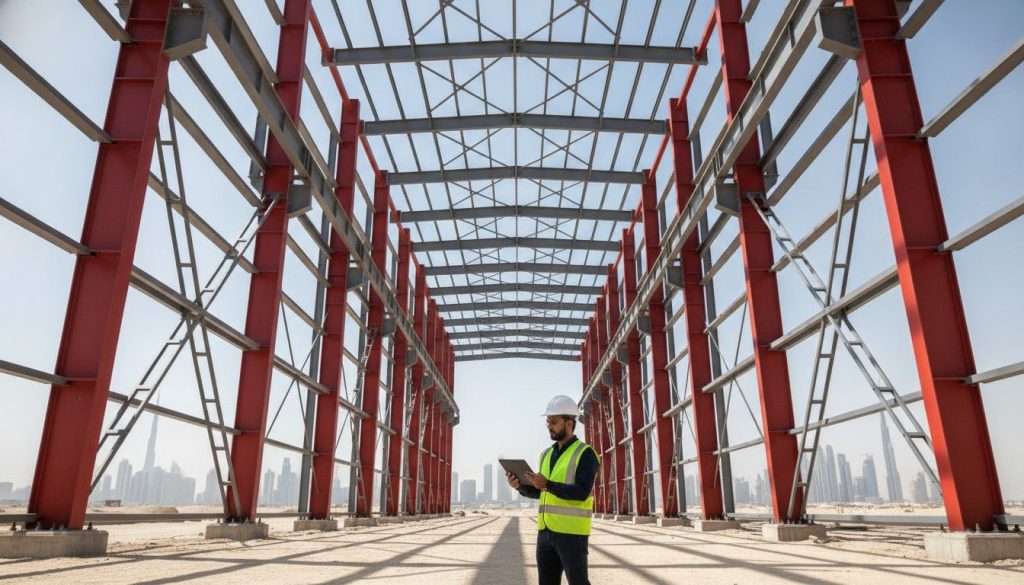
Hot rolled steel channels represent a foundational element in the UAE’s heavy construction sector. These sections are defined by a vertical web and two horizontal flanges that form a distinct U or C shape. Engineers often refer to them by various industry names including MS Channels, C-Channels, or Parallel Flange Channels (PFC). In specialized contexts, you might also encounter UPE sections. Each variant serves as a critical skeletal component, providing the necessary support for everything from industrial warehouses to complex bridge frameworks across the Emirates. Their structural versatility is matched by an excellent weldability that allows for rapid, secure assembly in demanding environments.

The production of these components involves passing steel through rollers at temperatures exceeding 1,100°C. This temperature is significantly above the material’s recrystallization point, which allows for large-scale shaping without the introduction of excessive internal stress. This high-heat environment ensures that hot rolled steel channels maintain a high strength-to-weight ratio while remaining easy to manipulate during on-site fabrication. The result is a product that offers industrial stability and the endurance required for long-term infrastructure projects.

The Mechanics of the Hot Rolling Process

Processing steel at such extreme temperatures fundamentally alters its internal grain structure. By heating the metal above its recrystallization threshold, manufacturers can eliminate the internal stresses that often plague cold-formed alternatives. This makes the steel more predictable under heavy loads. The cooling process naturally results in a characteristic blue-grey mill scale on the surface. While this scale is a hallmark of the hot rolling process, it also provides a base layer that can be treated or primed for enhanced durability. Because the material is processed in a malleable state, the final product is generally easier to machine and drill compared to cold-worked sections, which saves significant time during the installation phase.

Anatomy of a Steel Channel: Web vs. Flange

The structural efficiency of a structural channel lies in its specific geometry. The ‘Web’ acts as the vertical backbone, resisting shear forces, while the ‘Flanges’ extend horizontally to provide resistance against bending moments. This configuration allows for superior performance under axial loads. Engineers must choose between tapered flanges, which are thicker at the web and thin out toward the edges, and parallel flanges. Parallel flange channels (PFC) offer more uniform thickness, making them easier to bolt and join to other flat surfaces. This choice directly impacts the connection design and the overall stability of the framework, especially in large-scale national infrastructure where precision is non-negotiable.

Technical Specifications: Dimensions, Profiles, and Material Properties

Precision in measurement is the cornerstone of structural safety and operational excellence. When you’re reviewing a specification sheet for hot rolled steel channels, you’ll encounter three primary notations: height (h), flange width (b), and web thickness (t). These dimensions aren’t merely geometric descriptions; they define the section’s ability to resist specific stresses. For instance, the height directly influences the moment of inertia, which determines how much the beam will deflect under a vertical load. Adhering to international tolerance standards, such as EN 10279, ensures that every piece in a bulk order aligns perfectly on-site, preventing the costly rework often caused by non-compliant materials.

Calculating the weight per metre is equally vital for the success of large-scale infrastructure. It’s not just a matter of transport logistics; it’s about the dead load calculations that dictate the stability of a bridge or warehouse. Mechanical properties, including tensile strength and yield point, define the limits of the steel’s endurance. According to technical resources from the American Institute of Steel Construction (AISC), these properties must be verified through rigorous testing to ensure the material won’t fail under peak stress. Most structural applications in the UAE also require a specific elongation percentage to accommodate the thermal expansion caused by the region’s extreme heat.

Standard vs. Parallel Flange Channels (PFC)

The choice between Parallel Flange Channels (PFC) and standard tapered sections often comes down to the complexity of the joint connections. PFCs feature flanges with a uniform thickness, which simplifies bolting and creates cleaner, more stable connections. In contrast, standard tapered channels (UPN) have flanges that thin out toward the edges. While tapered sections remain common in traditional industrial frameworks, modern UAE projects increasingly favor PFC or UPE profiles for their superior assembly efficiency. If you’re planning a project that requires high-precision assembly, reviewing our inventory of MS channels can help you identify the right profile for your specific load requirements.

Machinability and Fabrication Characteristics

Hot rolled sections are prized for their exceptional weldability. The low carbon content in standard structural grades prevents the steel from becoming brittle after cooling, which is essential for maintaining the integrity of welded joints in heavy machinery or building skeletons. During fabrication, cutting and drilling must be performed with precision to avoid introducing micro-cracks that could compromise the section. While mild steel offers the ductility needed for bending and forming, it’s vital to stay within the material’s elastic limit to ensure the final framework remains a dependable foundational pillar for the intended structure.

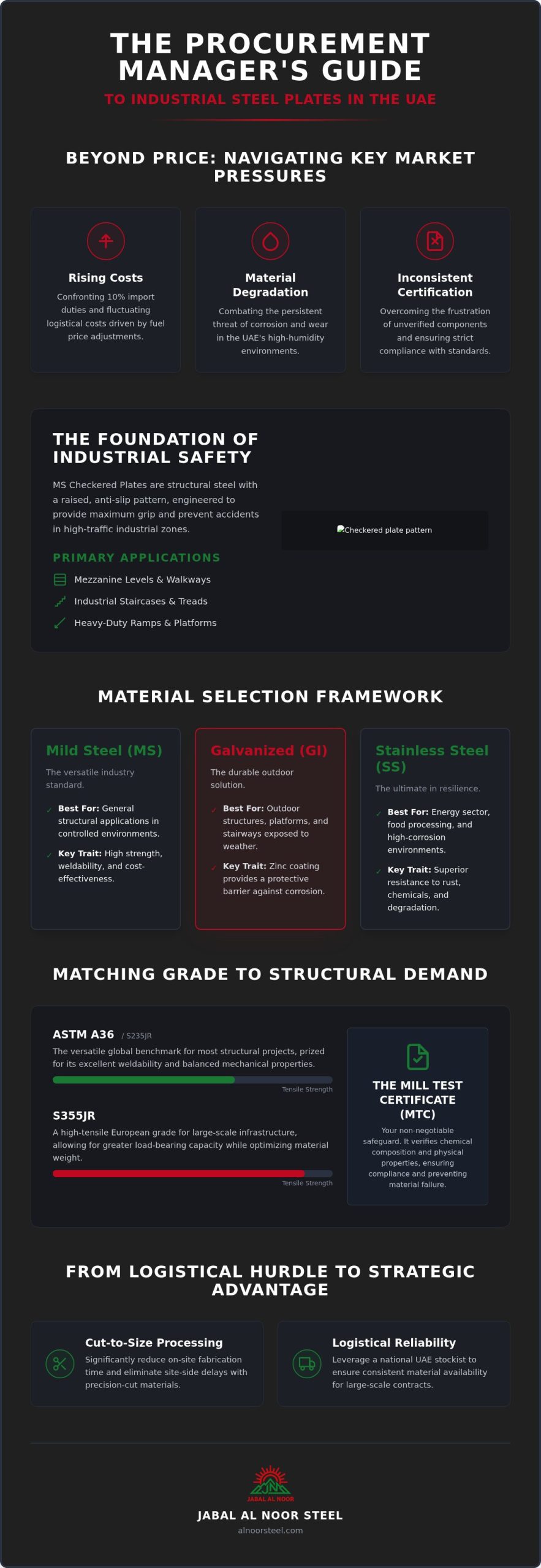
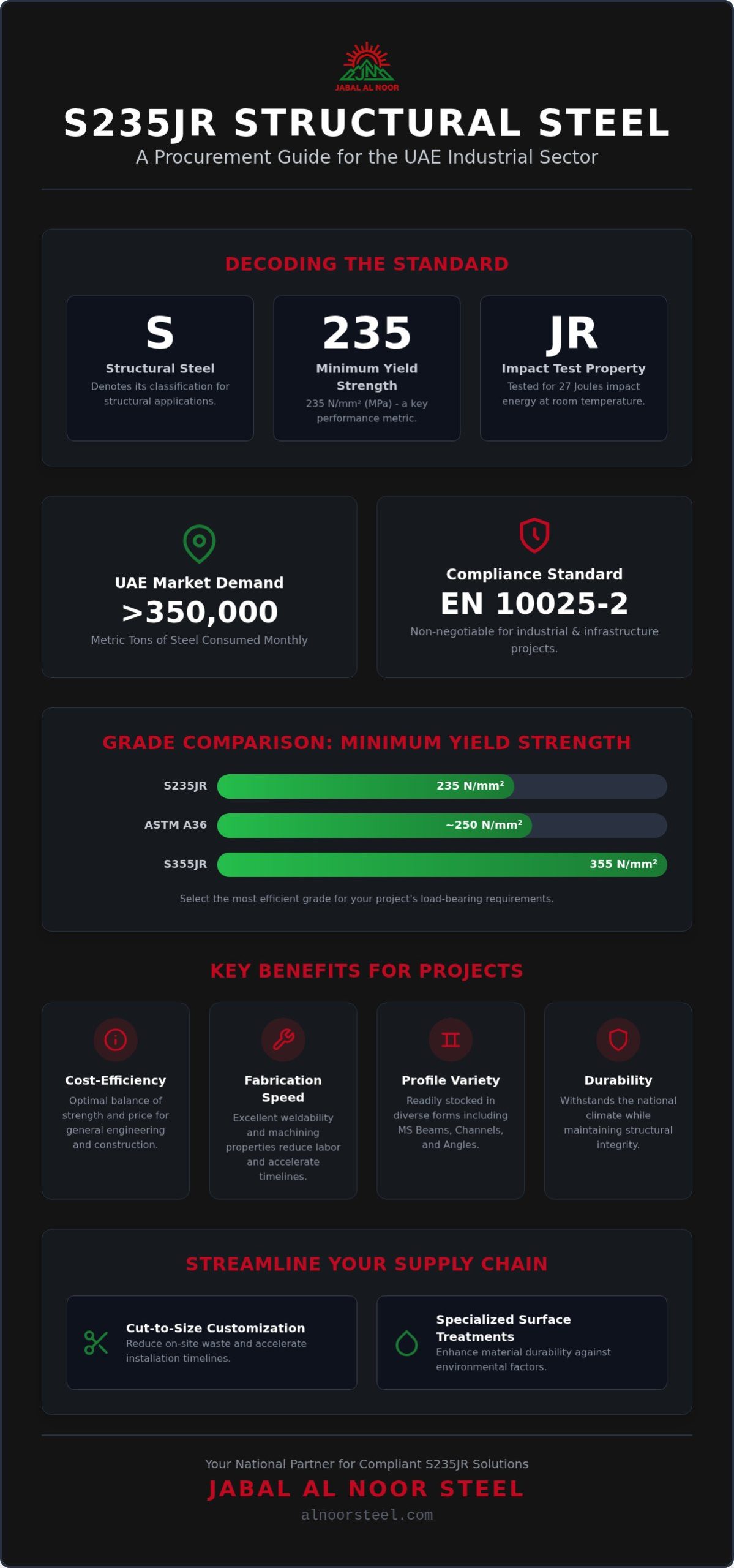
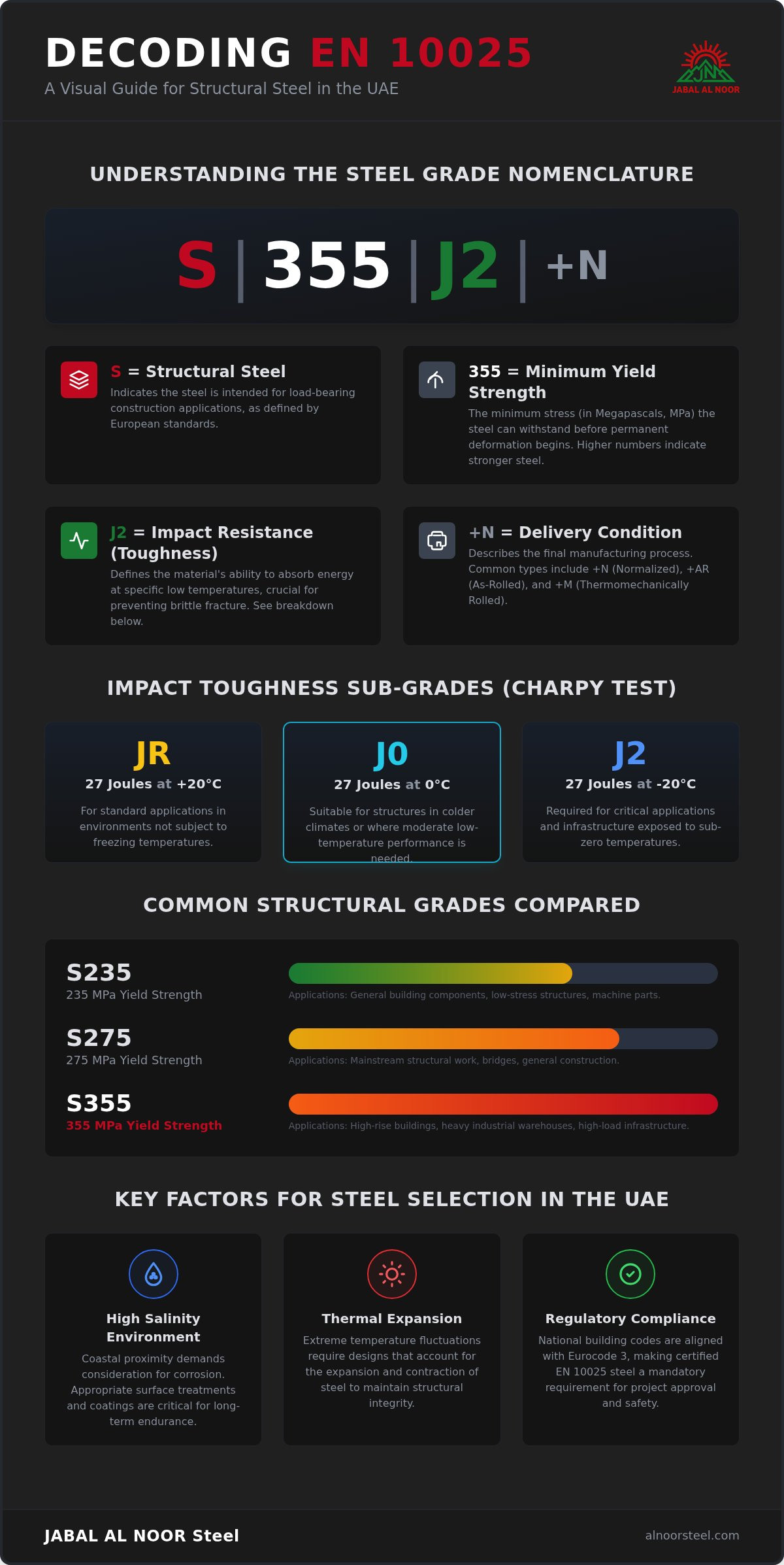
The selection of a specific steel grade is a decision that dictates the safety and longevity of any industrial framework. While the previous section detailed physical dimensions, the chemical composition and yield strength of hot rolled steel channels are what truly define their performance under pressure. In the United Arab Emirates, the industry primarily adheres to the BS EN 10025-2:2019 standard, where S235JR and S355JR are the dominant specifications. These grades ensure that the material possesses the predictable mechanical properties required for national infrastructure and energy projects.

Yield strength is the critical differentiator here. S235JR offers a minimum yield strength of 235 MPa, making it suitable for secondary supports and general framing. When projects involve heavy machinery or primary load-bearing structures, engineers often upgrade to S355JR. This grade provides a significantly higher yield point of 355 MPa, allowing for lighter sections to carry heavier loads without compromising safety. For a deeper understanding of how these grades fit into the broader context of construction, resources like Structural Steel 101 provide an excellent foundation for material selection and application.

Selecting the Right Grade for Your Project

Choosing between S235JR and S355JR depends entirely on the structural demand of your specific site. S235JR remains the standard for general support structures and secondary members where extreme load-bearing isn’t the primary concern. In contrast, S355JR is the preferred choice for large-span warehouses and primary frameworks that must endure significant stress. While ASTM A36 is frequently cited as the American equivalent for general-purpose structural steel, it has a different yield strength (approx. 250 MPa) and chemical composition compared to S235JR. Understanding these subtle variations ensures that your procurement aligns with the engineering requirements of the project.

Compliance and Quality Benchmarks

Maintaining high standards of operational excellence requires a rigorous approach to material certification. Every batch of steel should be accompanied by a Mill Test Certificate (MTC), which provides a transparent record of the material’s chemical and physical properties. This traceability is vital for contractor compliance and ensures that the hot rolled steel channels delivered to the site match the exact specifications outlined in the design phase. While EN and ASTM standards are common, certain sectors in the region also utilize JIS (Japanese Industrial Standards) for specific engineering applications. This global alignment ensures that regardless of the source, the structural integrity of the project remains uncompromised.

Hot Rolled Steel Channels: A Comprehensive Guide to Structural Applications

Industrial Applications: From Infrastructure to Heavy Machinery

The versatility of hot rolled steel channels makes them indispensable across the UAE’s most demanding industrial sectors. While their technical grades were discussed in the previous section, their real-world utility is best seen in the skeletal frameworks of the region’s massive infrastructure. From expansive industrial warehouses to robust offshore platforms, these sections provide the essential rigidity required for high-stakes operations. They aren’t just components; they’re the foundational pillars that allow modern engineering to scale safely and efficiently.

In the Oil & Gas sector, channels are the standard for constructing pipe racks, equipment skids, and offshore platform supports. These structures must withstand both heavy static loads and the corrosive effects of saline environments. Similarly, in transport and logistics, manufacturers rely on these sections to build durable trailers, truck beds, and shipping containers that can endure the rigors of regional trade routes. The transport sector’s reliance on these sections stems from their ability to provide high strength without adding excessive weight to the vehicle’s chassis.

Structural Frameworks and PEB Construction

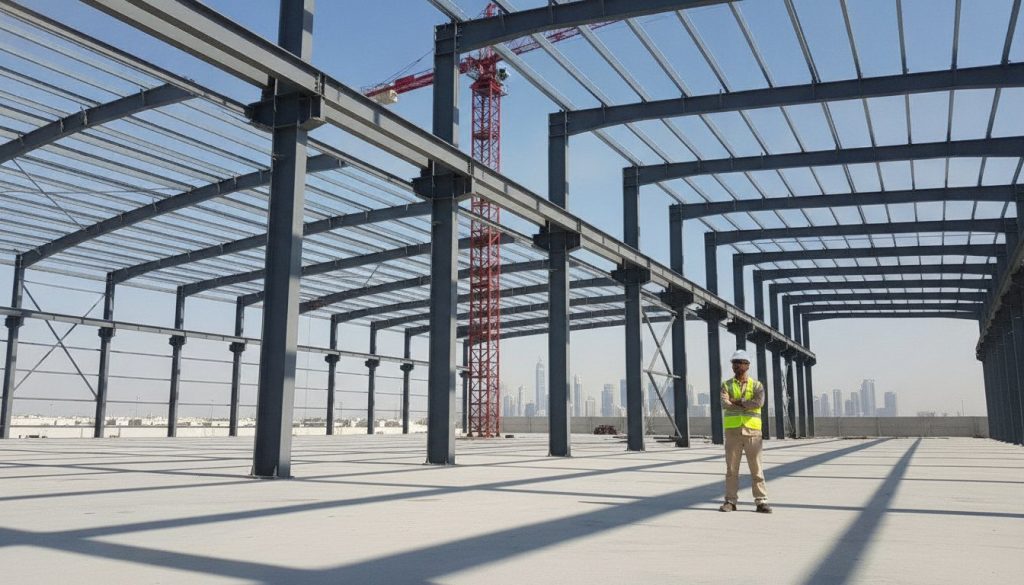
Pre-Engineered Buildings (PEB) rely heavily on channels for secondary structural members. They serve as purlins, girts, and door frames, providing the necessary support for wall and roof panels. By using hot rolled steel channels for cross-bracing and edge support, engineers can optimize material usage in large-span warehouses. This efficiency doesn’t just save on costs; it streamlines the entire assembly process. When integrated with MS beams and angles, these channels create a complete structural system that is both cost-effective and resilient against the UAE’s harsh environmental conditions.

Heavy Machinery and Industrial Equipment

Beyond buildings, these sections form the robust base frames for generators, compressors, and heavy industrial units. Their geometry is ideal for material handling systems, specifically as conveyor supports and racking frameworks in automated distribution centers. In the marine engineering sector, channels are frequently utilized in ship repair and barge construction, where structural stability under dynamic water pressure is paramount. If you’re managing a large-scale infrastructure project, you can view our full range of structural steel channels to find the exact specifications for your framework.

Infrastructure projects like bridges and pedestrian walkways also utilize these sections as secondary support beams. They provide the necessary lateral stability for walkways and staircases in industrial plants. Because they’re easy to weld and bolt, they’re often the first choice for on-site modifications where time and precision are equally critical.

Procurement and Customization: Sourcing Quality Structural Channels

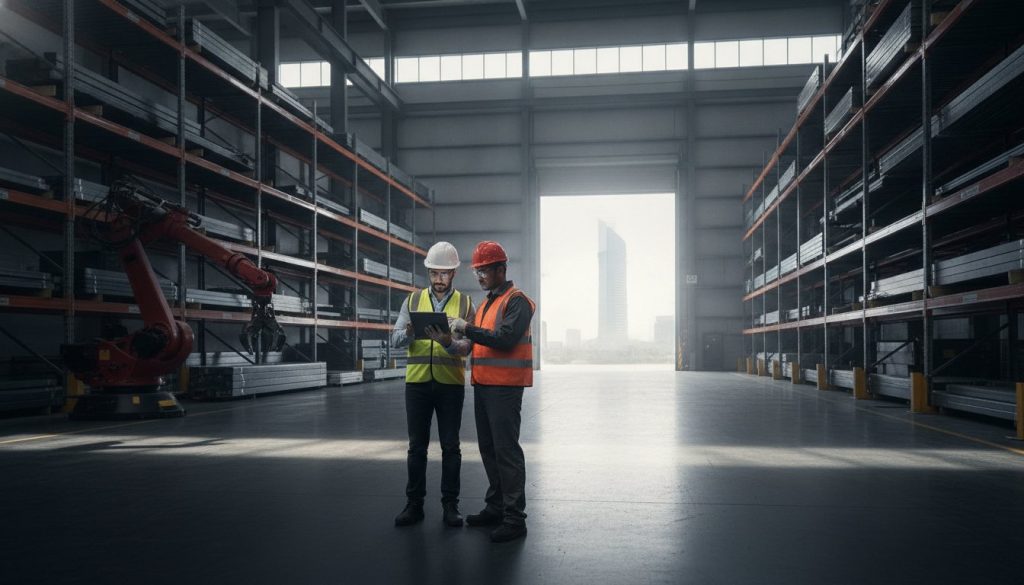
Securing a reliable supply of hot rolled steel channels in the United Arab Emirates requires a strategic approach that goes beyond simple price comparisons. For national contractors managing high-stakes infrastructure, the priority is the immediate availability of specific grades like S355JR and S235JR in standard 6m or 12m lengths. A partner who maintains a deep, localized inventory ensures that project timelines aren’t compromised by the global supply chain fluctuations or the 20-week lead times currently affecting the international structural steel market. This logistical stability is the bedrock of industrial confidence in the region.

The efficiency of on-site operations depends heavily on the supplier’s processing capabilities. Sourcing raw sections is only the first step. To maintain a methodical pace in construction, contractors increasingly rely on value-added services that prepare the steel for immediate installation. This reduces the need for complex fabrication setups on-site, which can be difficult to manage in the restricted spaces of urban development or remote energy sites. It’s about securing a transparent and reliable entity that prioritizes precision and long-term value for its collaborators.

Advanced Processing: Cut-to-Size and Finishing

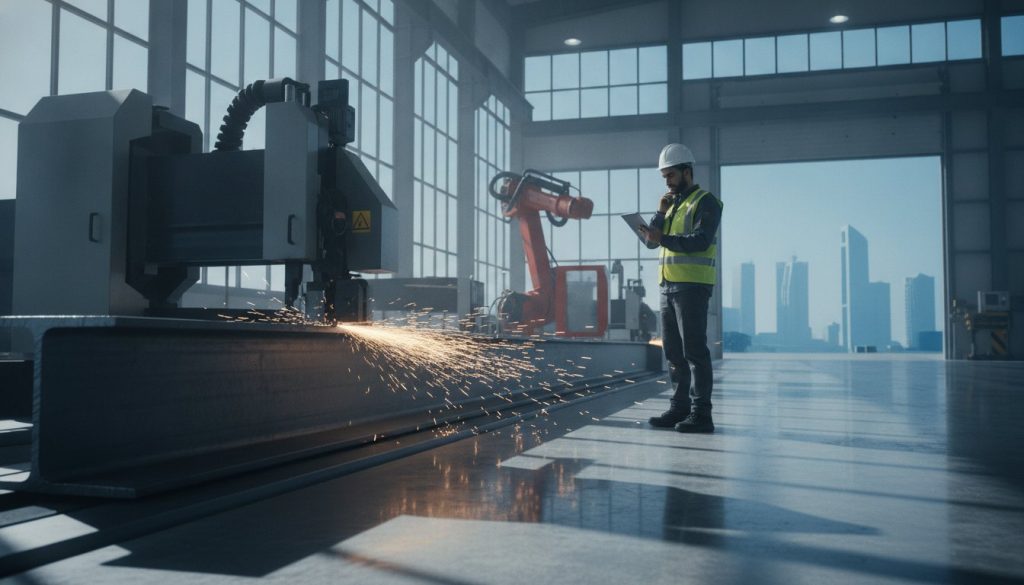
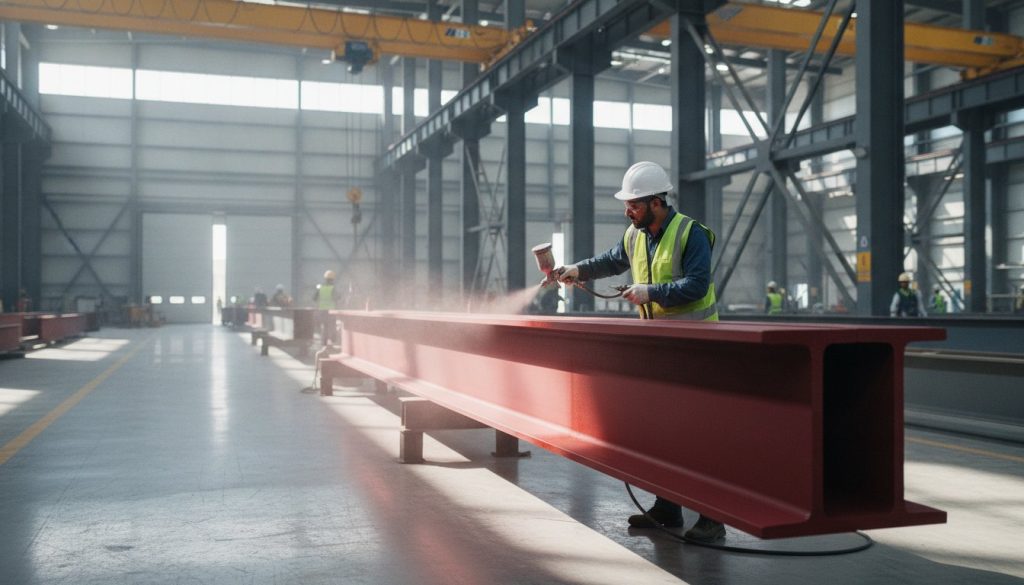
Implementing specialized cut-to-size services is a critical factor in reducing on-site waste and improving overall logistics. By receiving hot rolled steel channels cut to exact engineering specifications, fabrication teams can eliminate the time-consuming process of manual measuring and trimming. This precision is complemented by essential surface treatments. Shot blasting is used to remove the typical blue-grey mill scale, creating a clean surface that’s ready for further treatment. In the high-humidity environments of the UAE, applying priming and protective coatings is a non-negotiable step to prevent corrosion and ensure the endurance of the structural framework.

Strategic Sourcing for National Contractors

Evaluating a supplier’s capacity for bulk structural steel requirements is vital for maintaining the momentum of large-scale industrial contracts. A national stockist must demonstrate not just a high volume of inventory, but also the logistical proficiency to deliver materials across the Emirates with unwavering consistency. This includes providing Mill Test Certificates (MTC) for every batch to ensure full traceability from the mill to the construction site. These quality benchmarks reassure clients of the brand’s capability and regional expertise. To secure the backbone of your next project, you can Explore JABAL AL NOOR Steel’s range of hot rolled channels and processing services to ensure your procurement aligns with the highest standards of operational excellence.

Securing Structural Excellence for the UAE’s Industrial Future

The complexity of modern engineering demands a material partner that understands the high-stakes requirements of national infrastructure. You’ve seen how precise grade selection and strict adherence to BS EN 10025-2:2019 standards are essential for the structural integrity of your framework. By prioritizing hot rolled steel channels that are prepared through shot blasting and priming, you ensure your project withstands the unique environmental pressures of the Emirates while maintaining a methodical pace of construction.

Success in large-scale industrial projects is built on a foundation of logistical reliability and technical proficiency. We maintain an extensive national inventory to ensure your operations remain on schedule despite global supply chain fluctuations. Our commitment to operational excellence includes full technical compliance with EN and ASTM standards, supported by advanced cut-to-size and surface treatment capabilities. This approach provides the industrial stability and unwavering confidence your collaborators expect from a seasoned veteran of the steel sector.

Request a Quote for Structural Steel Channels to secure a dependable partner for your next infrastructure milestone. We look forward to supporting your vision with precision and long-term value.

Frequently Asked Questions

What is the difference between a C-channel and a U-channel?

The primary difference lies in the flange geometry, with C-channels (Parallel Flange Channels) featuring parallel internal surfaces and U-channels (UPN) possessing tapered flanges. C-channels are often preferred for modern structural frameworks because their uniform thickness simplifies bolting and connection designs. U-channels are more traditional and are frequently found in older industrial designs or specific machine frames where the flange taper doesn’t interfere with the assembly process.

Which steel grade is better for structural use: S235JR or S355JR?

S355JR is the superior choice for primary structural applications due to its higher yield strength of 355 MPa compared to the 235 MPa offered by S235JR. While S235JR is sufficient for secondary members and light framing, S355JR allows for the construction of lighter yet stronger frameworks. This makes it the standard for large-span warehouses and heavy infrastructure projects across the UAE where load-bearing capacity is the priority.

Can hot rolled steel channels be used for outdoor applications without treatment?

Hot rolled steel channels shouldn’t be used outdoors without protective treatment because the raw mill scale offers no long-term resistance to corrosion. In the humid coastal environments of the UAE, untreated steel will rapidly develop rust, compromising its structural integrity over time. We recommend a combination of shot blasting and priming or galvanization to ensure the material maintains its endurance and safety benchmarks in exposed industrial settings.

What are the standard lengths available for hot rolled channels?

Standard lengths for hot rolled steel channels in the national market are typically 6 metres or 12 metres. These lengths allow for efficient transport and minimize the number of joints required in large-scale frameworks. For projects with specific engineering requirements, we provide cut-to-size customization to reduce on-site fabrication time and eliminate material waste, ensuring your logistics remain streamlined and cost-effective throughout the project lifecycle.

How do I calculate the weight of a hot rolled steel channel?

You can calculate the weight by multiplying the cross-sectional area of the profile by the length and the density of steel, which is approximately 7,850 kg/m³. However, most engineers prefer using standardized weight tables that provide the mass per metre (kg/m) for specific profile sizes. Precise weight calculations are essential for accurate dead load assessments and for planning the logistics of bulk transport to your construction site.

Is ASTM A36 equivalent to S235JR?

ASTM A36 and S235JR are comparable in application but aren’t strictly identical in their mechanical properties or chemical composition. ASTM A36 typically has a slightly higher yield strength of approximately 250 MPa, whereas S235JR is rated at 235 MPa. While they’re often used for similar general-purpose structural work, you must verify the specific project requirements to ensure full compliance with the engineering standards mandated for your site.

What surface treatments are recommended for steel channels in high-corrosion areas?

For high-corrosion environments like offshore platforms or coastal facilities, we recommend shot blasting followed by high-performance priming or hot-dip galvanizing. Shot blasting is critical for removing contaminants and mill scale to ensure superior coating adhesion. These treatments provide a robust barrier against the saline air and high humidity common in the region, protecting the steel from premature degradation and maintaining long-term structural stability.

Do you provide Mill Test Certificates (MTC) for structural channels?

We provide Mill Test Certificates (MTC) for all structural sections to ensure complete transparency and traceability for our clients. These documents verify that the hot rolled steel channels meet the chemical and mechanical specifications required by international standards like EN 10025. Providing this documentation is a core part of our commitment to operational excellence and helps contractors maintain full compliance with local regulatory authorities and safety benchmarks.

Universal Beams and Columns UAE: A Guide to Structural Steel Sections

Universal Beams and Columns UAE: A Guide to Structural Steel Sections

With the introduction of Dubai Law No. (3) of 2026, the margin for error in structural steel specification has effectively disappeared. Selecting the correct universal beams and columns UAE construction projects demand is no longer just a matter of procurement; it’s a critical decision for building safety and regulatory compliance. We understand that the pressure to balance load-bearing requirements with international standards like EN 10025 or ASTM can often lead to costly delays or material waste on site.

You’ll find that mastering the technical differences between Universal Beam (UB) and Universal Column (UC) profiles is the first step toward structural integrity. This guide details exactly how to specify the right steel grades, such as S235JR or A36, while ensuring your materials meet the high-stakes benchmarks of the local market. We’ll also examine how cut-to-size customization and surface treatments like shot blasting can streamline your project’s logistical efficiency. By the end of this article, you’ll have a clear framework for sourcing reliable structural sections that support the Emirates’ evolving industrial landscape.

Key Takeaways

  • Differentiate between UB and UC profiles to align structural geometry with specific load-bearing requirements for bending or axial compression.
  • Identify the critical differences between EN 10025 and ASTM grades to ensure your selection of universal beams and columns UAE meets regional compliance standards.
  • Learn how specialized surface treatments such as shot blasting and priming protect structural integrity against the unique environmental challenges of the Middle East.
  • Understand the logistical benefits of utilizing cut-to-size customization to minimize on-site waste and streamline the assembly of large-scale infrastructure projects.
  • Gain insights into sourcing strategies that prioritize technical proficiency and inventory availability for consistent project delivery across the Emirates.

Understanding Universal Beams and Columns in the UAE Market

The structural integrity of the UAE’s rapidly expanding skyline depends on the precise application of standardized steel sections. Universal Beams (UB) and Universal Columns (UC) represent the evolution of heavy structural profiles, offering a level of predictability that is essential for modern engineering. Unlike older, less standardized sections, these profiles are manufactured to strict tolerances. This ensures that every ton of steel delivered to any construction site across the UAE performs exactly as specified in the design phase. The “Universal” designation isn’t just a name; it’s a guarantee of standardized mechanical properties that engineers rely on to calculate load-bearing capacities with absolute certainty.

In the local market, terminology often varies between contractors and suppliers. You’ll frequently hear professionals refer to “I-beams,” “H-beams,” or “wide flange sections” when discussing universal beams and columns UAE projects. While these terms are often used interchangeably in casual conversation, they refer to specific geometric configurations that dictate how a building handles stress. Universal sections are foundational to the UAE’s heavy industrial frameworks, providing the skeletal strength required for everything from oil and gas refineries to massive commercial malls.

The Anatomy of a Steel Section

A universal section consists of two horizontal plates known as flanges, joined by a vertical component called the web. This geometric configuration is engineered to handle specific stresses. In a Universal Beam, the web is typically deeper than the flanges are wide, which provides high resistance to bending. For those Understanding Universal Beams, the relationship between the flange width and web height is the primary factor that determines the section’s mechanical capacity. Universal Columns, by contrast, feature a more square profile where the width is nearly equal to the depth. This allows them to support significant axial loads without buckling, making them ideal for vertical support members.

Why “Universal” Sections are Preferred over Standard Joists

Historically, tapered flange joists were the industry standard, but they presented significant challenges during the fabrication process. Universal sections feature parallel flanges, which simplify the connection of bolts and plates. This design choice significantly reduces the time required for on-site assembly and fabrication. These sections offer a superior strength-to-weight ratio compared to standard joists, allowing engineers to design larger spans with less total steel volume. This optimization directly impacts project overhead, making universal sections the standard choice for the UAE’s sophisticated infrastructure and industrial hubs where precision and logistical efficiency are paramount.

Structural Differences: Universal Beams vs. Universal Columns

While both profiles are essential to modern engineering, the geometric distinction between a Universal Beam (UB) and a Universal Column (UC) dictates their specific role within a structural frame. A Universal Beam is characterized by a depth that is significantly greater than its flange width. This vertical orientation concentrates the material’s mass away from the neutral axis, which provides maximum resistance to bending moments. In the context of universal beams and columns UAE suppliers provide, UBs are the standard choice for horizontal applications where the primary stress is a downward force across a span.

Universal Columns utilize a different geometric strategy. A UC profile features a width that is nearly equal to its depth, resulting in a square, “H-shaped” cross-section. This design increases the radius of gyration, which is a critical factor in preventing buckling under heavy vertical loads. Because the flanges are typically thicker than those of a comparable beam, the column can withstand intense axial compression. Engineers across the Emirates specify these sections for vertical supports in high-rise frameworks and heavy industrial substructures where stability is non-negotiable.

Load-Bearing Characteristics: Tension vs. Compression

The performance of these sections is defined by how they manage internal stresses. When a Universal Beam is loaded horizontally, the top flange undergoes compression while the bottom flange experiences tension. The deep web serves to keep these flanges apart, maximizing the section’s “moment of inertia.” Conversely, a Universal Column is designed for pure compression. Its square profile ensures that it can resist forces from multiple directions equally well. This makes UCs indispensable for the primary vertical pillars of a structure, as they don’t twist or bend easily when supporting the cumulative weight of multiple floors.

Choosing the Right Profile for Long-Span Structures

Selection depends entirely on the span and the nature of the load. For long-span structures like warehouses or aircraft hangars in Sharjah and Abu Dhabi, Universal Beams are preferred because they offer a superior weight-to-strength ratio for horizontal distances. They provide the necessary stiffness without adding excessive dead weight to the foundation. However, at the intersections where these horizontal spans meet vertical supports, the UC becomes the priority. If you are currently finalizing specifications for a large-scale project, reviewing the available MS Beams and Universal Sections in stock can help align your design with current regional availability.

In many UAE industrial projects, the efficiency of the build is often improved by using both sections in tandem. A typical portal frame might use UBs for the rafters and UCs for the stanchions. This optimized approach ensures that each piece of steel is working at its maximum theoretical capacity, reducing material costs while maintaining the rigorous safety standards required by local municipalities.

Material Grades and Compliance Standards in UAE Construction

Compliance in the UAE’s construction sector is governed by a dual-standard system. While many international markets strictly adhere to a single regulatory code, the Emirates’ diverse design landscape accommodates both European and American benchmarks. Selecting the correct material grade for universal beams and columns UAE projects requires a precise understanding of yield strength and chemical composition to ensure structural endurance. This choice isn’t merely technical; it’s a regulatory necessity that impacts the speed of municipality approvals and the long-term safety of the built environment.

EN 10025: The European Benchmark for Structural Steel

The EN 10025 standard is the most prevalent benchmark in the local market. Grades like S235JR provide a baseline for lighter secondary structures, while S275JR and S355JR offer significantly higher yield strengths of 275 and 355 MPa, respectively. S355JR is particularly favored for heavy industrial frameworks and high-rise developments where maximizing load-bearing capacity without increasing the section’s physical footprint is essential. The “JR” suffix indicates that the steel has undergone Charpy V-notch impact testing at room temperature, which is a critical metric for ensuring the material won’t fail under sudden stress or environmental fluctuations.

ASTM Standards: Versatility in Heavy Engineering

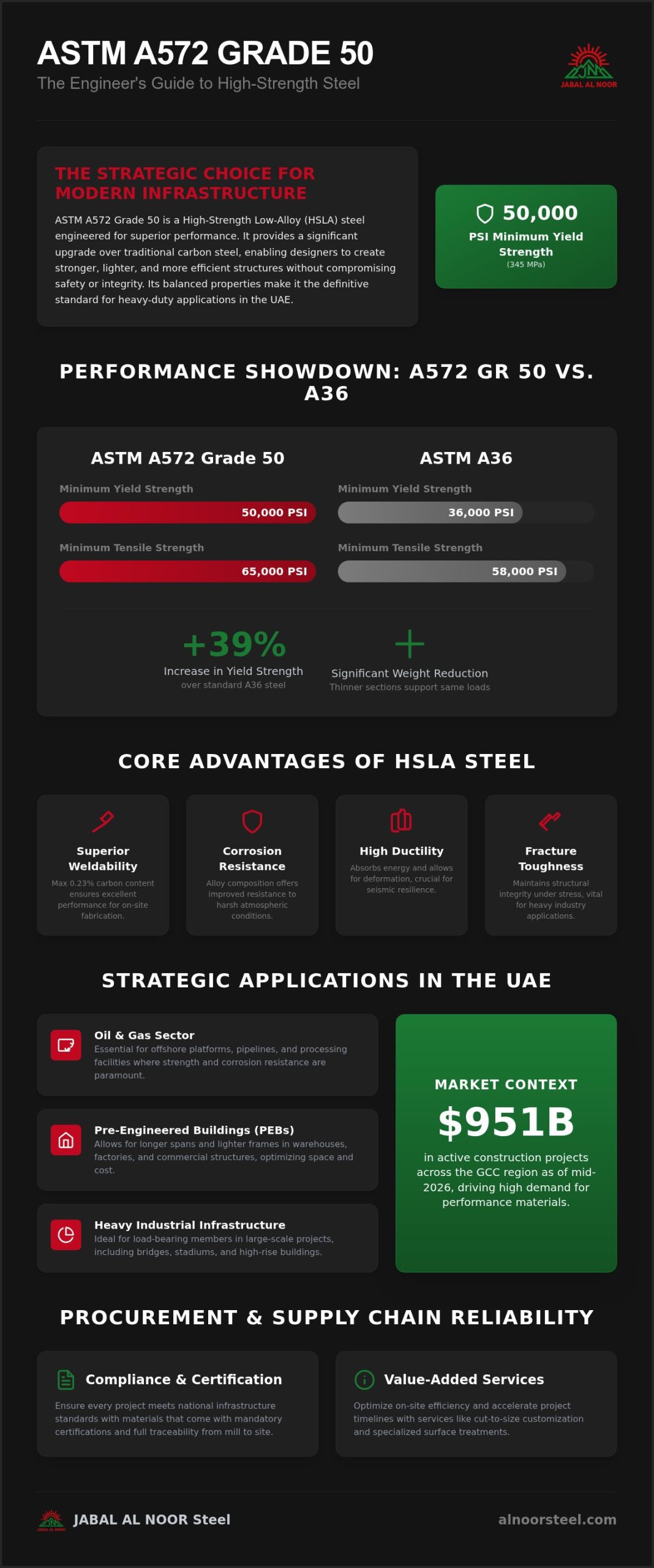
American standards remain a foundational pillar of Middle Eastern heavy engineering and energy sectors. ASTM A36 is a highly versatile carbon steel utilized in a broad spectrum of general construction and fabrication. For more demanding infrastructure, ASTM A572 Grade 50 is the preferred specification, offering a higher yield point of 50,000 psi. These standards are frequently mandated by international consultancy firms overseeing large-scale transport and utility projects. They ensure that the structural steel aligns with global safety protocols and specific design methodologies that have been the backbone of regional industrial growth for decades.

Ensuring Traceability and Quality Control

Every structural section must be accompanied by a comprehensive Mill Test Certificate (MTC). This document is the primary evidence of a material’s mechanical properties and chemical heat analysis. With the implementation of Dubai Law No. (3) of 2026, the requirements for technical and structural assessments have become more rigorous. Traceability ensures that every beam and column meets the specific quality and safety certificates mandated for modern infrastructure. Providing this level of documentation is vital for contractors who need to demonstrate compliance during the new contractor and engineering consultancy rating systems launching in early 2026.

The UAE’s harsh climate, characterized by high humidity and potential salinity in coastal areas, also influences grade selection. While the steel’s chemistry provides the strength, it’s the combination of the correct grade and professional surface treatments that ensures endurance. Higher grades often provide a greater safety margin against the environmental stresses unique to the region, making them a steady and dependable choice for high-stakes projects.

The procurement of structural steel is only the first phase of a successful project. To truly optimize a construction timeline, contractors must look beyond the raw material and consider the benefits of value-added industrial processing. High-capacity universal beams and columns UAE projects require can be significantly enhanced through precision customization and protective treatments before they even arrive at the site. This proactive approach effectively eliminates the logistical bottlenecks often associated with manual on-site fabrication. It ensures that the structural integrity established in the design phase is preserved throughout the entire lifecycle of the build.

Cut-to-Size Accuracy and Waste Reduction

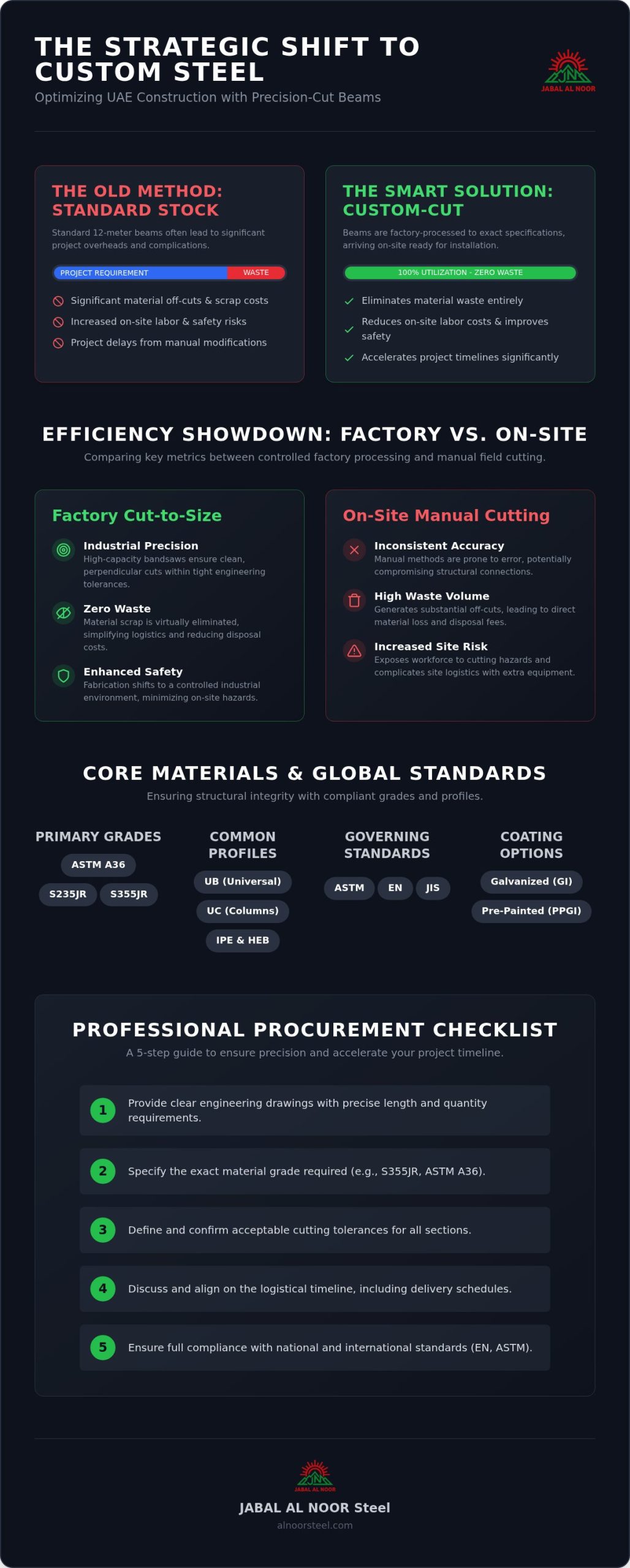
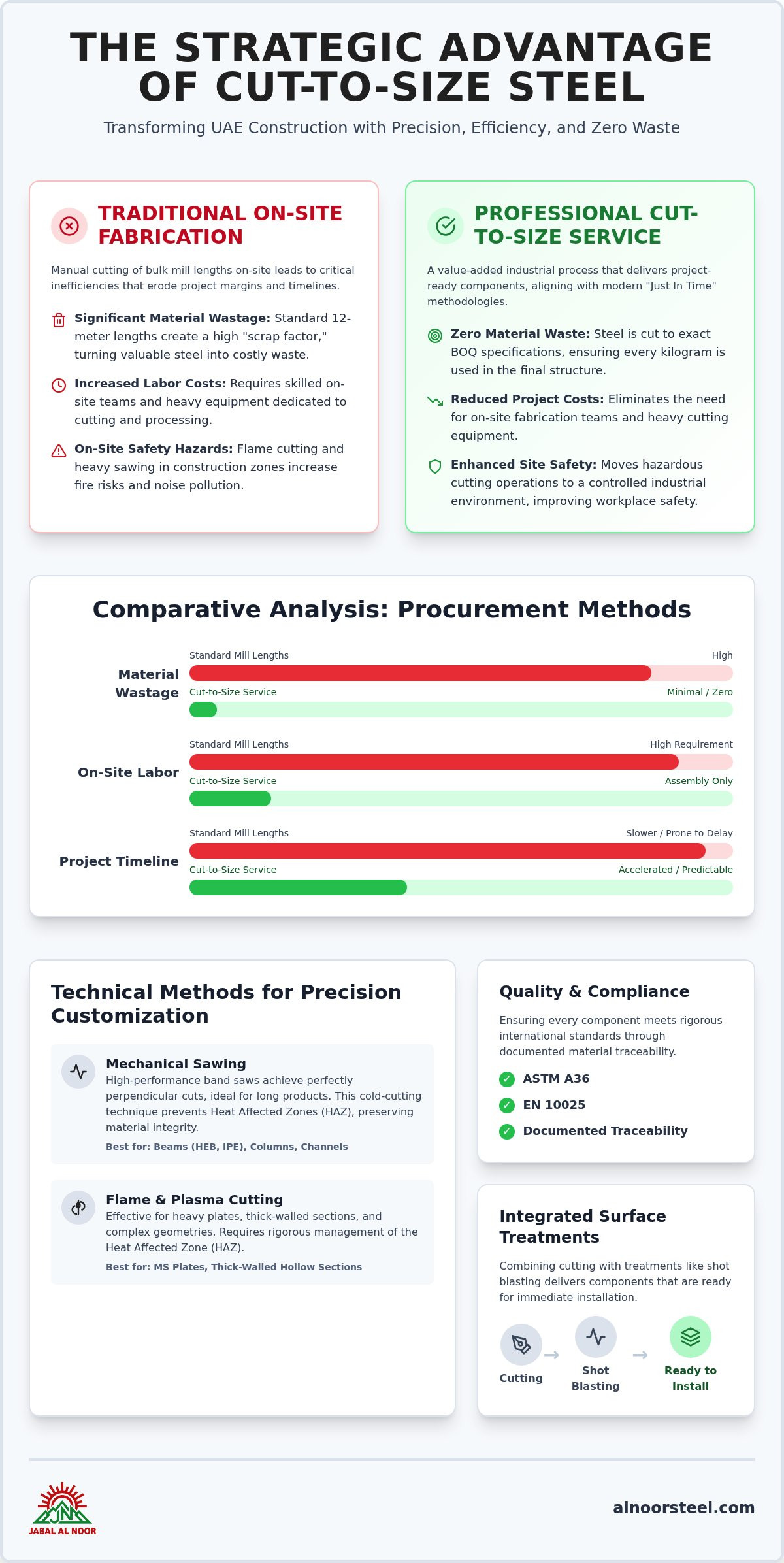
Structural steel is typically supplied in standardized lengths of 12 meters. However, modern engineering designs rarely utilize these exact dimensions across every span. On-site cutting is labor-intensive and frequently generates significant scrap material that increases total project overhead. Utilizing precision cut-to-size services allows contractors to receive sections that are ready for immediate installation. This accuracy reduces the total volume of steel that must be purchased and minimizes the costs associated with waste management. By outsourcing this process to a specialized facility, project managers can maintain a cleaner, more organized site while focusing their labor resources on assembly rather than preparation.

Shot Blasting and Priming: Extending Structural Lifespan

The environmental conditions in the UAE, particularly in coastal industrial zones like Jebel Ali or Abu Dhabi, present a constant threat of corrosion. Shot blasting is a critical surface treatment that utilizes high-velocity abrasives to remove mill scale, rust, and contaminants from the steel’s surface. This process creates a specific surface profile that is essential for the effective adhesion of protective coatings. Without this preparation, any subsequent paint or primer will eventually fail, exposing the underlying metal to the elements and compromising the structure’s endurance.

Following the shot blasting process, the application of a high-quality protective primer is the standard protocol for ensuring long-term durability. Priming provides a sacrificial layer that prevents oxidation during transport, storage, and the initial construction phases. In a market where structural assessments for older buildings are now legally mandated by Law No. (3) of 2026, investing in these surface treatments early ensures that the framework remains compliant and secure for decades. You can explore our full range of Surface Treatments and Customization Services to see how we help protect your structural investment from environmental degradation.

By integrating these industrial processes directly into the supply chain, contractors gain a significant competitive advantage. The reduction in on-site labor and the extension of the material’s lifespan contribute to a more sustainable and cost-effective construction model. It’s a methodical approach that reflects the high standards and operational excellence of the UAE’s heavy industry.

Universal Beams and Columns UAE: A Guide to Structural Steel Sections

Sourcing Universal Sections from JABAL AL NOOR Steel

Selecting a supply partner for heavy structural steel requires more than just reviewing a product catalog. It demands a relationship with a seasoned veteran that understands the high-stakes requirements of the UAE’s infrastructure and energy sectors. Since our establishment in 2010, JABAL AL NOOR Steel has served as a foundational pillar in the regional industrial landscape. We operate as a primary national stockist, maintaining a massive inventory of universal beams and columns UAE contractors rely on for rapid project mobilization. Our role is to provide the industrial stability and unwavering confidence necessary to keep large-scale projects on schedule and within technical specifications.

Strategic inventory management is the core of our operations. We don’t just store steel; we manage a supply chain designed for logistical efficiency. By maintaining an extensive range of MS Beams, including H, I, and Universal sections, we ensure that our partners can bypass the long lead times often associated with international sourcing. This immediate availability is critical for meeting the strict timelines of modern construction, allowing for a seamless transition from the design phase to on-site assembly.

National Supply Chain and Logistical Reliability

Our distribution reach extends across the entire United Arab Emirates, providing a consistent flow of materials to project sites from Abu Dhabi to the Northern Emirates. With local producers like Emirates Arkan Steel supplying 65% of the domestic market for heavy structural sections, we focus on bridging the gap between production and project-specific delivery. This national presence allows us to function as a steady, dependable partner for contractors managing multiple sites simultaneously. We’ve refined our logistical processes to handle the complexities of bulk structural steel transport, ensuring that every section arrives in optimal condition. This reliability is backed by our internal operational excellence, which prioritizes transparency and long-term value over short-term gains.

Technical Support for Procurement Professionals

Procurement in the structural steel sector involves navigating complex grade compliance and regulatory benchmarks. Our team provides the technical proficiency required to ensure that every beam and column meets the necessary international standards, whether you’re specifying EN 10025 grades like S355JR or American ASTM benchmarks. We provide comprehensive Mill Test Certificates (MTC) with every order, ensuring full traceability and compliance with the latest building safety laws, including Dubai Law No. (3) of 2026. This documentation is vital for demonstrating quality during the new contractor rating system assessments launching in early 2026.

Initiating a procurement request is a methodical process designed for precision. Whether you require standard lengths or specialized cut-to-size customization and surface treatments, our team is ready to facilitate your requirements. We encourage procurement professionals to reach out with detailed specifications to begin a technical consultation. By aligning your structural needs with our established inventory and processing capabilities, you ensure the endurance and integrity of your framework for decades to come.

Securing Your Structural Framework for Future Growth

The successful delivery of large-scale infrastructure projects in the Emirates depends on the precision of your material specifications. By distinguishing between the bending resistance of Universal Beams and the axial strength of Universal Columns, you align your structural design with the highest engineering benchmarks. Adhering to recognized EN 10025 and ASTM standards is no longer just a recommendation; it’s a critical requirement for regulatory compliance and long-term building safety. Utilizing professional surface treatments and cut-to-size customization further ensures that your materials are prepared to withstand the unique environmental pressures of the Middle East while reducing unnecessary waste on site.

When you’re ready to source universal beams and columns UAE projects require, partnering with a dependable national stockist ensures your procurement remains steady and transparent. Our commitment to maintaining a compliant inventory and providing full in-house processing services allows you to focus on the complexities of construction with unwavering confidence. We invite you to Request a Technical Quote for Universal Beams and Columns and leverage our national distribution reach for your next development. We look forward to establishing a reliable partnership that supports the enduring success of your structural frameworks.

Frequently Asked Questions

What is the difference between a Universal Beam and a Universal Column?

Universal Beams are primarily designed for horizontal spans where bending resistance is the priority, while Universal Columns feature a square profile to support vertical axial loads. The depth of a UB is significantly greater than its flange width to maximize stiffness across a span. Universal Columns have nearly equal depth and width, which prevents buckling under heavy compression in vertical pillars.

Which steel grade is most commonly used for beams in the UAE?

The most frequently specified grades for universal beams and columns UAE projects are EN 10025 S275JR and S355JR. While S275JR is suitable for general structural work, S355JR is preferred for heavy-duty applications due to its higher yield strength. ASTM A36 also remains a common choice for projects following American design codes. Selecting the correct grade ensures the structure can withstand both static loads and regional environmental stressors.

Can Universal Beams be used for residential construction in the UAE?

Universal Beams are an excellent choice for residential projects that require wide, open-plan spaces without the need for intrusive support walls. They allow for larger window openings and expansive spans that reinforced concrete cannot easily achieve. While many villas rely on traditional masonry, incorporating structural steel beams provides greater architectural flexibility. All such installations must follow the specific building codes enforced by the local Emirate’s municipality.

What are the standard lengths available for Universal Columns?

The industry standard length for structural steel sections is 12 meters. While these are the stock lengths available at most national distributors, specialized cut-to-size services are available to meet specific architectural requirements. This customization reduces on-site labor and eliminates the logistical burden of managing excess material waste during the assembly phase of a project. Accurate sizing is essential for maintaining the planned construction schedule.

How does shot blasting improve the performance of structural steel?

Shot blasting removes mill scale and surface oxidation to create a specific anchor profile for protective coatings. In the high-humidity environment of the UAE, this process is essential for ensuring that primers and paints adhere correctly to the metal. Without this treatment, corrosion can develop beneath the surface, eventually compromising the structural integrity of the entire framework. It’s a foundational step for ensuring the endurance of the steel.

Does JABAL AL NOOR Steel provide Mill Test Certificates for all products?

Yes, JABAL AL NOOR Steel provides Mill Test Certificates (MTC) for all structural sections in our inventory. These documents are essential for meeting the rigorous quality benchmarks established by UAE municipalities and the Building Safety Law issued in 2026. An MTC provides a verified record of the steel’s chemical composition and mechanical properties, ensuring that every beam and column is traceable and compliant with project specifications.

What is the advantage of using S355JR over S235JR for columns?

S355JR offers a significantly higher yield strength of 355 MPa compared to the 235 MPa provided by S235JR. This increased capacity allows engineers to specify lighter, more compact sections that can still support the same axial loads. Using a higher grade often results in a more efficient design, reducing the total tonnage of steel required for large-scale infrastructure projects. This optimization directly impacts the overall efficiency of the structural framework.

How do I calculate the weight of a Universal Beam per meter?

You can find the weight per meter in standardized property tables, which list the mass for every profile size. For example, a 203 x 133 x 30 UB weighs exactly 30 kilograms per linear meter. If tables aren’t available, the weight is calculated by multiplying the cross-sectional area by the standard density of steel, which is 7,850 kilograms per cubic meter. Accurate weight calculations are vital for foundation design and transport logistics.

Structural Steel Supplier UAE: 2026 Procurement Guide

Structural Steel Supplier UAE: 2026 Procurement Guide

In the 2026 UAE industrial market, the difference between a project’s success and a costly delay often hinges on whether you view procurement as a simple transaction or a strategic technical partnership. You’re likely facing the pressure of fluctuating steel prices, with rebar benchmarks at AED 2,516 per tonne, alongside increasingly stringent national building code compliance requirements. It’s frustrating when material certification is unclear or when a lack of ready customization causes logistical bottlenecks that stall your timeline. Finding a reliable structural steel supplier UAE who understands these pressures is essential for maintaining operational excellence and securing long-term value.

This guide provides the expert insights you need to master these complexities by ensuring 100% compliance with national building codes and international standards. We’ll examine the technical requirements for material grades like S275 and S355, the logistical advantages of value-added services like cut-to-size processing, and the evolving regulatory landscape for the year ahead. By the end of this article, you’ll have a clear framework for selecting a partner that offers the precision, durability, and logistical efficiency required for the UAE’s most demanding infrastructure projects.

Key Takeaways

  • Identify the technical and regulatory criteria for selecting a structural steel supplier UAE to ensure your project remains compliant with 2026 building codes.
  • Understand the mechanical roles of long and flat products, such as MS beams and channels, to optimize material selection for heavy engineering.
  • Learn how to verify material integrity using Mill Test Certificates and international standards like ASTM and EN to mitigate structural risks.
  • Discover how utilizing integrated cut-to-size services and surface treatments can reduce on-site labor costs and accelerate your construction schedule.
  • Gain a strategic overview of the 2026 UAE steel market to better manage price fluctuations and secure a stable national supply chain.

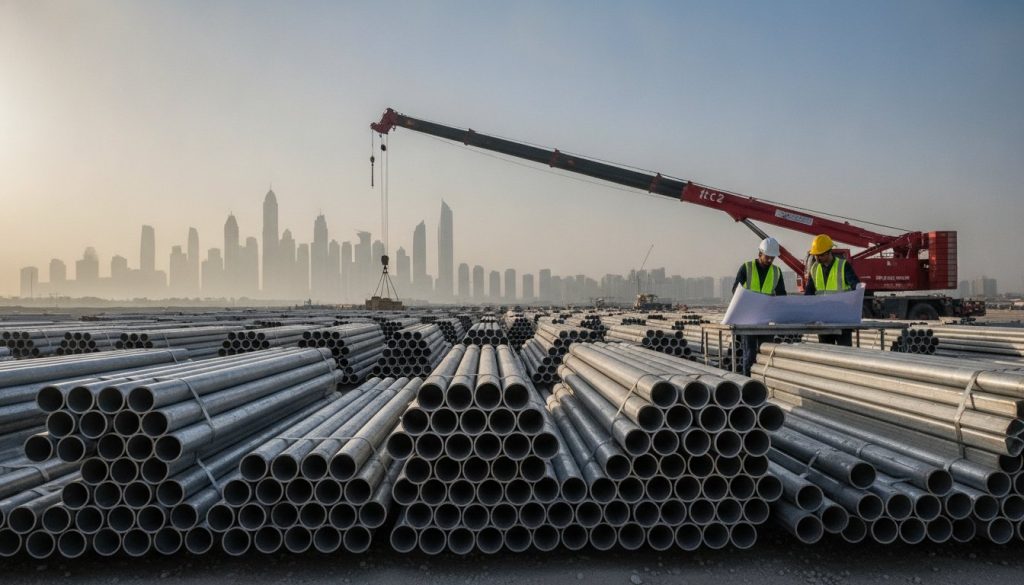
The UAE industrial sector has entered a period of intense growth as we move through 2026, with steel consumption reaching new heights. This surge isn’t merely about volume; it’s about the sophisticated requirements of a nation modernizing its energy, logistics, and manufacturing sectors. For any major project, choosing a structural steel supplier UAE involves more than checking price lists. It requires an understanding of how these materials serve as the literal skeleton of the nation’s infrastructure. According to UAE building regulations, structural steel is defined as hot-rolled or cold-formed carbon steel products that meet specific load-bearing standards and chemical profiles for permanent installation in buildings and civil engineering works.

For a technical look at material properties, this Structural steel overview details the standard shapes and grades used globally. In the local market, the drive toward 2026 economic goals means that energy infrastructure, including massive desalination plants and renewable energy arrays, accounts for a significant portion of structural demand. Similarly, the expansion of the Etihad Rail network and regional logistics parks has created a continuous need for high-grade long products and hollow sections. These sectors require materials that can withstand the unique environmental pressures of the Gulf while meeting rigorous safety benchmarks.

The Shift Toward Integrated Steel Supply

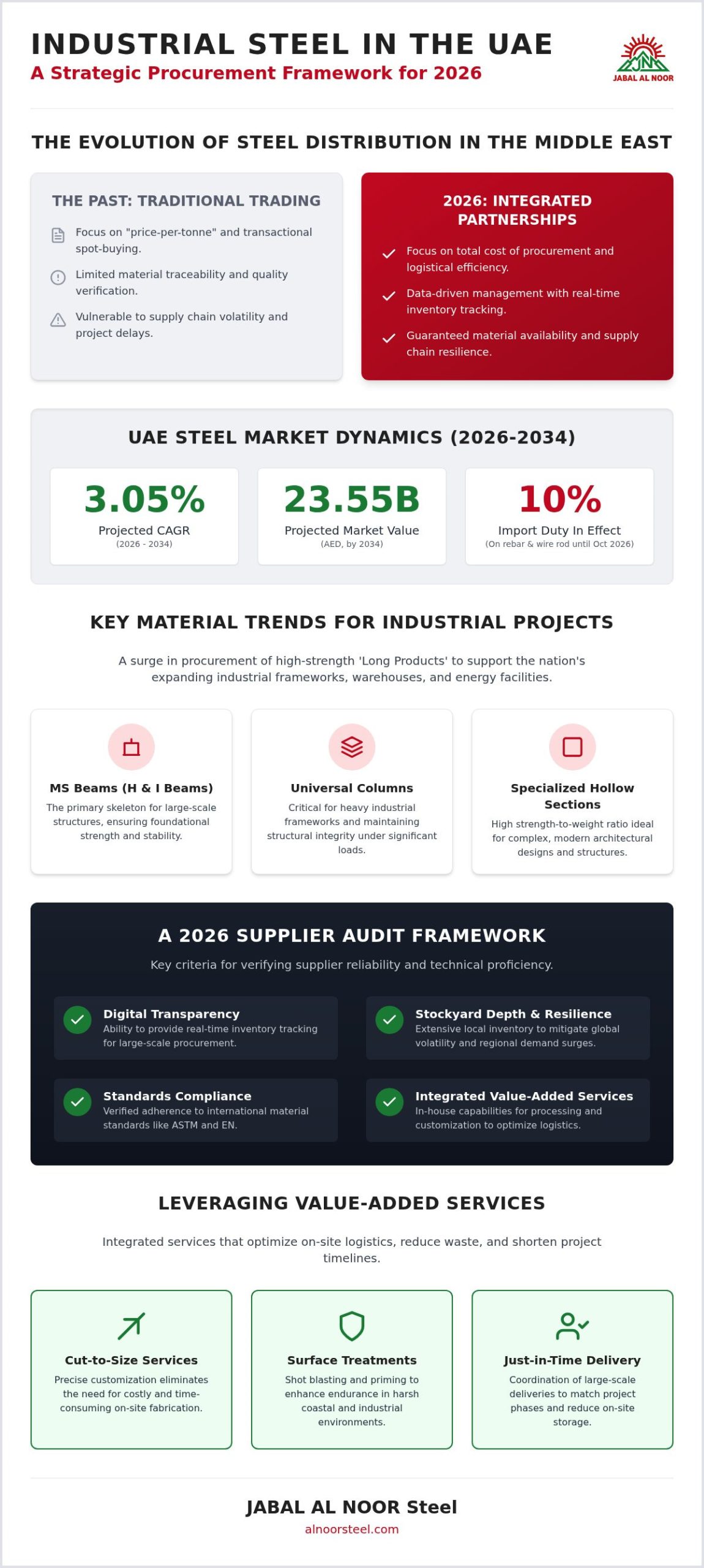
The procurement landscape has changed significantly. Contractors no longer look for simple traders who only move material from point A to point B. Instead, there’s a clear move toward suppliers that offer integrated processing, such as cut-to-size and surface treatments. This shift is essential for meeting the compressed timelines of 2026 projects. Relying on a partner with national-scale logistics is far more effective than coordinating with small, city-specific traders in Dubai or Sharjah. A national partner ensures that material reaches remote sites in Abu Dhabi or the Northern Emirates with the same precision and quality as a central urban project.

Key Challenges in National Steel Procurement

Managing a multi-phase project in the current market requires navigating significant supply chain volatility. While rebar prices have seen specific benchmarks like AED 2,516 per tonne in August 2026, structural sections often follow different global trends. Maintaining high-volume inventory is the only way to stabilize costs over long-term contracts. Procurement teams must also ensure that material quality remains consistent across diverse geographic sites. This consistency is only possible when a structural steel supplier UAE maintains rigorous mill test report (MTR) tracking and adheres strictly to international standards like ASTM or EN grades, ensuring every beam and channel meets the safety requirements of the UAE building code.

Essential Structural Steel Inventory: Long and Flat Products

Securing a consistent material flow for large-scale infrastructure requires a partner with a deep, ready-to-ship inventory of both long and flat products. In the context of heavy engineering, these two categories serve distinct but complementary roles. Long products typically form the primary structural skeleton of a project, providing the necessary rigidity and load-bearing capacity. Flat products, conversely, are utilized for surface integrity, enclosures, and the fabrication of heavy-duty industrial components. As Global structural steel market trends indicate a shift toward higher-grade alloys, a veteran structural steel supplier UAE must maintain a diverse range of sections to support complex engineering requirements.

The UAE market specifically demands materials that can withstand high ambient temperatures and, in many cases, corrosive coastal environments. This necessity has made specialized materials like GI, PPGI, and various grades of Stainless Steel standard requirements for modern procurement. Whether the project involves a high-rise in Dubai or an industrial warehouse in Abu Dhabi, the availability of MS Beams, Channels, and Angles remains the foundational requirement for any structural framework.

Long Products: Beams, Channels, and Bars

Long products are the workhorses of the construction industry. H-beams and I-beams, often referred to as Universal Beams and Universal Columns, are engineered to handle heavy vertical and horizontal loads. MS Channels and MS Angles provide the essential bracing and support for trusses and secondary framing systems. In modern UAE architecture, hollow sections; including square, rectangular, and circular profiles; have become increasingly popular. These sections offer a high strength-to-weight ratio and are frequently used in aesthetic structural designs like stadium canopies and airport terminals. For those managing complex structural frameworks, reviewing the technical specifications at JABAL AL NOOR Steel can help align material selection with project needs.

Flat Products and Special Steel Sheets

Flat products provide the necessary coverage and surface durability for industrial assets. GI (Galvanized Iron) and PPGI (Pre-Painted Galvanized Iron) sheets are critical for the UAE’s industrial roofing and cladding, offering superior corrosion resistance against the region’s humidity. For heavy-duty applications, MS plates and chequered plates are the standard for industrial flooring, platforms, and machinery bases where slip resistance and impact durability are paramount. In marine environments or chemical processing plants, stainless steel components are indispensable. These materials ensure long-term structural endurance where carbon steel might otherwise fail due to oxidation or chemical exposure.

Understanding Quality Standards and Material Compliance

Technical integrity serves as the non-negotiable cornerstone for every major industrial project across the Emirates. In a market where structural failures carry immense financial and safety risks, verifying the chemical and mechanical properties of your inventory is a primary responsibility. A reputable structural steel supplier UAE doesn’t just deliver material; they provide the technical documentation necessary to prove that every beam and column meets the project’s engineering specifications. The most critical document in this process is the Mill Test Certificate (MTC), which acts as a material passport, tracing the steel back to its specific heat number and confirming its chemical composition and tensile strength.

ASTM A36 defines carbon structural steel with a minimum yield strength of 36,000 psi (250 MPa) and a tensile strength range of 58,000 to 80,000 psi (400 to 550 MPa), establishing it as the standard grade for bolted or welded construction in UAE infrastructure. While ASTM A36 is widely used for general structural applications, projects requiring higher load-bearing capacities often turn to European grades. S235JR is frequently specified for secondary structures and light frameworks, whereas S355JR is the preferred choice for heavy-duty infrastructure, such as bridges and high-rise skeletons, due to its superior yield strength and durability under stress.

Comparing ASTM, EN, and JIS Standards

Contractors must distinguish between different international benchmarks to ensure structural safety. While ASTM A36 is the standard for carbon steel, ASTM A572 Grade 50 offers a high-strength, low-alloy alternative that allows for lighter structural designs without sacrificing integrity. In the UAE, European standards (EN 10025) are often the dominant framework, providing a clear hierarchy of grades like S235, S275, and S355. Japanese Industrial Standards (JIS), such as JIS G3101 (SS400), are also present in the market, particularly in specialized machinery or marine vessel fabrication. Selecting the correct grade requires a precise alignment with the engineer’s load-bearing calculations and the environmental conditions of the site.

Compliance with UAE National Safety Codes

Procurement strategies must align strictly with the UAE Fire and Life Safety Code of Practice to ensure that all structural components contribute to the building’s overall fire resistance. Third-party inspections from recognized bodies like Bureau Veritas or TUV are often mandatory to verify material authenticity before it arrives on-site. Sourcing from an established structural steel supplier UAE ensures that these compliance layers are already integrated into the supply chain. National trading entities provide an essential layer of accountability, ensuring that the steel isn’t only high-quality but also fully compliant with the rigorous safety benchmarks set by Dubai Municipality and other regional authorities.

Structural Steel Supplier UAE: 2026 Procurement Guide

Maximizing Project Efficiency with Custom Steel Processing

The difference between a basic stockist and a premium structural steel supplier UAE lies in the ability to provide materials that are ready for immediate assembly. Basic traders often leave the burden of fabrication to the contractor, which leads to increased on-site labor and potential errors. By opting for a partner that provides integrated processing, you can receive ready-to-install structural components that align perfectly with your architectural drawings. This approach significantly reduces project timelines, as it eliminates the need for heavy machinery and specialized labor at the construction site. Custom length steel beams are particularly valuable for complex engineering designs where standard mill lengths would result in excessive joints or material waste.

Receiving processed steel directly at the project location offers immense logistical advantages. It simplifies inventory management and reduces the risk of damage that often occurs during multiple handling stages. When beams are delivered at custom lengths, the crane time required for installation is minimized, and the structural integrity is often improved by reducing the number of splices needed. This level of service transforms the supply chain from a series of individual purchases into a streamlined flow of components tailored to the specific geometry of the build.

Cut-to-Size Customization and Precision

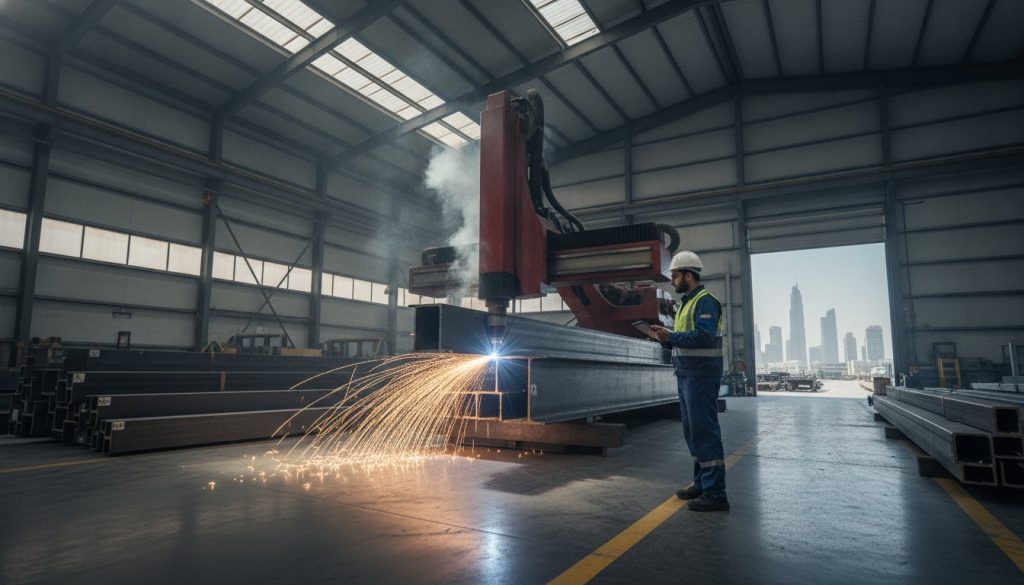
Precision cutting is achieved through industrial bandsaws and advanced plasma technology, ensuring that every MS beam or plate meets exact dimensional tolerances. These cut-to-size services allow engineers to optimize their budgets by only paying for the material they actually use while minimizing scrap on the job site. Industrial steel profiles require high engineering accuracy to ensure that connections and bolt holes align during the erection phase. This level of precision is difficult to maintain with portable tools, making off-site industrial processing a necessity for modern, large-scale projects.

Surface Treatments and Corrosion Protection

The humid and saline environment of the UAE necessitates rigorous surface preparation to prevent premature oxidation. Shot blasting is a critical industrial process that uses high-velocity abrasives to remove mill scale and rust, creating a clean profile for coating adhesion. Once cleaned, applying a high-quality primer extends the lifespan of structural steel significantly, protecting the core material during transport and site storage. For steel plates used in high-corrosion environments like desalination plants or coastal refineries, specialized treatments provide an essential barrier against chemical and atmospheric degradation. If you require materials that meet these exacting standards, you can view our full range of processing services to see how we support industrial durability.

Strategic Sourcing: Selecting a Reliable National Steel Partner

Selecting a structural steel supplier UAE for the year ahead involves evaluating more than just current stock levels. It’s about finding a partner that acts as a foundational pillar for your industrial operations. In 2026, the criteria for selection have evolved to prioritize technical proficiency and the ability to handle large-scale, multi-phase projects without logistical friction. Transparent communication regarding mill lead times and material certification is no longer an optional service; it’s a critical requirement for maintaining project schedules and ensuring ethical conduct throughout the procurement process.

Technical proficiency is especially vital when sourcing for high-stakes sectors like energy and large-scale manufacturing. A partner that understands the nuances of international grades and UAE building codes can prevent costly compliance errors before they reach the site. This level of expertise ensures that your supply chain remains resilient, even during periods of global market uncertainty. By focusing on long-term value rather than short-term price fluctuations, contractors can build a reliable framework for project success. We invite you to leverage JABAL AL NOOR’s extensive inventory and processing expertise to meet these demands with confidence.

The JABAL AL NOOR Advantage in the UAE

JABAL AL NOOR Steel is positioned as a veteran entity within the local industrial landscape. Our commitment to durability and high standards is reflected in an extensive inventory that spans MS beams, channels, and specialized hollow sections. Unlike localized traders who focus on specific city hubs like Dubai or Sharjah, our national distribution network reaches across all Emirates. This breadth of reach provides a seamless supply chain for infrastructure projects in remote locations, ensuring that logistical efficiency is maintained regardless of the site’s geography. We function as a knowledgeable guide, helping procurement teams navigate the specific pressures of heavy industry while ensuring every component meets the rigorous quality benchmarks we uphold.

Streamlining Your Steel Supply Chain

Initiating a bulk supply contract with a national stockist provides a level of price and supply stability that spot-buying cannot match. To begin this process, it’s essential to provide a comprehensive bill of quantities that includes specific grade requirements and processing needs. Requesting detailed quotes that include cut-to-size customization and surface treatments allows for a more accurate project budget and reduces the risk of on-site delays. By consolidating your procurement with a single, reliable entity, you reduce the administrative burden and ensure consistent material quality across your entire project portfolio. It’s the most effective way to manage the complexities of the 2026 market while maintaining operational excellence.

Partner with JABAL AL NOOR Steel for your 2026 structural requirements.

Securing Industrial Excellence in 2026

Success in the 2026 industrial landscape requires a focus on technical precision and supply chain resilience. We’ve explored how verifying Mill Test Certificates and selecting the correct material grades, such as S355JR or ASTM A36, forms the bedrock of structural integrity. By integrating value-added services like shot blasting and precision cutting, you don’t just source material; you optimize your entire construction timeline. This strategic approach minimizes on-site labor and ensures your project meets the most rigorous safety benchmarks.

Selecting an established structural steel supplier UAE ensures your project benefits from a national distribution network and a legacy of operational excellence. JABAL AL NOOR Steel maintains an extensive inventory of ASTM and EN grade structural steel, backed by decades of expertise in the UAE industrial sector. Our in-house cut-to-size and surface treatment facilities deliver precision components that meet exacting engineering standards. We provide the stability your high-stakes infrastructure requires.

Request a Technical Quote from JABAL AL NOOR Steel to secure a dependable partner for your next development. We look forward to supporting your vision with industrial stability and unwavering quality.

Frequently Asked Questions

What are the most common structural steel grades used in the UAE?

Structural steel in the UAE primarily adheres to European and American standards. Common grades include S275 and S355 under the EN 10025 standard, alongside ASTM A36 for general carbon steel applications. These grades are selected based on their yield strength and suitability for the region’s diverse infrastructure projects, ensuring every component meets the specific load-bearing requirements of the build.

How does cut-to-size customization benefit a large-scale construction project?

Cut-to-size services significantly reduce on-site labor costs and minimize material waste by delivering ready-to-install components. This precision ensures that structural beams and columns fit perfectly according to architectural drawings, which accelerates project timelines. It’s a critical service offered by a professional structural steel supplier UAE to enhance overall project efficiency and reduce the administrative burden of on-site fabrication.

What is the difference between MS beams and H-beams in structural engineering?

The primary difference lies in the flange width and load-bearing capacity. H-beams, often called Universal Columns or Beams, feature wider flanges that allow them to handle higher vertical loads and bending moments. MS beams, or I-beams, have narrower flanges and are generally lighter, making them suitable for secondary structures or shorter spans where weight and material volume are primary considerations.

Why is shot blasting and priming necessary for structural steel in the UAE?

These treatments are essential for protecting steel against the UAE’s high humidity and saline coastal air. Shot blasting removes mill scale and rust to create a clean surface profile, while priming provides an immediate barrier against oxidation. These processes ensure the long-term durability of the steel and provide a reliable foundation for final protective coatings applied after installation.

How can I verify the quality of steel products from a UAE supplier?

Quality verification requires reviewing the Mill Test Certificate (MTC) for every batch to confirm chemical and mechanical properties. You should also look for third-party inspection reports from recognized bodies like Bureau Veritas or TUV to ensure authenticity. Sourcing from an established structural steel supplier UAE guarantees that all materials meet the necessary national safety codes and international quality benchmarks.

What are the advantages of using hollow sections in industrial buildings?

Hollow sections, including square, rectangular, and circular profiles, offer an exceptional strength-to-weight ratio and high torsional resistance. This makes them ideal for large-span industrial buildings, warehouses, and aesthetic architectural features where structural efficiency is paramount. They’re also easier to maintain and coat due to their smooth surfaces, which helps reduce long-term maintenance costs in harsh industrial environments.

Does JABAL AL NOOR Steel provide national delivery for bulk orders?

JABAL AL NOOR Steel maintains a robust national distribution network capable of handling bulk orders across all seven Emirates. This logistical capability ensures that heavy structural products reach remote industrial zones or urban project sites with consistent reliability and timing. Our fleet is specifically equipped to transport long products and processed steel safely to ensure they arrive ready for immediate use.

What international standards do UAE steel stockists typically follow?

Stockists in the UAE typically follow ASTM, EN, and JIS standards to ensure global material compatibility. These international benchmarks ensure that the steel used in the region meets rigorous quality and safety requirements for load-bearing structures. Adherence to these standards is mandatory for projects overseen by Dubai Municipality and other regional regulatory authorities to maintain national building integrity.