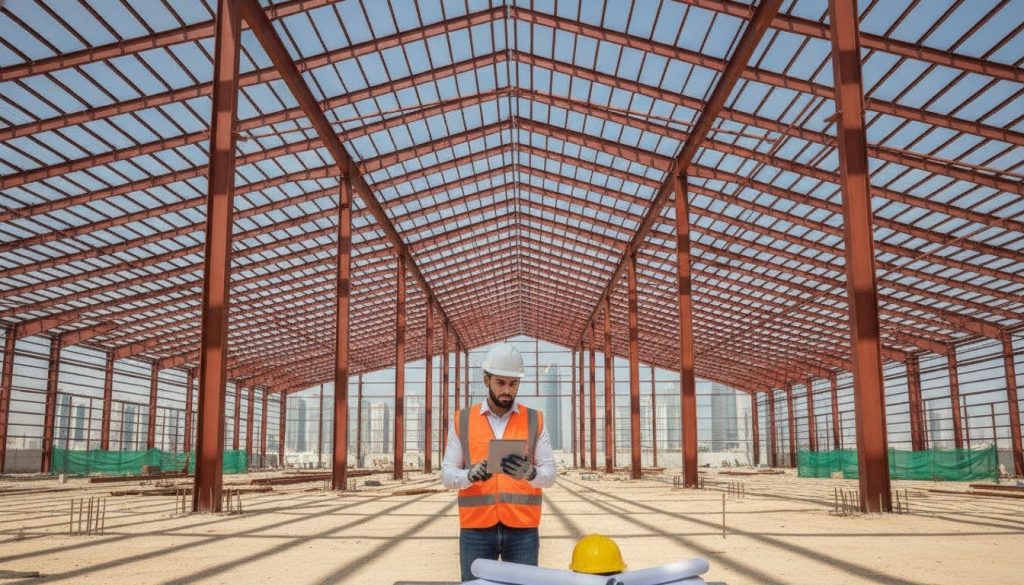
With structural steel prices rising by 11.9% in 2025 and continuing their ascent through the third quarter of 2026, the margin for procurement error has effectively vanished. For project managers and engineers, the challenge isn’t just about managing costs; it’s about ensuring that every MS beam and hollow section meets the strict ASTM and EN standards required for industrial safety. You likely recognize that inconsistent material quality or a simple delay in receiving customized lengths can derail an entire construction timeline. Finding a reliable steel supplier for PEB structures has become a strategic necessity to mitigate these structural risks and logistical bottlenecks.
This article provides the framework you need to master technical requirements and procurement strategies for sourcing high-grade structural steel. You’ll learn how to secure a steady supply of certified materials while optimizing on-site assembly through the use of pre-processed, cut-to-size components. We’ll also explore methods for reducing overall project costs through strategic volume procurement, helping you maintain operational excellence in a market defined by measured volatility and constrained supply.
Key Takeaways
- Understand why material traceability and strict adherence to international ASTM and EN standards serve as the primary safeguards against structural failure in industrial steel projects.
- Identify the critical roles of MS beams, channels, and hollow sections in forming both the primary rigid frames and secondary structural members of a durable building.
- Evaluate a steel supplier for PEB structures based on their inventory of high-strength grades, specifically looking for ASTM A572 Grade 50 and S355JR for demanding applications.
- Discover how value-added processing, such as cut-to-size customization and shot blasting, improves logistical efficiency and provides essential long-term corrosion resistance.
- Develop a strategic procurement framework for partnering with national stockists that offer a comprehensive range of long and flat products to support large-scale infrastructure.
The Critical Role of a Steel Supplier for PEB Structures
The efficiency of a pre-engineered building depends entirely on the precision and quality of its constituent parts. In the current industrial climate, where structural steel prices reached $2,660.55 per ton in July 2026 after rising 11.9% in 2025, every procurement decision carries significant financial and safety implications. A steel supplier for PEB structures functions as the logistical backbone of rapid industrial construction, ensuring that every structural member arrives on-site with the precision required for immediate assembly. This role has evolved from a simple material provider to a critical link in the engineering chain. Material traceability now serves as the primary safeguard against structural failure. It provides a documented history of chemical composition and mechanical properties that ensures every MS beam and hollow section meets the rigorous benchmarks set by international regulatory bodies.
Fundamental Advantages of Steel-Based PEB Systems
Steel remains the preferred medium for industrial infrastructure due to its exceptional strength-to-weight ratio. This characteristic allows for clear-span designs that maximize usable floor space without the need for intrusive interior columns. Unlike traditional reinforced concrete structures, steel-based systems offer a speed of execution that significantly reduces project timelines. Components are manufactured off-site and delivered ready for installation, which minimizes on-site labor requirements and waste. Additionally, the inherent recyclability of structural steel aligns with the growing demand for sustainable construction practices in large-scale energy and infrastructure projects.
The Supplier as a Strategic Engineering Partner
In 2026, the relationship between a contractor and their steel supplier for PEB structures has shifted toward a technical partnership. Modern suppliers provide material consultancy that goes beyond typical price lists, helping clients select the optimal steel grades for specific environmental loads and structural requirements. Maintaining consistency across bulk orders is vital; even minor deviations in mechanical properties can compromise the integrity of a rigid frame. By managing localized national inventory, a dependable supplier mitigates the risks associated with global supply chain disruptions and seasonal demand surges. You can browse a comprehensive range of certified materials in the product inventory to ensure your project remains on schedule. This stability allows project managers to plan with confidence, knowing their supply of MS channels and universal beams is secured against the measured volatility of the current market.
Essential Structural Steel Components for PEB Frameworks
A sophisticated PEB system isn’t merely a collection of parts; it’s a precisely engineered assembly where every component must perform under specific load conditions. Selecting a reliable steel supplier for PEB structures ensures that these components meet the exacting tolerances required for rapid on-site bolting. The framework is generally divided into primary frames, secondary members, and bracing systems, each requiring specific long products to maintain the building’s structural equilibrium. Without high-grade materials, the synergy between design and execution is lost, leading to costly modifications during the construction phase.
Beams and Columns: The PEB Backbone
Primary framing members consist of heavy-duty MS beams that form the rigid rafters and columns. Universal Beams (UB) and IPE sections are frequently specified for their optimized depth-to-weight ratios, providing the necessary stiffness for wide-span industrial sheds. HEB and Universal Columns are utilized where axial loads are dominant, such as in multi-story mezzanines or heavy crane runway supports. As an established structural steel supplier UAE, we maintain a robust inventory of these profiles to prevent project delays. Dimensional accuracy in these hot-rolled sections is non-negotiable. Even a slight deviation in flange width or web thickness can lead to misalignment during the assembly of the primary rigid frame.
Hollow Sections and Secondary Members
Secondary structural members provide the necessary lateral support and the surface area required for cladding attachment. MS channels and cold-formed sections are the industry standard for purlins and girts, while square and rectangular hollow sections (SHS/RHS) are preferred for architectural bracing and structural reinforcement. These components must adhere to recognized steel grades and standards to ensure they can withstand wind loads and seismic forces without compromising the primary frame. For projects in corrosive coastal environments, specifying galvanized (GI) or stainless steel components for secondary framing provides an essential layer of protection against oxidation. You can review our full range of structural steel products to identify the specific MS bars and angles required for your building’s stability reinforcement. Using high-grade MS angles for cross-bracing ensures the structure remains plumb and square under dynamic industrial loads.
Evaluating Steel Grades and Standards for PEB Integrity
Metallurgical precision is the foundation of structural safety in modern heavy industry. In the context of pre-engineered construction, selecting the correct material grade isn’t just about meeting a specification; it’s about ensuring the building can handle the environmental and mechanical loads of its specific location. ASTM A36 and S235JR remain the industry workhorses for standard rigid frames. These grades offer excellent ductility and weldability, which are essential for the rapid assembly of pre-engineered components. However, the carbon content in these steels must be strictly monitored. Excessive carbon can lead to brittleness and heat-affected zone cracking during the welding process, which compromises the integrity of the primary framing members.
ASTM vs EN Standards: A Procurement Comparison
Choosing between American and European standards often depends on regional building codes and the original engineering design specifications. While ASTM A36 is common, many large-scale infrastructure projects now require European S235JR or S355JR due to their specific yield strength benchmarks and impact resistance. You should consult a structural steel quality standards UAE reference guide to determine which standard aligns with your project’s eligibility. For high-load environments or structures with wide clear spans, specifying high-strength grades like ASTM A572 Grade 50 or S355JR becomes necessary. These materials allow for thinner sections without sacrificing load-bearing capacity, which reduces the total weight of the structure and lowers logistical costs. The Metal Building Manufacturers Association (MBMA) provides extensive research on how these high-strength steels improve building performance and long-term durability.
Certification and Quality Assurance Protocols
A reputable steel supplier for PEB structures must provide comprehensive documentation to verify that every delivery meets the required technical specifications. Mill Test Certificates (MTC) are the non-negotiable standard for quality assurance in the 2026 industrial landscape. These certificates provide a detailed breakdown of chemical composition and mechanical test results, ensuring that the MS beams and channels you receive are exactly what was ordered. Beyond the mill’s own testing, third-party inspection protocols for long products add an extra layer of security. This level of material traceability, from the initial melt at the mill to the final delivery at the PEB site, is what separates a foundational industrial partner from a mere trader. It ensures that every component, whether it follows JIS or EN 10025 standards, is fit for its intended purpose in the building’s framework.
Value-Added Processing: Customization for PEB Efficiency
The transition from raw material to a structural assembly requires more than just transport; it demands precision processing that aligns with the building’s engineering blueprints. Partnering with a specialized steel supplier for PEB structures allows contractors to receive materials that are already optimized for immediate erection. This approach eliminates the need for extensive on-site fabrication, which is often prone to errors and environmental delays. By delivering ready-to-assemble components, suppliers act as an extension of the project’s engineering team, ensuring that every MS beam and hollow section fits perfectly within the intended framework.
Precision Cut-to-Size Services
On-site labor costs and material waste are two of the most significant drains on an industrial project budget. Utilizing a cut to size steel service UAE ensures that structural members are delivered to exact millimeter tolerances. This precision is vital for the large spans typical of pre-engineered buildings, where even a minor measurement error can lead to structural misalignment. Customizing beam lengths at the warehouse level also minimizes off-cut waste. This is a critical advantage in 2026, as structural steel prices remain high. Precision engineering of steel profiles ensures that every kilogram of purchased material contributes directly to the building’s integrity.
Surface Treatments and Protection
Long-term durability in heavy industry depends heavily on initial surface preparation. Shot blasting to SA 2.5 standards is the recognized benchmark for removing mill scale and rust, providing a clean profile for optimal coating adhesion. Applying industrial primers immediately after blasting protects the steel from oxidation during transport and the often lengthy erection phase. While galvanized finishes offer superior protection in highly corrosive environments, primed steel remains the standard for most PEB frameworks due to its balance of cost-effectiveness and durability. These treatments ensure that the foundational pillars of your project remain resilient against the elements from day one.
Inventory Management for Large Contracts
Managing the supply chain for multi-phase industrial projects requires a methodical approach to logistics. A reliable steel supplier for PEB structures maintains a vast national inventory of long and flat products, allowing for just-in-time delivery strategies that keep the site clear of unnecessary clutter. This steady flow of materials prevents bottlenecks and ensures that secondary members arrive exactly when the primary rigid frames are secured. For contractors managing high-volume orders across multiple project phases, a well-structured bulk steel supply strategy is essential to maintaining cost control and schedule adherence. Warehousing solutions for bulk orders provide an additional layer of security against market fluctuations and seasonal demand surges. You can explore our full range of customizable steel products to streamline your next industrial project and ensure consistent material availability throughout every construction phase.
Strategic Sourcing: Partnering with a National Steel Stockist
The success of an industrial construction project depends on the stability of its supply chain. In a market where structural steel prices reached $2,660.55 per ton in July 2026, choosing the right partner is a critical financial decision. A steel supplier for PEB structures must offer more than just material; they must provide a foundation of reliability that supports the entire project lifecycle. This requires a methodical approach to evaluating steel manufacturers in UAE, focusing on their ability to maintain consistent stock levels of MS beams, channels, and hollow sections. A diversified product range, extending from primary structural members to specialized stainless steel components, ensures that every technical requirement is met under a single procurement umbrella.
Assessing Supplier Capability and Reach
Operational stability is the hallmark of a seasoned industry veteran. When you’re managing large-scale infrastructure or energy projects, you don’t just need a vendor; you need a partner with the financial and logistical capacity to handle bulk material orders over several months. Technical support is equally vital. A knowledgeable supplier helps you navigate complex material specifications, ensuring that the grades you receive are precisely suited for the building’s load-bearing requirements. Leveraging national logistics allows for seamless delivery to industrial zones, preventing the bottlenecks that often occur when relying on fragmented supply chains. Jabal Al Noor Steel serves as this foundational pillar, offering an extensive inventory and the technical proficiency required to support the most demanding industrial applications.
The Future of Steel Procurement for PEBs
The industrial landscape of 2026 is defined by a shift toward high-performance materials and data-driven logistics. Modern steel suppliers in UAE are increasingly integrating digital inventory tracking with construction timelines to facilitate just-in-time delivery. This synchronization minimizes on-site storage needs and optimizes cash flow for contractors. We’re also seeing a move toward higher-grade alloys and more rigorous sustainability goals, as the industry seeks to reduce the carbon footprint of structural components. Understanding the broader shifts in the regional distribution landscape is equally important; a detailed analysis of industrial steel suppliers UAE market trends and sourcing strategies reveals how supply chain volatility and material grade compliance are reshaping procurement decisions across the Emirates. By prioritizing material traceability and operational excellence, a dedicated steel supplier for PEB structures helps you navigate these evolving standards with confidence. You can review our full range of long and flat products in the product inventory to secure the materials necessary for your next project. This strategic alignment ensures that your procurement process remains efficient, transparent, and geared toward long-term value.
Securing the Future of Industrial Infrastructure
The industrial landscape of 2026 demands a level of precision and material traceability that only a seasoned partner can provide. By mastering technical specifications and prioritizing value-added processing like cut-to-size customization, you ensure your project remains resilient against market volatility. Selecting the right steel supplier for PEB structures isn’t merely a transactional choice; it’s a commitment to the long-term durability and safety of your infrastructure. Ensuring that every MS beam and channel meets rigorous ASTM or EN standards is the only way to safeguard your investment in an era of constrained supply and high structural requirements.
Jabal Al Noor Steel has been a foundational pillar of industrial reliability since 2010. We maintain a comprehensive stock of MS beams, channels, and hollow sections, all tailored to meet the exacting requirements of modern engineering. Our national delivery capability ensures that your large-scale infrastructure projects receive high-grade materials exactly when they’re needed, optimizing your assembly timelines. Explore our full inventory of structural steel for PEB projects to secure the high-performance components your next build requires. We look forward to supporting your operational excellence with the technical proficiency and steady partnership your projects deserve.
Frequently Asked Questions
What is the best steel grade for PEB structures in the UAE?
ASTM A36 and S235JR are the standard grades for rigid frames due to their excellent ductility and weldability. For projects requiring higher yield strength or wider spans, specifying ASTM A572 Grade 50 or S355JR is necessary. These materials allow for lighter sections without compromising load-bearing capacity. Choosing the correct grade through a reliable steel supplier for PEB structures ensures the building meets national safety codes and environmental requirements.
How does a steel supplier support the PEB design phase?
A supplier acts as a technical consultant by aligning material availability with engineering blueprints. They provide critical data on the dimensional accuracy of MS beams and the mechanical properties of various alloys. This partnership helps engineers select profiles that are readily available in national inventory, preventing costly redesigns later in the project. Early collaboration ensures that the structural steel for construction is optimized for both performance and procurement efficiency.
What is the difference between hot-rolled and cold-formed steel in PEB?
Hot-rolled steel, including universal beams and columns, forms the primary load-bearing backbone of the building. These sections are produced at high temperatures to achieve high structural integrity. Cold-formed steel is typically used for secondary members such as purlins and girts. These sections are shaped at room temperature and offer a high strength-to-weight ratio, which is ideal for supporting cladding systems while minimizing the overall weight of the framework.
Why is shot blasting necessary for PEB structural components?
Shot blasting to SA 2.5 standards is essential for removing mill scale, rust, and contaminants from the steel surface. This process creates a clean, textured profile that ensures maximum adhesion for industrial primers and protective coatings. Without proper surface treatment, coatings are likely to fail, leading to premature corrosion and structural risks. This is particularly vital for industrial buildings exposed to harsh environmental conditions or chemical processes.
How can cut-to-size steel services reduce PEB construction costs?
Cut-to-size customization lowers expenses by reducing on-site labor and eliminating material off-cut waste. When a steel supplier for PEB structures delivers components to exact millimeter tolerances, the need for dangerous and time-consuming on-site welding or cutting is minimized. This precision engineering speeds up the erection process and ensures that every kilogram of purchased steel is utilized effectively, which is crucial given that structural steel prices remain high in 2026.
What certifications should I demand from my PEB steel supplier?
You should always demand Mill Test Certificates (MTC) that verify the chemical composition and mechanical properties of every delivery. These documents ensure compliance with international standards such as EN 10025, ASTM, or JIS. Additionally, look for suppliers who adhere to third-party inspection protocols. Traceability from the mill to the construction site is the primary safeguard against using substandard materials that could compromise the integrity of heavy industrial infrastructure.
Can stainless steel be used in PEB structures for coastal environments?
Stainless steel is an excellent choice for secondary components and fasteners in coastal or highly corrosive industrial zones. While primary rigid frames often use primed MS beams, stainless steel offers superior resistance to chloride-induced pitting and oxidation. Utilizing stainless steel for critical connection points or specialized tubing ensures the long-term endurance of the structure. It’s a strategic investment that reduces maintenance costs in environments where standard carbon steel would degrade rapidly.
What are the typical lead times for bulk structural steel delivery?
Typical lead times vary based on the scale of the order and current national inventory levels. National stockists with extensive warehouses can often fulfill orders for standard MS beams and channels within a few business days. However, bulk orders for specialized high-strength grades or large-scale infrastructure projects require longer lead times for processing. Planning procurement in the fourth quarter is a common strategy to secure materials before the spring construction surge. A comprehensive bulk steel supply procurement guide can help you anticipate these timelines and build a more resilient ordering schedule.