Selecting Grade 304 for a high-salinity industrial project isn’t just a budget choice; it’s often a calculated risk that leads to catastrophic corrosion failure within years. You understand that in the demanding environments of the UAE, where humidity and salt spray are constant, the integrity of your piping infrastructure is non-negotiable. Finding a reliable stainless steel 316 pipe supplier is the first step in securing long-term durability for your assets. This guide provides the technical mastery you need to evaluate procurement standards, ensuring every length of pipe meets the rigorous ASTM A312/A312M-22a standards required for 2026 operations.
We’ll examine the molybdenum-enriched chemistry that prevents pitting, clarify wall thickness schedules for high-pressure systems, and outline the essential verification steps for material test certificates. By the end of this reference, you’ll have the framework to source bulk materials that withstand the most aggressive chemical and marine conditions while maintaining full regulatory compliance. This ensures your large-scale infrastructure remains secure, operational, and compliant with international engineering benchmarks for decades to come.
Key Takeaways
- Understand why the 2-3% molybdenum content in Grade 316 is essential for preventing chloride pitting in high-salinity industrial environments.
- Learn to navigate critical international standards like ASTM A312 and ASTM A358 to ensure your piping infrastructure meets rigorous 2026 safety requirements.
- Evaluate the long-term cost-effectiveness of Grade 316 over 304 by comparing lifecycle maintenance costs against initial project investments.
- Identify the criteria for selecting a reliable stainless steel 316 pipe supplier, including the verification of material test certificates and value-added customization capabilities.
- Discover how precise material selection secures the operational integrity of national marine, offshore, and oil and gas processing facilities.
Understanding Stainless Steel 316: The Molybdenum Advantage
Grade 316 stainless steel represents the standard for industrial durability in high-corrosion zones. As an austenitic chromium-nickel alloy, its defining characteristic is the intentional addition of molybdenum, which distinguishes it from the more common Grade 304. This chemical modification is not merely a minor upgrade; it’s a fundamental engineering requirement for infrastructure exposed to aggressive environmental stressors. Partnering with a reputable stainless steel 316 pipe supplier ensures that the material delivered aligns with these critical chemical benchmarks, providing the necessary protection for long-term assets.
The inclusion of 2% to 3% molybdenum specifically targets the prevention of chloride pitting and crevice corrosion. In the United Arab Emirates, where coastal salinity and high humidity are pervasive, this chemical distinction is why engineers mandate Grade 316 for national infrastructure projects. While Grade 304 may suffice in inland, low-moisture areas, it often fails rapidly in the presence of salt spray or industrial chemicals. Grade 316 is therefore classified as marine-grade stainless steel, serving as the primary choice for offshore platforms and desalination plants.
Procurement professionals must also distinguish between Grade 316 and 316L for specific project requirements. The “L” designation signifies a low carbon content, restricted to a maximum of 0.03%. This reduction is vital for welding applications because it minimizes harmful carbide precipitation. By preventing carbon from reacting with chromium during the heating process, the heat-affected zone of the pipe remains as corrosion-resistant as the rest of the material, ensuring the structural integrity of the welded joint remains uncompromised.
The Chemistry of Corrosion Resistance
Chromium, present at a minimum of 16%, reacts with oxygen to form a microscopic, self-healing chromium oxide layer on the pipe’s surface. This passive film acts as the primary barrier against oxidation and environmental degradation. Beyond salt air, Grade 316 demonstrates superior resistance to chemical stressors like acetic and phosphoric acids, making it indispensable in food processing and pharmaceutical manufacturing. The Pitting Resistance Equivalent Number (PREN) is a standardized calculation that quantifies the material’s ability to withstand localized corrosion based on its specific chromium, molybdenum, and nitrogen content.
Mechanical Properties and Structural Integrity
Grade 316 typically exhibits a tensile strength of approximately 515 MPa and a yield strength of 205 MPa. These benchmarks ensure structural stability under high-pressure loads and heavy-duty industrial use. The material maintains excellent toughness and mechanical integrity across extreme temperature fluctuations, performing reliably from cryogenic levels up to 800°C. For large-scale infrastructure, these durability factors ensure that piping systems don’t succumb to stress corrosion cracking or fatigue in volatile industrial zones.
Manufacturing Standards and ASTM Specifications
Adherence to international benchmarks is the only way to guarantee the safety and longevity of high-pressure industrial systems. In the UAE’s heavy industry sectors, ASTM A312 serves as the primary specification for seamless, straight-seam welded, and cold-worked welded austenitic stainless steel pipes. It’s the standard most frequently requested from a reputable stainless steel 316 pipe supplier because it covers the rigorous testing required for corrosive environments. For larger diameters, ASTM A358 covers electric-fusion-welded pipes designed for high-temperature service, ensuring the material can withstand the thermal stresses of local processing plants.
Dimensional accuracy is governed by ASME B36.19 for stainless steel, though ASME B36.10 is often referenced for specific heavy-wall requirements. Without these standards, ensuring a precise fit with valves, flanges, and fittings becomes impossible, leading to costly delays during onsite assembly. Contractors must insist on a Material Test Certificate (MTC) with every delivery. An MTC provides a transparent, verifiable record of the heat number, chemical analysis, and physical test results. This document confirms the material’s origin and quality before it’s integrated into a project. You can review our full inventory of certified piping to ensure your next project meets these essential engineering requirements.
Seamless vs. Welded 316 Pipes
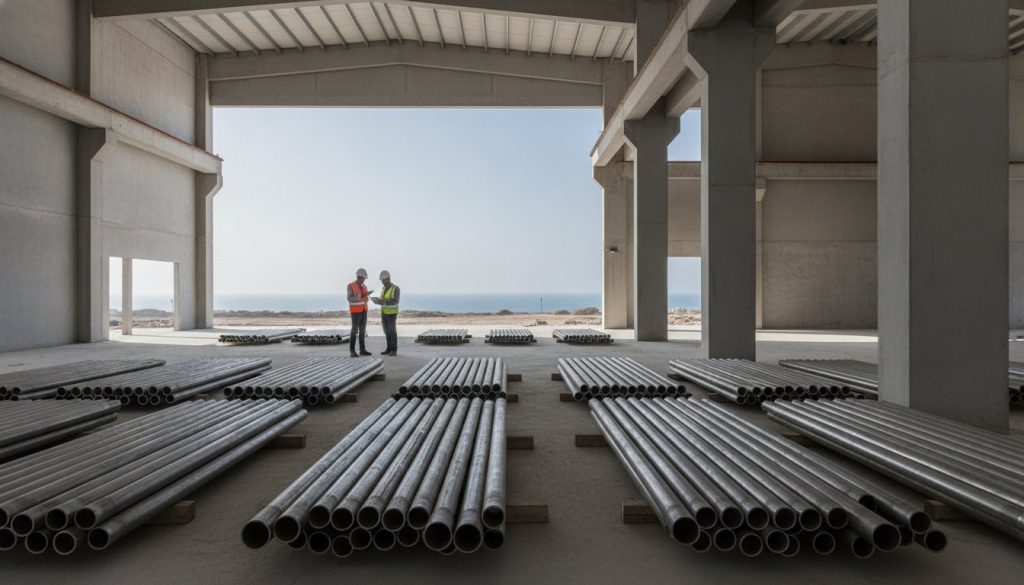
Seamless pipes are manufactured without a weld seam, making them the superior choice for high-pressure environments where leak paths must be entirely eliminated. They’re often specified for offshore oil and gas lines where failure isn’t an option. Welded pipes are more cost-efficient and are ideal for structural applications or lower-pressure fluid transport. Modern manufacturing uses automated quality control to ensure weld-seam integrity, often involving non-destructive testing like ultrasonic or radiographic inspections to verify the strength of the bond.
Dimensional Schedules and Wall Thickness
Piping is categorized by schedules, which determine the wall thickness and the resulting pressure rating. Schedule 10 is typically used for lightweight applications, whereas Schedule 40 and Schedule 80 provide the heavy-duty walls required for high-stress industrial zones. Understanding these dimensions is crucial for calculating pipe weight, which directly impacts logistics costs and structural loading calculations. For a deeper look at similar structural components, consult our guide for Hollow Section Steel Suppliers in UAE. Accurate weight calculations prevent structural overloads and ensure that transport remains efficient and compliant with local weight regulations.
Comparing Grade 316 vs. 304 for Project Procurement
Procurement decisions often hinge on balancing immediate budgetary constraints with the long-term operational integrity of the infrastructure. While Grade 304 is the most widely used stainless steel globally, it possesses inherent limitations that make it unsuitable for many national industrial projects. The primary difference lies in the chemical composition; Grade 304 contains 18% chromium and 8% nickel, whereas Grade 316 contains 16% chromium, 10% nickel, and at least 2% molybdenum. Selecting the right stainless steel 316 pipe supplier provides access to materials that can survive environments where Grade 304 would fail within months.
A lifecycle cost-benefit analysis usually favors Grade 316 for heavy industry; it’s a decision that accounts for long-term endurance. Although the initial investment for 316 is higher than 304, the costs associated with premature corrosion, system downtime, and frequent replacement of Grade 304 pipes far outweigh the upfront savings. However, Grade 304 remains a viable, cost-effective choice for internal structural supports, indoor architectural features, or climate-controlled processing areas where exposure to chlorides and industrial chemicals is non-existent. For projects that incorporate multiple steel product types, understanding the corrosion protection offered by pre galvanized steel tubes UAE suppliers provide can help procurement managers make informed decisions across their full material specification list.
Chloride Resistance and Pitting
In coastal environments, Grade 304 is prone to “tea staining,” a cosmetic but progressive surface rust that signals the breakdown of the material’s passive layer. For national projects located near the shoreline, the molybdenum boost in Grade 316 is mandatory to prevent this localized pitting. Adhering to Structural Steel Quality Standards UAE ensures that the chosen material grade matches the environmental severity of the site, protecting the project from the rapid degradation caused by high-salinity air.
Temperature and Chemical Sensitivity
Grade 316 offers superior resistance to specific corrosive agents, including sulfuric acid and other common industrial solvents found in wastewater treatment and chemical processing. While both grades handle high temperatures, Grade 316 maintains better creep resistance and structural stability in volatile processing zones. For the oil and gas sector, where fluid transport involves sour service or high-salinity brine, the technical proficiency of a seasoned stainless steel 316 pipe supplier is essential for specifying the correct wall thickness and alloy grade to prevent stress corrosion cracking. This level of material precision ensures that the infrastructure remains operational under the most demanding chemical and thermal conditions.
Primary Applications in National Industrial Sectors
Theoretical advantages translate into operational security across the nation’s most demanding industrial sectors. In marine and offshore environments, the combination of constant moisture and high chloride levels makes standard carbon steel or lower-grade alloys unusable. Offshore platforms and subsea infrastructure rely on Grade 316 to resist deep-seated corrosion that could otherwise lead to catastrophic structural failure. Similarly, the oil and gas industry utilizes these pipes for transporting corrosive fluids and sour service media, where maintaining the purity of the cargo and the integrity of the conduit is a non-negotiable safety priority.
Desalination plants represent a critical national use case. These facilities process massive volumes of seawater, creating a highly aggressive environment that would degrade lesser materials in short order. By sourcing from a specialized stainless steel 316 pipe supplier, plant operators ensure their systems can handle high-salinity brine without frequent, costly maintenance shutdowns. In the food and pharmaceutical sectors, the material’s non-reactive nature is equally vital. It provides a hygienic surface that doesn’t leach metallic contaminants into sensitive products, meeting the strict international safety standards required for consumer health.
Infrastructure and Civil Engineering
Civil engineering projects along the coastline utilize 316 pipes for both aesthetic and structural purposes. Architectural handrails, balustrades, and structural supports on bridges must withstand the abrasive effects of salt-laden winds. Using high-grade piping in these applications extends the lifecycle of public infrastructure and reduces the long-term burden of repairs. For comprehensive projects, coordinating with a Structural Steel Supplier UAE allows for the integration of various steel products into a unified, durable design that survives the local climate. Industrial flooring, walkways, and access platforms in these coastal facilities also benefit from properly specified chequered steel plates, which provide the skid resistance and load-bearing capacity required for safe, long-term operation in demanding environments.
Chemical and Wastewater Management
Wastewater treatment facilities face unique challenges from sewage gases and industrial effluent. Hydrogen sulfide and other volatile compounds can rapidly corrode standard piping, leading to leaks and environmental hazards. Grade 316 pipes provide the necessary resistance to these aggressive agents, ensuring secure transport within treatment networks. Precision is often required for these complex layouts, which is where cut-to-size steel services become invaluable for creating bespoke piping configurations that fit exact site specifications. To secure the materials for your next industrial installation, you can order certified Grade 316 pipes directly from our comprehensive inventory.
Selecting a Reliable Stainless Steel 316 Pipe Supplier
Identifying a qualified stainless steel 316 pipe supplier requires more than a cursory glance at a stock list. It demands a rigorous evaluation of the supplier’s technical infrastructure and their ability to maintain supply chain stability for large-scale national projects. A reliable partner doesn’t just deliver material; they provide the technical documentation and logistical support necessary to keep complex industrial timelines on track. This steady presence is vital for infrastructure that must perform under the specific pressures of the local energy and construction sectors.
Project managers should verify that the supplier maintains a comprehensive inventory across multiple schedules, including Schedule 10, 40, and 80, alongside various diameters. This depth of stock ensures that both high-pressure fluid transport and heavy-duty structural requirements are met without the delays associated with international backorders. Assessing a supplier’s delivery capacity is equally critical. A partner with a robust national logistics network can mitigate the risks of site downtime, ensuring that bulk materials arrive exactly when the construction phase requires them.
Value-Added Services and Customization
Precision is a cornerstone of efficient industrial assembly. High-tier suppliers offer value-added services like precision cut-to-size customization, which allows pipes to arrive at the site ready for immediate installation. This approach significantly reduces on-site labor costs and minimizes material waste, which is essential for maintaining project budgets. Beyond cutting, surface treatments such as shot blasting and priming provide an extra layer of protection. These treatments are particularly useful for protecting the steel during the transit and storage phases in high-humidity zones, ensuring the material’s integrity is preserved until it’s integrated into the final structure.
Quality Assurance and Documentation
Traceability is the foundation of industrial safety and regulatory compliance. Every length of pipe should be accompanied by an original mill test report (MTR) that verifies its chemical composition and mechanical properties against ASTM standards. For projects that require a broader range of protective materials, it’s beneficial to work with a supplier who understands the nuances of related products, such as those outlined in our guide on GI and PPGI Steel Sheets UAE. JABAL AL NOOR Steel serves as a steady, dependable partner, providing the transparency and ethical conduct required for high-stakes energy and infrastructure projects. You can visit the JABAL AL NOOR Steel shop to explore our full range of certified industrial piping and secure the long-term value your project demands.
Securing Long-Term Industrial Integrity for 2026 and Beyond
Securing the operational future of national infrastructure requires a commitment to technical precision and material excellence. By prioritizing the molybdenum-rich chemistry of Grade 316, you ensure your piping systems withstand the most aggressive chloride environments and chemical stressors. Adhering to rigorous ASTM and ASME standards isn’t just a compliance step; it’s a foundational requirement for the safety and endurance of large-scale industrial assets. Precision is paramount in these high-stakes environments.
As a leading national industrial supplier, JABAL AL NOOR Steel provides the stability and expertise needed to manage complex procurement cycles. Our ASTM and ASME compliant inventory is supported by specialized cut-to-size customization, ensuring every component meets your exact engineering specifications. Partnering with a proven stainless steel 316 pipe supplier allows you to focus on project execution while we manage the intricacies of supply chain reliability and material traceability. We invite you to browse our inventory of high-grade stainless steel 316 pipes to find the durable solutions your next project requires. We’re ready to support your vision with the unwavering standards your industry demands.
Frequently Asked Questions
What is the main difference between 316 and 316L stainless steel pipes?
The primary distinction lies in the carbon content, where Grade 316L contains a maximum of 0.03% carbon compared to the 0.08% found in standard Grade 316. This lower carbon threshold is critical for welding applications as it prevents carbide precipitation at the grain boundaries during the heating process. Consequently, 316L maintains its corrosion resistance in the heat-affected zones of welded joints, making it the preferred choice for structural integrity in complex industrial piping systems.
Does stainless steel 316 pipe rust in high-salinity environments?
While Grade 316 is exceptionally resistant to corrosion, it’s not entirely immune to surface oxidation in extreme conditions. In high-salinity coastal zones, the material may experience superficial tea staining if the surface finish is not properly maintained or cleaned. However, the 2% to 3% molybdenum content provides superior protection against deep-seated pitting and structural failure, ensuring that the pipe’s core integrity remains intact far longer than standard Grade 304 alternatives.
What are the standard lengths and diameters for industrial SS 316 pipes?
Industrial stainless steel pipes are typically supplied in standard 6-meter lengths, though custom lengths are available through specific processing. Diameters range extensively from 1/8 inch for small-scale instrumentation to over 24 inches for major industrial transport lines. These pipes are categorized by wall thickness schedules, with Schedule 10, Schedule 40, and Schedule 80 being the most common configurations stocked by a professional stainless steel 316 pipe supplier to meet varying pressure requirements.
How much more expensive is Grade 316 compared to Grade 304?
Grade 316 generally commands a higher market price than Grade 304 due to the inclusion of molybdenum and increased nickel content. While the initial procurement cost is greater, the investment is justified by the material’s extended lifecycle and reduced maintenance requirements in corrosive environments. For national projects, the cost difference is often offset by the prevention of premature system failure and the avoidance of expensive downtime associated with replacing lower-grade materials in saline conditions.
What manufacturing standards should I look for in a 316 pipe supplier?
Procurement managers should verify that materials adhere to globally recognized benchmarks such as ASTM A312 for seamless and welded pipes or ASTM A358 for large-diameter electric-fusion-welded applications. Dimensional accuracy must align with ASME B36.19 or B36.10 standards. A reputable stainless steel 316 pipe supplier will always provide a Material Test Certificate for every batch, confirming the heat number, chemical composition, and physical test results to ensure full traceability and compliance with project specifications.
Can Grade 316 pipes be used for high-temperature industrial applications?
Grade 316 pipes are highly effective for high-temperature service, maintaining their structural integrity and oxidation resistance up to approximately 870°C in intermittent service. The material exhibits excellent creep resistance and tensile strength under thermal stress, making it suitable for heat exchangers and exhaust systems. However, for continuous service between 425°C and 860°C, Grade 316L is often recommended to avoid sensitization and subsequent intergranular corrosion in welded components.
What is the typical lifespan of a 316 stainless steel pipe in marine use?
The lifespan of a 316 stainless steel pipe in marine environments often exceeds 20 to 30 years when correctly specified and maintained. This longevity is directly tied to the formation of the chromium-oxide passive layer, which is reinforced by molybdenum to resist chloride-induced pitting. Factors such as the specific salinity levels, water temperature, and flow velocity will influence the exact duration, but Grade 316 remains the industry standard for long-term durability in offshore and coastal infrastructure.
Do you provide cut-to-size services for stainless steel pipes?
Yes, we provide comprehensive cut-to-size customization services for all our stainless steel piping products. Utilizing precision industrial equipment, we deliver pipes to your exact dimensional requirements, which significantly reduces onsite labor costs and material waste. This value-added service ensures that your piping infrastructure arrives ready for immediate integration into your project, allowing for more efficient logistics and faster assembly times in demanding construction and energy sectors.