
Tag: Steel Beams

IPE and HEB Beams: A Comprehensive Comparison for Structural Engineering

IPE and HEB Beams: A Comprehensive Comparison for Structural Engineering

Selecting the heaviest steel profile available might seem like a shortcut to structural safety, but it often leads to unnecessary material costs and logistical complications. Most engineers and procurement specialists understand the pressure of balancing rigid safety standards with strict project budgets. It’s common to feel overwhelmed by the subtle geometric differences between European sections or the nuances of the latest EN 10365:2026 updates. Mastering the critical differences between IPE and HEB beams is essential to ensure you select the profile that guarantees both structural integrity and maximum cost-efficiency for your specific application.

In this comprehensive comparison, we provide a clear framework for choosing between these two profiles based on bending versus compression needs. You’ll gain a reliable understanding of how geometry influences performance and how to align technical delivery conditions, such as the updated EN 10025-2:2024 standards, with your procurement strategy. We will also address common confusion regarding regional terminology and the upcoming EN 10034:2026 tolerance requirements. This methodical overview serves as an authoritative guide for large-scale infrastructure and energy projects that demand precision, durability, and long-term value.

Key Takeaways

  • Differentiate between IPE and HEB profiles by understanding how their specific web and flange dimensions dictate performance under bending and axial stress.
  • Evaluate technical properties like Section Modulus and Moment of Inertia to prevent over-specification and reduce overall material expenditure.
  • Identify the most efficient applications for each profile, from specifying IPE for horizontal rafters to utilizing HEB for heavy-duty foundations and bridge girders.
  • Ensure compliance with international standards by mastering the selection of S235JR and S355JR grades and the verification of Mill Test Certificates.
  • Streamline your procurement of IPE and HEB beams by partnering with established national suppliers capable of providing cut-to-size customization and specialized surface treatments.

Understanding IPE and HEB Beams in Structural Frameworks

Structural steel serves as the foundational skeleton for large-scale infrastructure and energy projects. Selecting the specific profile for a project isn’t merely a technicality; it’s a strategic decision that impacts the long-term stability and financial viability of the build. Engineering professionals frequently evaluate IPE and HEB beams to determine which section provides the necessary load-bearing capacity without inflating material costs. These profiles are strictly governed by the EN 10025 standard, which ensures that mechanical properties and chemical compositions meet rigorous industrial benchmarks. Choosing the correct profile is critical. It prevents the common pitfall of over-specification, which increases project expenses and logistical complexity.

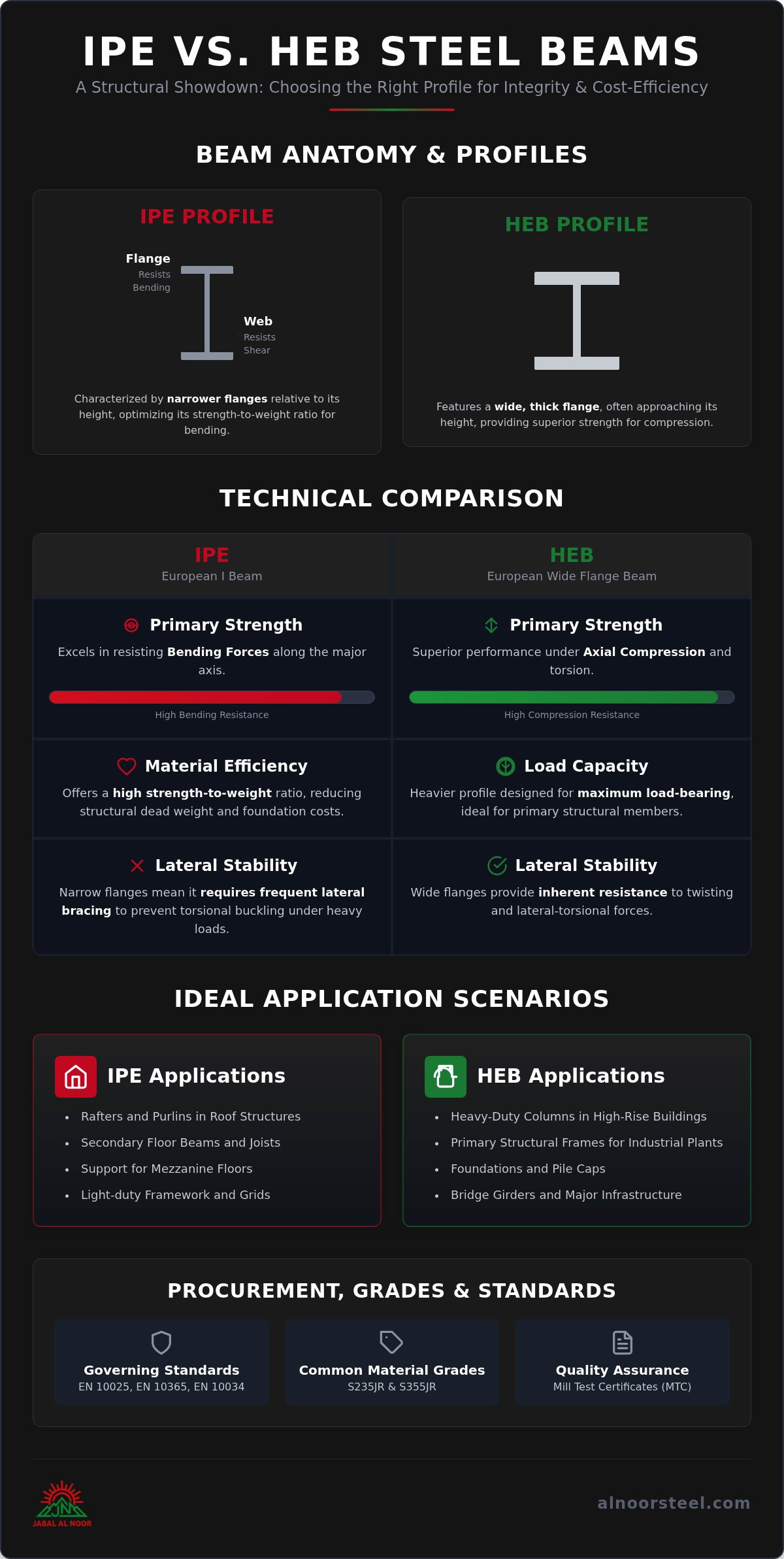
The mechanical performance of an I-beam depends on its geometric distribution of steel. The section consists of two horizontal plates, known as flanges, connected by a vertical component called the web. In structural mechanics, the web primarily resists shear forces, while the flanges counteract the majority of the bending moment. By understanding these roles, you can optimize your design for specific stress types. You can find the full range of these structural components at the Al Noor Steel shop, where international grade compliance is a standard requirement for every section.

The Anatomy of an IPE Beam

The IPE profile, or European I Beam, is characterized by its narrow flanges relative to the height of its web. Modern IPE sections utilize parallel flange designs that simplify connections compared to older tapered versions. These beams are exceptionally material-efficient when resisting bending forces in horizontal applications. Because the mass is concentrated away from the neutral axis, IPE sections offer a high strength-to-weight ratio. They’re ideal for rafters and secondary floor supports where vertical loads are the primary concern. Using IPE sections helps reduce the dead weight of the structure, which can lead to significant savings in the foundation and support columns.

The Anatomy of an HEB Beam

In contrast, the HEB beam is a European Wide Flange Beam where the flange width often approaches the total height of the section. These profiles feature a significantly thicker web and flanges than their IPE or HEA counterparts. This robust geometry makes the HEB profile the superior choice for handling axial compression and torsion. They’re foundational elements in heavy-duty columns and bridge girders where multi-directional stress is a constant factor. While they’re heavier and more expensive than IPE beams, their ability to withstand massive vertical loads makes them indispensable for the primary structural members of high-rise buildings and industrial plants.

Technical Comparison: IPE vs HEB Design Properties

Technical specifications dictate the structural efficiency of any industrial build. When comparing IPE and HEB beams, the most significant variance lies in their Section Modulus (W) and Moment of Inertia (I). IPE profiles are engineered to maximize bending resistance along the major axis while using the least amount of steel possible. This makes IPE the lighter champion for horizontal applications where weight reduction is a priority. Conversely, HEB profiles possess a much higher Moment of Inertia on the minor axis. This geometric property provides the lateral stability required for heavy load-bearing members. Detailed technical data on these ArcelorMittal I sections confirms that while IPE is efficient for simple bending, HEB is necessary when lateral forces are present.

Flange width directly impacts a beam’s resistance to lateral-torsional buckling. IPE beams have relatively narrow flanges, meaning they require frequent lateral bracing to prevent twisting under heavy loads. HEB profiles feature wide flanges that provide inherent resistance to these torsional forces. This geometric stability is why engineers prefer HEB sections for multi-story columns and primary structural frames. The upcoming EN 10034:2026 standard will introduce even tighter tolerances for flange parallelism, further enhancing the reliability of these wide-flange sections in precision engineering.

Load-Bearing Capacity and Stress Distribution

HEB beams distribute heavy vertical loads across a significantly wider surface area than IPE sections. This distribution reduces the localized stress on connecting plates and foundations. While IPE beams perform exceptionally well under uniform distributed loads (UDL) in flooring systems, they lack the cross-sectional area to handle concentrated axial compression effectively. The wide flange design provides a substantial footprint that minimizes the risk of local buckling under extreme compression. This makes HEB the standard for foundational columns in high-stakes infrastructure projects.

Weight and Logistics Considerations

The weight difference between these profiles has a massive impact on project logistics. For instance, an IPE 300 weighs approximately 42.2 kg per meter, whereas an HEB 300 weighs roughly 117 kg per meter. This means an HEB section is nearly 2.7 times heavier than an IPE section of the same height. Such a drastic increase in mass affects everything from transportation costs to the capacity of the cranes required on-site. When planning your logistics, it’s also worth researching Hollow Section Steel Suppliers in UAE to see how different profiles can complement your beam selection. For a reliable supply of these components, you can browse the full inventory selection to match your specific engineering requirements.

Application Scenarios: When to Specify IPE vs HEB

Mapping IPE and HEB beams to specific structural roles requires a deep understanding of load paths and architectural constraints. While both profiles are essential in modern construction, they serve fundamentally different purposes within a building skeleton. IPE beams excel as horizontal members. Their high depth-to-width ratio makes them the industry standard for roof purlins and rafters where the primary stress is bending. In residential construction, they provide a sleek, narrow profile that architects often prefer for exposed steel features or secondary floor supports where vertical clearance is a priority.

HEB sections function as the workhorse of vertical load paths. Their massive cross-sectional area and thick flanges make them indispensable for primary columns and heavy-duty foundations. In bridge engineering, HEB girders handle the complex torsional and axial stresses that would cause lighter sections to fail. These beams are designed to remain stable under the immense pressure of multiple stories, providing the foundational strength required for high-rise infrastructure and industrial warehouses.

Pre-Engineered Buildings (PEB) frequently utilize a hybrid approach to optimize both safety and cost. Engineers might specify HEB for the main frame columns to ensure axial stability while using IPE for the roof rafters to minimize the total tonnage of the project. This strategic mix ensures structural integrity while maintaining budget efficiency. By selecting the right profile for each specific load case, you avoid the unnecessary expense of over-designing secondary members.

Horizontal vs. Vertical Structural Roles

IPE is the preferred choice for spanning long distances with minimal weight. It’s often used in floor systems where the goal is to resist gravity loads across a wide bay without adding excessive dead weight. HEB is indispensable for high-rise vertical supports because its wider flanges resist buckling over long vertical spans. For project managers, selecting a reliable Structural Steel Supplier UAE ensures that both profiles are available in the required grades to meet these distinct structural roles.

Environmental and Industrial Factors

Industrial machinery platforms often face high-frequency vibrations that can lead to fatigue in thinner sections. In these environments, the mass and damping capacity of HEB beams provide superior performance and operational safety. Conversely, IPE is the better choice for architectural features where a slimmer, more refined profile is desired. In the oil and gas sector, where infrastructure must withstand extreme conditions and heavy equipment loads, HEB sections provide the necessary durability and resistance to harsh industrial environments.
IPE and HEB Beams: A Comprehensive Comparison for Structural Engineering

Procurement Factors: Material Grades and Customization

Procurement of IPE and HEB beams involves more than selecting a profile height. You must specify the correct steel grade to match the structural calculations of your project. S235JR is a standard non-alloy structural steel with a yield strength of 235 MPa; it’s suitable for many secondary IPE applications. In contrast, S355JR provides a higher yield strength of 355 MPa, which is often mandatory for the heavy-duty HEB columns used in infrastructure. Using S355JR can sometimes allow for a lighter profile while maintaining the same load capacity, which helps reduce the total weight of the structure. This grade is particularly effective for large-scale energy projects where endurance and high standards are the primary metrics.

Every beam must be accompanied by a Mill Test Certificate (MTC). This document verifies the chemical composition and mechanical properties of the steel, ensuring it meets the rigorous EN 10025 standards. Without this verification, you risk introducing non-compliant materials into high-stakes projects. It’s a foundational step in maintaining operational excellence and ensuring long-term structural safety. Reliable procurement requires a transparent view of these certificates to guarantee that the materials match the engineer’s specifications exactly.

Sourcing International Standard Steel

Compliance with Structural Steel Quality Standards UAE is a non-negotiable requirement for government and energy sector contracts. Large-scale projects require a partner with stockist capabilities rather than just a middleman supplier. A true stockist maintains an extensive inventory of various grades and sizes, which ensures that project timelines aren’t delayed by manufacturing lead times. This regional expertise allows for a steady flow of materials that meet both EN 10025 and ASTM standards, providing the logistical efficiency necessary for complex construction schedules.

Value-Added Services for Contractors

On-site efficiency is significantly improved through a Cut-to-Size Steel Service in the UAE. This logistical service reduces on-site welding and material waste, allowing for immediate assembly upon delivery. Additionally, surface treatments like shot blasting and priming are essential for beams exposed to harsh industrial environments. These processes remove mill scale and apply a protective layer that prevents corrosion during transport and installation. For contractors, these services provide industrial stability by ensuring every component arrives ready for immediate use. To ensure your next project utilizes only high-standard materials, you can view our full range of structural steel sections.

Strategic Sourcing from JABAL AL NOOR Steel

Securing a reliable supply of IPE and HEB beams is a critical factor in maintaining the momentum of large-scale infrastructure and energy projects. JABAL AL NOOR Steel maintains a comprehensive inventory of MS beams, including IPE, HEB, and HEA sections, ensuring that structural requirements are met with precision and speed. Our commitment to international quality benchmarks means every section complies with the latest EN 10025 standards. This dedication to operational excellence provides contractors and engineers with the industrial stability needed to execute complex builds. We prioritize long-term partnership over transactional sales, offering expert consultation to help you align beam profiles with specific load-bearing requirements.

National delivery capabilities ensure that heavy structural components reach project sites across the UAE without delay. Managing the logistics of high-tonnage steel requires a sophisticated supply chain and a deep understanding of regional industrial pressures. We provide the transparency and reliability expected from a seasoned industry veteran. Our inventory isn’t limited to standard sizes; we offer the specialized support needed for high-stakes projects that demand rigorous quality benchmarks and verified material origins.

A Trusted Partner for Long Products

With decades of experience in the regional steel distribution sector, we’ve established ourselves as a foundational pillar for the construction industry. We understand that time-sensitive infrastructure projects don’t have room for supply chain interruptions. Our role as a leading entity among Steel Suppliers in UAE allows us to offer consistent availability even for rare or high-demand profiles. This seasoned expertise ensures that every client receives materials that are not only compliant with international standards but also optimized for logistical efficiency.

Ready to Support Your Next Project

Every construction project has unique requirements, and we’re prepared to provide the specific solutions your engineering team demands. Whether you need to request a quote for bulk IPE and HEB beams or require access to our full range of hollow sections and flat products, our procurement process is designed for clarity and speed. We address the common industry gap in value-added services by providing specialized cut-to-size customization and surface treatments like shot blasting and priming. These services reduce on-site waste and ensure your steel arrives ready for immediate structural integration. To secure the materials for your next build, explore our structural steel inventory and partner with a supplier that values precision and long-term value.

Optimizing Structural Integrity with Precise Beam Selection

Mastering the technical nuances of IPE and HEB beams is the first step toward achieving industrial stability in your next project. We’ve established that while IPE sections offer unmatched efficiency for horizontal bending, the wide-flange HEB profile remains the standard for vertical load-bearing members. Selecting the correct steel grade, such as S355JR, ensures your structure meets the rigorous safety benchmarks required for large-scale infrastructure. These decisions directly impact both the safety of the build and the project’s overall cost-efficiency.

Partnering with a dependable supplier transforms these technical choices into operational reality. JABAL AL NOOR Steel provides the regional expertise and logistical efficiency needed to keep complex projects on schedule. With an EN 10025 Compliant Inventory and In-house Cut-to-Size Services, we help you minimize on-site waste and streamline the assembly process. Our National UAE Distribution Network ensures that high-standard materials are delivered directly to your site with unwavering reliability and professionalism.

Request a Quote for Structural Beams to secure the precision and long-term value your project deserves. We’re ready to provide the foundational strength for your engineering success.

Frequently Asked Questions

What is the main difference between IPE and HEB beams?

The primary distinction lies in their cross-sectional geometry and intended structural role. IPE sections feature narrower flanges and are optimized for resisting bending moments in horizontal applications like floor joists. HEB profiles possess wider flanges and thicker webs, providing the axial stability required for vertical columns. This design difference makes HEB sections significantly heavier and more capable of handling multi-directional stress in large-scale infrastructure projects.

Can I use an IPE beam for a column in a multi-story building?

While technically possible for light loads, IPE beams aren’t the standard choice for primary columns in multi-story structures. Their narrow flanges make them susceptible to lateral buckling under heavy axial compression. HEB profiles are specifically engineered for vertical support because their wide-flange design provides the necessary stability to prevent twisting. For secondary supports or light-duty frames, IPE might suffice, but primary structural integrity usually demands the robust cross-section of an HEB beam.

Which is more cost-effective: IPE or HEB?

IPE beams are generally more cost-effective for horizontal spans because they provide high strength with minimal steel weight. This reduces material costs and transportation expenses for roof rafters and secondary floor beams. However, for heavy vertical loads, using an HEB beam is more economical than attempting to reinforce multiple lighter IPE sections. True cost-efficiency is achieved by matching the beam profile to the specific stress requirements of the engineering design.

What do the numbers after the beam type (e.g., IPE 200) signify?

The numerical value following the profile designation indicates the nominal height of the beam in millimeters. For instance, an IPE 200 has a total height of approximately 200mm. These dimensions are standardized under EN 10365:2026 to ensure consistency across the industrial supply chain. Engineers use these numbers to quickly identify the section properties required for their calculations, allowing for precise procurement and structural alignment during the design phase.

Are HEB beams the same as Wide Flange Beams (W-Beams)?

HEB beams are the European version of Wide Flange beams, but they’re not identical to American W-beams. While both share the “H” shape and wide-flange characteristics, HEB profiles follow European EN standards, whereas W-beams adhere to American ASTM standards. There are subtle differences in dimensions and weight per meter. For projects in the UAE, specifying IPE and HEB beams ensures compliance with the European standards most commonly utilized in regional infrastructure.

Which steel grade is most common for IPE and HEB beams in the UAE?

Structural steel in the UAE most commonly utilizes S235JR and S355JR grades in accordance with the EN 10025 standard. S235JR is a standard grade suitable for many general construction applications. S355JR is frequently specified for HEB beams in high-stress environments because it offers a higher yield strength of 355 MPa. Choosing the correct grade is essential for ensuring that the structural framework can withstand the operational pressures of heavy industry.

Do you offer surface treatments for beams used in outdoor environments?

JABAL AL NOOR Steel provides specialized surface treatments to protect structural components from harsh outdoor conditions. We offer shot blasting to remove mill scale and priming to create a corrosion-resistant barrier. These treatments are vital for maintaining the durability of steel in the humid and saline environments often found across the UAE. Proper surface protection extends the lifecycle of your structural framework and reduces long-term maintenance requirements for industrial infrastructure.

What are the standard lengths for IPE and HEB beams in stock?

Standard stock lengths for these profiles are typically 6 meters or 12 meters to facilitate efficient transport and handling. However, project requirements often demand precise dimensions to minimize on-site waste and welding. We provide in-house cut-to-size customization for our entire inventory of long products. This service allows contractors to receive beams that are ready for immediate installation, significantly improving the logistical efficiency and safety of high-stakes construction projects.
Custom Steel Beams UAE: Structural Procurement Guide

Custom Steel Beams UAE: Structural Procurement Guide

Standard 12-meter stock lengths are no longer the benchmark for high-stakes infrastructure projects; they’re often a primary source of avoidable project overhead. In an industry where the UAE structural steel fabrication market is projected to reach USD 3.16 billion by 2031, the cost of material waste and on-site labor for manual cutting can severely compromise a project’s financial stability. You’re likely familiar with the logistical strain of managing oversized sections and the subsequent delays that arise when standard materials require extensive field modification before installation.

Procuring custom length steel beams UAE allows you to bypass these bottlenecks by integrating factory-precision cutting directly into your supply chain. This guide demonstrates how precision-cut structural sections optimize your procurement strategy, ensuring full compliance with ASTM and EN standards while achieving zero-waste efficiency. We’ll examine the technical advantages of tailored beams, their impact on reducing project timelines, and the methodical approach required to maintain rigorous quality benchmarks across the national industrial landscape.

Key Takeaways

  • Learn how factory-processed beams eliminate the significant material waste typically associated with standard 12-meter stock lengths.
  • Understand the essential material grades, such as ASTM A36 and S355JR, that ensure compliance with international structural standards.
  • Discover how procuring custom length steel beams UAE reduces on-site labor costs and safety risks by shifting fabrication to controlled industrial environments.
  • Identify the technical advantages of industrial bandsaw cutting over manual on-site methods for achieving superior precision and structural reliability.
  • Master a professional procurement checklist to avoid ambiguity in fabrication and accelerate your project’s logistical timeline.

The Strategic Role of Custom Length Steel Beams in UAE Construction

Custom length steel beams are factory-processed structural sections tailored precisely to specific engineering drawings. Unlike standard stock, these beams arrive at the site ready for immediate installation, acting as a pre-fabricated solution rather than a raw commodity. In the current industrial climate, the procurement of custom length steel beams UAE represents a shift toward higher operational efficiency. This transition is driven by the need to meet 2026 efficiency standards, where the emphasis on pre-fabricated components reduces the reliance on intensive on-site fabrication.

The core profiles utilized across the national infrastructure include Universal Beams (UB), Universal Columns (UC), IPE, and HEB sections. Understanding the fundamental structural steel properties of these profiles is essential for selecting the correct material for heavy-load applications. While standard 6-meter or 12-meter lengths are readily available, they often fail to align with the specific spans required by modern architectural designs. This mismatch leads to significant material “off-cut” waste that unnecessarily inflates project budgets and complicates waste management protocols.

Reducing Material Waste and Project Costs

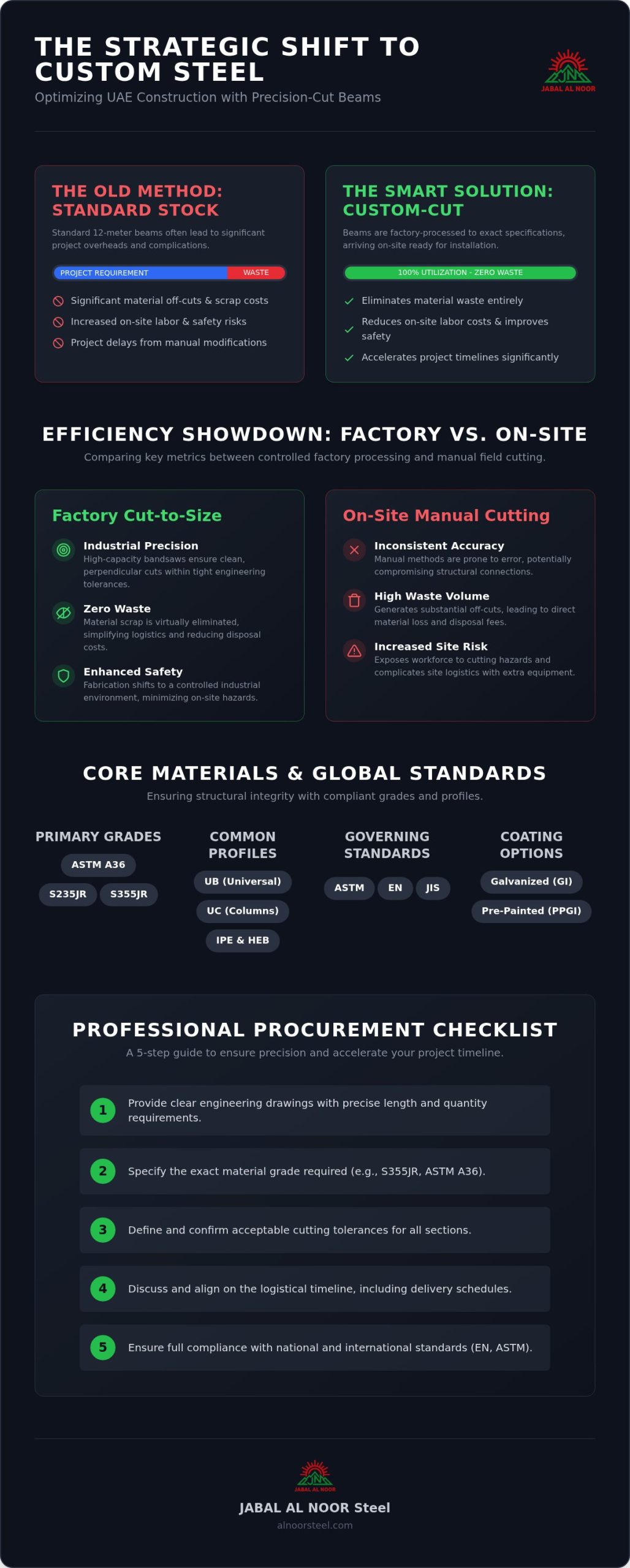
The financial impact of scrap steel reduction is a critical factor in large-scale industrial contracts. When beams are cut to precise specifications in a controlled factory environment, the volume of unusable scrap generated on-site drops to near zero. This precision simplifies inventory management; logistics teams don’t need to account for the removal and disposal of heavy off-cuts. Beyond the immediate cost savings on material, factory-cut beams reduce the labor hours typically spent on manual measuring and cutting. Scrap optimization serves as a primary driver for sustainable construction within the regional energy and infrastructure sectors.

Standard Profiles vs. Customized Sections

Standard MS beam availability provides a foundation for the market, but it lacks the flexibility required for complex engineering projects. Jabal Al Noor Steel bridges this gap by offering a comprehensive cut-to-size service that transforms standard stock into precision components. By optimizing steel profiles for engineering projects, contractors can ensure maximum load efficiency without the weight penalties of oversized sections. This methodical approach to custom length steel beams UAE ensures that every structural member contributes to the project’s integrity while maintaining the highest standards of logistical proficiency and technical excellence.

Technical Specifications: Material Grades and Standards for Customized Beams

The selection of structural grades is a fundamental step in ensuring the long term reliability of any framework. For the procurement of custom length steel beams UAE, the industry relies heavily on primary structural grades like Mild Steel (ASTM A36, S235JR, S355JR) and Stainless Steel (304, 316L). Adherence to the AISI Design Standards ensures that these materials provide the necessary load bearing capacity and ductility. Customization must be executed with precision to maintain the structural integrity mandated by JIS, EN, and ASTM benchmarks; improper cutting can introduce localized stress points that compromise the entire section.

The mechanical properties of a beam, specifically its flange width and web thickness, dictate the appropriate industrial cutting method. Heavier sections require high capacity bandsaws to achieve clean, perpendicular cuts that align with tight engineering tolerances. For specialized environmental requirements, GI and PPGI options are available, providing pre-coated protection for projects where atmospheric exposure is a concern. It’s often beneficial to review available stock profiles before finalizing your technical drawings.

Mild Steel Beams for Structural Frameworks

ASTM A36 is the most versatile grade for general construction because it responds exceptionally well to precision cutting and welding. It provides a balanced combination of strength and cost efficiency for standard framing. For more detailed compliance parameters, engineers should consult the Structural Steel Quality Standards UAE. In contrast, S355JR is the preferred choice for high tensile requirements in heavy infrastructure, such as bridge spans and communication towers, where superior yield strength is mandatory.

Corrosion Resistance and Surface Treatments

Achieving durable protection in the regional climate requires a specific sequence of operations. It’s critical that beams are cut to their final dimensions before any surface treatments are applied. This ensures that the newly exposed edges receive full coverage, preventing the onset of edge corrosion. Following customization, steel surface priming in UAE provides the necessary barrier against oxidation. Shot blasting is often employed for customized sections to strip away mill scale and create a profile that allows primers to bond effectively, ensuring the steel’s endurance in harsh industrial environments.

Factory Cut-to-Size vs. On-Site Cutting: Efficiency Comparison

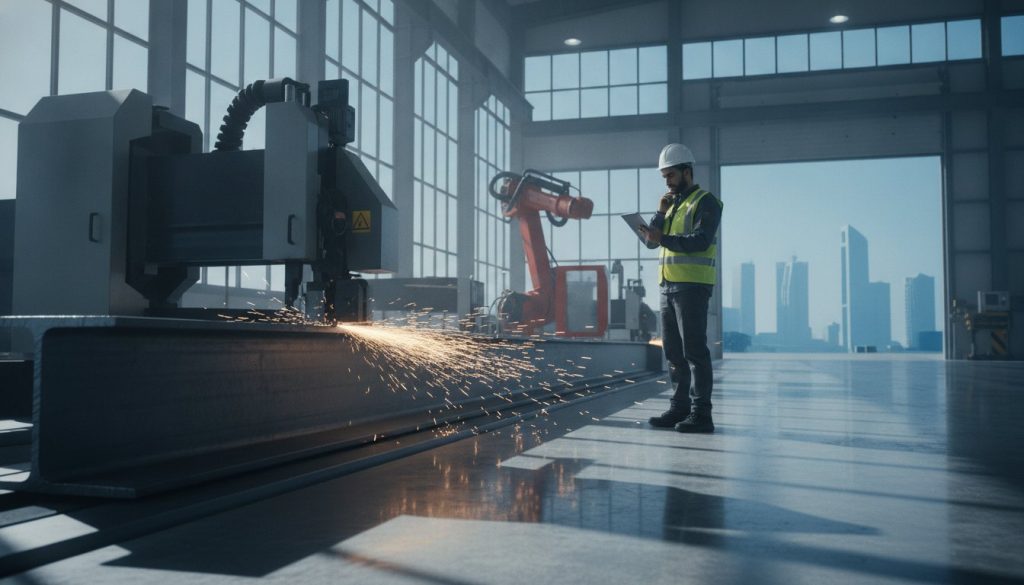
The decision between factory processing and on-site fabrication often determines the overall pace of a construction schedule. While manual oxy-fuel or plasma cutting remains a standard field practice, it can’t match the precision of industrial bandsaws used in a controlled environment. Procuring custom length steel beams UAE allows project managers to implement the “ready-to-bolt” strategy. This approach ensures that structural members arrive with exact tolerances, ready for immediate assembly without the need for additional field modifications. It’s a method that shifts the heavy labor away from the site, allowing for a more streamlined erection process.

Safety is another primary consideration. Reducing the volume of hot work required at the construction site decreases the risk of industrial accidents and fire hazards. While factory processing involves a planned lead time during the procurement phase, it eliminates hundreds of labor hours that would otherwise be spent on manual measuring and cutting in the field. This trade-off results in a predictable timeline and a significantly lower risk of error during the critical phases of structural assembly.

Precision Tolerances and Structural Accuracy

A tolerance of +/- 1mm isn’t just a preference; it’s a requirement for Pre-Engineered Buildings (PEB) and modular steel structures. Manual cutting methods often generate a significant Heat-Affected Zone (HAZ), which can weaken the steel’s edge and complicate subsequent welding or bolting. Factory-controlled environments eliminate these metallurgical concerns. Jabal Al Noor utilizes advanced processing equipment to ensure dimensional consistency across bulk orders. This level of accuracy is vital for maintaining the structural integrity of large-scale industrial frameworks where every millimeter counts.

Logistical Advantages of Pre-Cut Beams

Logistical efficiency begins at the loading bay. Custom lengths enable optimized truck loading patterns, ensuring that transport vehicles operate at maximum capacity without exceeding length limits. This optimization leads to faster offloading at the site, as beams can be organized according to the sequence of installation. When beams are delivered to exact specifications, crane time is reduced because the material moves directly from the trailer to its final position. Utilizing a professional cut-to-size steel service in the UAE transforms the delivery phase from a potential bottleneck into a highly disciplined deployment.

Custom Steel Beams UAE: Structural Procurement Guide

Procurement Checklist for Ordering Custom Length Steel Beams

Accuracy in procurement is the foundation of structural stability. When ordering custom length steel beams UAE, procurement officers must first verify the structural grade and section type, such as HEB 200 or IPE 300, against the final approved bill of quantities (BOQ). Ambiguity at this stage can lead to costly logistical errors. Specifying exact lengths in millimeters rather than centimeters or meters is a mandatory standard to ensure the factory-controlled cutting process aligns with the modular requirements of the project. This level of precision eliminates the need for site-based measuring, which is often prone to human error.

Coordination of secondary processes is equally vital for maintaining project momentum. Identifying the required surface treatments, such as steel plate shot blasting, before the material leaves the facility ensures that the beams arrive ready for immediate installation or priming. This proactive approach prevents the need for double handling at the site. Finally, confirm that the delivery schedule is synchronized with your on-site erection sequence to avoid site congestion and ensure that the right sections are available as the structure rises. We recommend you review our current stock profiles to align your procurement timeline with material availability.

Specifying Custom Requirements

Detailed drawings are indispensable for beams that require more than simple length adjustments. If your project involves specific hole patterns or notches for connection plates, providing these dimensions in the initial request for quotation (RFQ) is essential for accurate pricing. For large-scale infrastructure, requesting bulk quotes for varied lengths within a single project allows for better cost management and logistical planning. The procurement of custom length steel beams UAE is most effective when technical specifications are finalized early, allowing the supplier to optimize the cutting schedule for maximum efficiency. It’s often prudent to check the Jabal Al Noor shop to verify current inventory availability for your specific profile requirements before finalizing the procurement plan.

Quality Assurance and Certification

Documentation for structural steel in the UAE industrial sector must be comprehensive and transparent. Compliance with national regulations hinges on the verification of Material Test Certificates (MTC), which confirm the chemical composition and mechanical properties of the steel. Jabal Al Noor maintains a disciplined approach to material traceability; every customized beam is tracked from its original heat number to its final delivery. This provides a transparent audit trail for quality assurance officers and project stakeholders, ensuring the steel meets the rigorous standards required for long-term endurance and safety.

Jabal Al Noor Steel: Your National Partner for Customized Long Products

Jabal Al Noor Steel operates as a central pillar in the national supply chain, providing more than just raw materials. As a leading national stockist and processor, the brand specializes in the precision delivery of custom length steel beams UAE, catering to the high-stakes requirements of the infrastructure and energy sectors. The facility maintains a comprehensive inventory of MS beams, including H-beams, I-beams, Universal Beams, and Columns, alongside MS channels, angles, and hollow sections. This extensive stock is available for immediate customization, ensuring that project timelines remain secure and predictable. Every section processed undergoes rigorous material testing to ensure absolute compliance with international benchmarks including ASTM, JIS, and EN standards.

Reliability in heavy industry is built on consistency and logistical proficiency. Jabal Al Noor leverages its national delivery reach to underscore its role as a dependable partner for large-scale projects across the country. By providing factory-processed structural members, the brand enables contractors to maintain a disciplined erection sequence, free from the bottlenecks of field-based fabrication. This methodical approach to distribution ensures that the right materials arrive at the right time, precisely as specified in the engineering drawings.

Comprehensive Industrial Processing

Value-added services are at the core of our operations. Beyond precision cut-to-size capabilities, Jabal Al Noor provides specialized surface finishing, including shot blasting and priming, to enhance the durability of structural steel. These processes are essential for ensuring long-term endurance in the UAE’s challenging environmental conditions, where humidity and heat can accelerate oxidation. We focus on delivering components that are ready for immediate integration into your framework. If your project requires specific technical configurations or non-standard lengths, our team is available for technical consultations to ensure your structural requirements are met with industrial-grade precision.

Reliable Supply Chain for Heavy Industry

Transparency and reliability define the long-term partnerships we build with our collaborators. Jabal Al Noor Steel isn’t just a supplier; it’s a foundational entity that understands the pressures of modern engineering. We prioritize ethical conduct and technical proficiency, ensuring that every delivery is backed by full material traceability and documented quality benchmarks. This commitment to excellence has established the brand as a seasoned veteran in the regional industrial landscape. To see how our inventory can support your next project, explore our full range of structural steel products and discover the advantages of a partner that prioritizes precision and logistical efficiency.

Optimizing Your Structural Supply Chain for Future Infrastructure

Shifting fabrication from the high-stakes environment of a construction site to a controlled industrial facility is a strategic decision that directly impacts project profitability. By prioritizing precision-cut sections, you ensure that every structural member aligns perfectly with engineering drawings while maintaining the rigorous quality benchmarks required for modern energy and infrastructure projects. This transition to factory-processed materials reduces on-site labor risks and eliminates the financial burden of material waste.

Jabal Al Noor Steel has been a trusted supplier since 2010, providing the regional market with unwavering reliability and technical expertise. We maintain full compliance with ASTM, EN, and JIS standards, ensuring that our products meet the highest global benchmarks for endurance and safety. With our extensive national delivery network, your materials arrive ready for immediate installation, keeping your project’s timeline secure. If you’re ready to enhance your procurement strategy, Request a Quote for Custom Length Steel Beams today. Choosing the right partner for custom length steel beams UAE is a commitment to precision and long-term value. We’re prepared to support your next structural milestone with the stability and proficiency your project deserves.

Frequently Asked Questions

What is the maximum length of steel beam that can be customized in the UAE?

The maximum length for customization is governed by the standard stock size of 12 meters. While standard sections are sourced in these 12-meter lengths, they can be precision-cut to any specific smaller dimension required by your engineering drawings. For projects requiring spans longer than 12 meters, specialized procurement or splicing techniques are necessary. We ensure that every customized section is handled with the appropriate logistical care to maintain structural integrity during transport.

How does factory cutting affect the structural integrity of the steel beam?

Industrial factory cutting utilizes heavy-duty bandsaws that employ a cold-cutting mechanical process, which preserves the original structural integrity of the material. Unlike manual oxy-fuel or plasma cutting used on-site, this method prevents the formation of a significant Heat-Affected Zone (HAZ). By avoiding extreme thermal exposure, the steel maintains its specified yield strength and ductility. This ensures the custom length steel beams UAE meet all mechanical performance requirements mandated by international engineering standards.

Can I request specific surface treatments like shot blasting for custom-length beams?

Yes, comprehensive surface treatments including shot blasting and priming are available for all customized sections. It’s recommended that beams are cut to their final dimensions before these treatments are applied to ensure that the newly exposed ends receive full protective coverage. This sequence is critical for preventing edge corrosion in the UAE’s humid industrial environments. Shot blasting prepares the steel surface by removing mill scale, creating an ideal profile for high-performance primers to bond effectively.

What are the standard tolerances for cut-to-size steel beams?

Standard tolerances for factory-processed steel beams typically range between +/- 1mm and +/- 2mm, depending on the section size and the equipment used. This high level of precision is essential for modular construction and Pre-Engineered Buildings (PEB) where components must align perfectly during assembly. Achieving these tight tolerances in a factory setting eliminates the common errors associated with manual field measurements. This precision ensures that structural members are ready for immediate bolting or welding upon arrival.

Are material test certificates provided for customized steel orders?

Material Test Certificates (MTC) are provided for every order to confirm full compliance with international and national quality regulations. These documents detail the chemical composition and mechanical properties of the steel, ensuring traceability from the original heat number to the final delivery. Providing MTCs is a standard practice that supports the rigorous quality assurance protocols required for large-scale infrastructure and energy projects. This documentation provides stakeholders with the necessary confidence in the material’s durability and safety.

How much time does it typically take to process a bulk order of custom-length beams?

Processing timelines for bulk orders are influenced by the total tonnage and the complexity of the required cuts. Standard customization for custom length steel beams UAE typically requires a lead time of three to five business days following the final approval of technical specifications. This planned duration includes material selection, precision cutting, and quality inspections. While it involves an upfront time commitment, it significantly reduces the hundreds of labor hours that would otherwise be spent on fabrication at the site.

Which steel grades are most commonly used for customized beams in UAE infrastructure?

The most common structural grades include ASTM A36 for general purpose framing and S355JR for high-tensile applications in heavy infrastructure. ASTM A36 is valued for its excellent weldability and response to precision cutting, making it a staple for standard industrial frameworks. S355JR is frequently specified for bridges, towers, and large spans where superior yield strength is mandatory. Both grades are maintained in extensive inventory to support the rapid deployment of customized structural sections across the national landscape.

Is it more cost-effective to order custom lengths or standard stock for large projects?

Ordering custom lengths is generally more cost-effective for large projects due to the elimination of material waste and the reduction of on-site labor. While standard 12-meter stock may have a lower initial procurement price, the hidden costs of manual cutting, scrap disposal, and extended crane time often exceed these savings. Factory-precision beams arrive ready for installation, which accelerates the construction timeline and minimizes the overhead associated with site-based fabrication and inventory management.