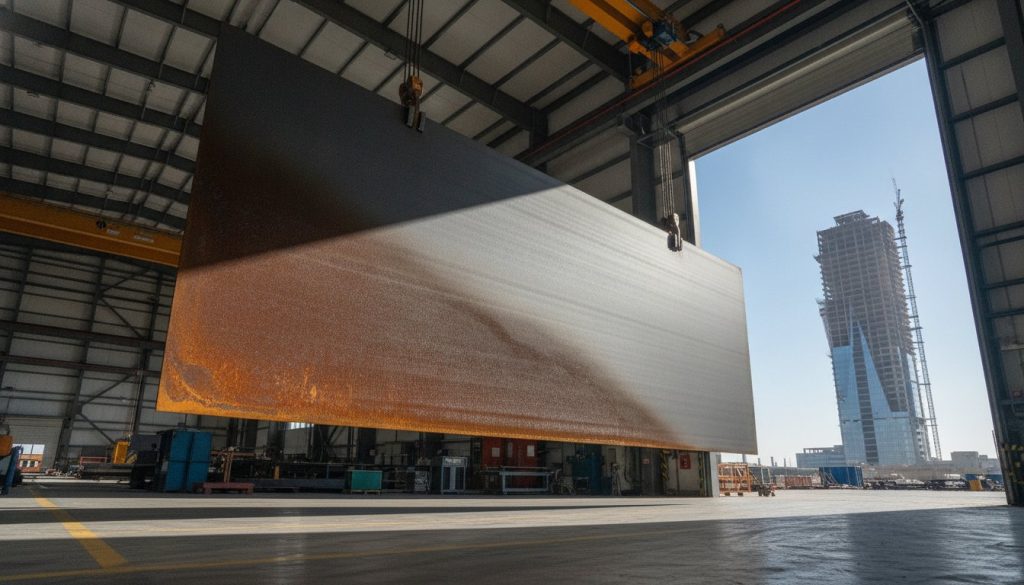
In the UAE’s aggressive coastal environment, shot blasting isn’t an optional finish; it’s a structural necessity for preventing subsurface corrosion. With an estimated $951 billion in active construction projects across the GCC region as of mid-2026, the demand for high-performance materials has never been higher. You’re likely aware that the relentless combination of high humidity and extreme salinity can cause premature coating failure on structural steel within months. This guide explores how professional steel plate shot blasting UAE services provide the essential foundation for long-term durability and logistical efficiency.
We understand the pressure of meeting strict consultant specifications while ensuring your project remains on schedule. By adopting the latest draft DIN EN ISO 8501-1:2026-01 standards for surface cleanliness, you can significantly extend the service life of your steel structures. This article provides a comprehensive overview of shot blasting techniques, their impact on paint and primer adhesion, and the benefits of sourcing pre-treated plates from a national stockist. You’ll learn how to implement the correct surface preparation standards to ensure your projects withstand the region’s harsh climate and meet global quality benchmarks.
Key Takeaways
- Understand why the UAE’s unique combination of high humidity and coastal salinity makes shot blasting a critical requirement for preventing subsurface corrosion and coating failure.
- Navigate the technical specifications of ISO 8501-1 and learn why Sa 2.5 is the established benchmark for high-performance steel plate shot blasting UAE infrastructure projects.
- Evaluate the industrial advantages of shot blasting over sand blasting, focusing on operational efficiency, surface consistency, and reduced environmental impact.
- Gain insights into the specialized centrifugal wheel blasting process, from initial moisture removal to the precise application of kinetic energy for optimal profile creation.
- Streamline project timelines in 2026 by identifying the benefits of sourcing pre-processed, shot-blasted, and primed steel directly from a national stockist to minimize secondary handling.
The Importance of Steel Plate Shot Blasting in the UAE
Steel plate shot blasting UAE is a critical industrial process designed to safeguard the longevity of national infrastructure. It utilizes advanced centrifugal wheel blasting technology to strip away mill scale, rust, and surface contaminants. By propelling steel abrasive at extreme velocities, the process creates a uniform, textured profile that’s essential for the long-term adhesion of industrial coatings. This mechanical approach ensures a level of cleanliness that chemical or manual methods simply can’t replicate, establishing a foundation for structural endurance.
The UAE’s environmental conditions demand this level of precision. High ambient humidity and airborne salinity accelerate the oxidation process, turning minor surface imperfections into significant structural vulnerabilities. Manual cleaning, while common in smaller workshops, often fails to meet the rigorous standards of modern structural engineering. It typically leaves behind microscopic salt deposits that trap moisture beneath the paint, leading to rapid delamination and corrosion. Professional steel plate shot blasting UAE services eliminate these risks by providing a chemically clean and physically keyed surface.
To better understand this industrial process, watch this technical overview of the machinery in action:
Combating Mill Scale and Atmospheric Corrosion
Mill scale is a primary concern for engineers and project managers. It’s a thin, brittle layer of iron oxide formed during the hot-rolling of steel plates. Although it looks like a solid surface, it’s highly unstable. In the UAE’s climate, moisture and salt inevitably penetrate the mill scale, causing it to detach from the base metal. When the scale fails, the entire coating system fails with it. Shot blasting effectively removes this “invisible enemy,” preventing structural pitting before it starts. A thorough cost-benefit analysis reveals that the initial investment in Sa 2.5 cleaning in 2026 is significantly lower than the logistical and financial burden of mid-life structural remediation.
Industrial Applications for Treated Steel Plates
The necessity for high-standard surface preparation spans across the UAE’s most vital sectors. Structural steel for high-rise frameworks and massive industrial warehouses requires these treated plates to ensure a service life exceeding 25 years. In the energy sector, oil and gas infrastructure must meet strict compliance codes to handle corrosive environments. Marine and offshore projects also demand plates that can survive constant salt spray and immersion. Accessing high-quality, pre-treated flat products ensures that these projects begin with a foundation of durability and technical excellence. This approach minimizes on-site preparation time and guarantees that every component meets international quality benchmarks from the moment it arrives at the yard.
The Shot Blasting Process: A Step-by-Step Technical Guide
Success in steel plate shot blasting UAE depends on a rigorous, multi-stage technical sequence. It’s not just a cleaning method; it’s a controlled engineering process. It begins long before the first abrasive particle strikes the metal. Every stage is meticulously designed to ensure the plate reaches the required Sa 2.5 or Sa 3 cleanliness level with total consistency across the entire surface area.
Pre-Treatment and Material Loading
Initial surface inspection is the first line of defense in this process. Technicians must identify and remove heavy oil, grease, or chalk marks using specialized solvent cleaning. Blasting over grease is a critical error; it doesn’t remove the lubricant but instead contaminates the abrasive media and the entire blast chamber. In the UAE’s humid environment, pre-heating the plates is often a necessary step. This removes surface moisture, which prevents abrasive clumping and ensures a steady, uninterrupted flow through the turbines. Automated roller conveyor systems move the plates at a calibrated speed, guaranteeing uniform exposure to the blast stream for every square centimeter of the material.
The Blasting Chamber and Media Recovery
Inside the chamber, high-velocity turbines serve as the engine of the operation. These centrifugal wheels use kinetic energy to hurl abrasive media at the steel surface at incredible speeds. The choice of media is a technical decision based on the desired finish. While steel shot provides a peening effect to smooth the surface, steel grit is often preferred for its ability to cut through stubborn mill scale and create a sharp, angular anchor pattern. This microscopic profile is what allows high-performance industrial coatings to grip the metal securely.
A continuous recycling loop maintains operational efficiency and quality. After impact, the media falls through a floor hopper and is transported to an air-wash separator. This system removes dust, broken media, and contaminants before returning the clean, functional abrasive to the turbines. Effective dust extraction ensures that the finished plate is entirely free of particulate matter before it exits the machine.
To maintain the integrity of the newly cleaned surface, immediate post-blast priming is essential. The effectiveness of steel plate shot blasting UAE services is maximized when followed by immediate coating. In this climate, “flash rusting” can occur within hours due to high humidity levels. Applying a weldable shop primer immediately after blasting locks in the cleanliness and provides temporary protection during fabrication. For a comprehensive understanding of the priming steel surface treatments UAE professionals rely on, our technical guide covers the full range of primer systems and ISO 12944 compliance requirements. If you are looking to streamline your supply chain, you can source pre-processed flat products that arrive ready for immediate use. This integrated approach reduces secondary handling and ensures your structural components meet the highest quality benchmarks from day one.
Shot Blasting vs. Sand Blasting: Which is Better for UAE Projects?
Choosing between shot blasting and sand blasting is a pivotal decision for any large-scale industrial project. While both methods aim to clean surfaces, their mechanisms and outcomes differ significantly. Sand blasting relies on compressed air to propel mineral abrasives, which often creates a massive amount of dust and requires extensive manual labor. In contrast, steel plate shot blasting UAE utilizes centrifugal force and recyclable metal media within a controlled environment. For the heavy-duty requirements of 2026 infrastructure, shot blasting has emerged as the superior industrial standard.
Environmental and safety considerations often dictate this choice. Traditional sand blasting produces high levels of silica dust, a known respiratory hazard that’s strictly regulated across the UAE. Shot blasting is a closed-loop system that incorporates advanced dust extraction, making it the cleaner and more sustainable choice. It doesn’t just protect the workforce; it ensures compliance with increasingly stringent national environmental standards while maintaining a tidy, efficient job site.
Operational Efficiency and Cost
Operational scale is where the advantages of an automated system become undeniable. Manual sand blasting is slow and highly dependent on the skill of the operator, which can lead to inconsistent finishes. Automated shot blasting systems process large volumes of steel plates with machine-controlled precision, significantly reducing labor costs and project timelines. The durability of the media also plays a role in cost management. While sand or mineral abrasives break down after a single use, steel shot can be recycled hundreds of times. This longevity leads to:
- Lower material costs: Reduced frequency of abrasive procurement.
- Decreased waste: Significantly less spent media requiring disposal.
- Consistent speed: Uniform processing times regardless of plate size.
Surface Profile and Coating Adhesion
The quality of the “anchor pattern” is what ultimately determines the success of a protective coating. Shot blasting provides a consistent peak-to-valley height across the entire plate surface, which is essential for the adhesion of heavy-duty epoxy primers and marine-grade paints. The kinetic energy of steel shot is much higher than that of sand, allowing it to effectively “peen” the surface and remove even the most stubborn mill scale. This process doesn’t just clean; it hardens the surface slightly, enhancing the overall durability of the steel.
If your project involves high-performance coatings, the mechanical bond created by a centrifugal wheel is far more reliable than the irregular profile left by manual air-blasting. Sourcing flat products that have been pre-processed using industrial shot blasting ensures that your structures are ready for the most demanding coating specifications from the moment they arrive.
Surface Preparation Standards: Understanding ISO 8501-1
Adherence to international standards is the cornerstone of industrial quality in the UAE. For contractors and engineers, ISO 8501-1 serves as the primary technical reference for the visual assessment of surface cleanliness. This standard categorizes the degree of rust removal into a clear hierarchy, ranging from Sa 1 (Light Blast Cleaning) to Sa 3 (Blast Cleaning to Visually Clean Steel). In the context of 2026 infrastructure projects, achieving the correct grade through steel plate shot blasting UAE is not merely a preference but a contractual obligation mandated by global consultants.
While cleanliness is vital, the “anchor profile” or surface roughness is equally critical. This physical texture, typically measured between 50 and 75 microns, provides the mechanical bond necessary for industrial primers. Without this specific peak-to-valley height, even the most expensive coating systems will eventually fail. Accurate measurement using replica tape or digital surface profile gauges ensures that every plate processed meets the technical requirements of the project’s coating specification.
Breaking Down the Sa 2.5 Standard
Sa 2.5, often referred to as “Near-White Metal Blast Cleaning,” is the established gold standard for UAE infrastructure. The technical definition requires the removal of at least 95% of all surface contaminants, including mill scale, rust, and old paint. Only slight streaks or discolorations are permitted to remain. This grade is specifically required for high-performance protective coatings because it provides a nearly pristine surface while remaining more cost-effective than the absolute purity of Sa 3. To verify this finish, inspectors utilize visual comparators, which allow for a side-by-side assessment of the treated steel against standardized photographic examples from the draft DIN EN ISO 8501-1:2026-01 guidelines.
Compliance and Certification for UAE Projects
Meeting the requirements of international consultants and government bodies requires more than just technical skill; it demands rigorous documentation. Quality Assurance and Quality Control (QA/QC) protocols involve recording ambient conditions, abrasive media types, and the final surface profile for every batch of steel. Third-party inspections are common on national-scale projects to verify that the surface preparation meets the stated ISO compliance levels. This transparency builds trust and ensures that the structural components can withstand the aggressive environment for their intended service life.
To ensure your project begins with materials that meet these exacting benchmarks, you can view our inventory of pre-treated steel plates that are processed to Sa 2.5 standards and ready for immediate fabrication. Sourcing pre-blasted material simplifies your QA/QC process and guarantees that the foundation of your structure is compliant with the latest 2026 industrial regulations.
Sourcing Pre-Processed Steel Plates for National Projects
Integrating surface treatments directly into the procurement phase is a strategic decision for modern engineering firms. Traditionally, the supply chain involves sourcing raw plates, transporting them to an external blasting yard, and then moving them again to the fabrication site. This fragmented approach introduces multiple logistical hurdles and increases the risk of surface contamination. By utilizing integrated steel plate shot blasting UAE services at the point of supply, project managers can consolidate their operations effectively. This ensures that the material arrives in a ready-to-use state, preserving the Sa 2.5 cleanliness standard without the physical risks associated with repeated loading and unloading.
Sourcing from a national stockist that provides value-added processing means that quality control is centralized. Instead of managing multiple vendors, you deal with a single entity responsible for both the steel grade and the surface finish. This level of transparency is vital for large-scale infrastructure where every component must have a verifiable pedigree and a consistent technical profile. It allows for a more predictable workflow and reduces the administrative burden of tracking material through various processing stages. For engineers who also need to address the geometric precision of their structural components, understanding how to optimize steel profiles for engineering projects is an equally critical part of the procurement strategy.
Streamlining the Project Supply Chain
Eliminating third-party blasting contractors removes a significant bottleneck from the project timeline. In 2026, the pace of UAE infrastructure development requires just-in-time delivery to maintain operational momentum. Sourcing pre-treated material allows for a direct path from the processing facility to the site, which reduces overall transportation costs. This streamlined workflow also provides a critical defense against atmospheric corrosion. Raw steel is highly vulnerable to the UAE’s saline air during transit and site storage. However, plates that are shot-blasted and immediately coated with a weldable primer remain protected from the elements, ensuring the metal’s integrity isn’t compromised before fabrication begins. To select the most effective system for your application, refer to our detailed overview of priming steel surface treatments UAE engineers depend on for long-term corrosion protection in coastal environments.
JABAL AL NOOR Steel’s Commitment to Quality
Maintaining a comprehensive inventory of international grades, including ASTM A36 and A572, is the foundation of our service. We don’t just supply metal; we provide engineered solutions that are ready for the most demanding environments. Our customized surface treatments are tailored to meet the specific requirements of each project, from offshore energy platforms to high-rise skeletal structures. We take immense pride in our role as a dependable partner, offering logistical efficiency and technical proficiency that national projects depend on. By choosing a partner that integrates supply and treatment, you ensure that every plate meets the highest quality benchmarks from the warehouse to the final structure.
Explore our range of flat products and surface treatment services to see how we can support your next project with precision-treated steel that meets global standards.
Securing the Future of UAE Infrastructure
The integrity of any large-scale project depends on the quality of its foundational materials. Professional steel plate shot blasting UAE services bridge the gap between raw metal and long-term structural endurance. By adhering to the Sa 2.5 standard and utilizing automated centrifugal wheel technology, you ensure that your structures can withstand the region’s aggressive coastal environment. Moving toward an integrated supply chain, where plates are sourced, treated, and primed by a single entity, represents the most efficient path for 2026 infrastructure development.
JABAL AL NOOR Steel stands as a reliable partner in this process, offering an extensive inventory of international standard ASTM and EN grades. Our specialized surface treatment capabilities and logistical network allow for seamless UAE-wide delivery of structural steel directly to your site. This comprehensive approach reduces secondary handling and guarantees compliance with the most rigorous consultant specifications. Contact JABAL AL NOOR Steel for a Quote on Pre-Treated Steel Plates and ensure your next project is built for endurance. We look forward to supporting your vision with technical precision and operational excellence.
Frequently Asked Questions
What is the primary difference between shot blasting and sandblasting for steel plates?
The primary difference lies in the method of propulsion and the media used. Shot blasting utilizes centrifugal wheels to hurl metallic abrasives at high velocities, while sandblasting relies on compressed air to move mineral media. For industrial applications, steel plate shot blasting UAE services are significantly more efficient and provide a more consistent surface finish. It’s also a cleaner process that incorporates dust extraction, making it better suited for national environmental regulations.
Why is Sa 2.5 the most commonly specified blasting grade in the UAE?
Sa 2.5 is specified because it removes at least 95% of surface contaminants, including stubborn mill scale. In the UAE’s high-salinity environment, this level of cleanliness is essential for the adhesion of high-performance coatings. It provides a reliable balance between technical perfection and industrial cost-efficiency. According to the draft DIN EN ISO 8501-1:2026-01, this grade ensures that only slight streaks or discolorations remain, which is sufficient for most national infrastructure projects.
Can shot blasting be performed on all types of structural steel?
Shot blasting is highly effective for most structural steel grades, including international standards like ASTM A36 and A572. It is the preferred method for heavy sections, beams, and thick plates used in large-scale construction. While it works on most carbon steels, technicians must calibrate the turbine velocity for thinner materials to avoid potential warping. This flexibility allows it to support a wide range of national infrastructure and energy sector requirements.
How long can a shot-blasted steel plate remain unpainted in the UAE climate?
In the UAE’s aggressive climate, a shot-blasted steel plate should be painted or primed within a few hours. High humidity and airborne salts can cause flash rusting to appear on a pristine surface in as little as four hours. To maintain the integrity of the steel plate shot blasting UAE process, we recommend applying a weldable shop primer immediately after the surface is cleaned to prevent any atmospheric re-contamination.
Does shot blasting affect the thickness or structural integrity of the steel plate?
Shot blasting does not negatively impact the structural integrity or thickness of the metal. The process is designed to remove only surface-level mill scale, rust, and contaminants rather than the base material itself. It actually enhances the plate’s performance by creating a uniform anchor profile for coating adhesion. Additionally, the impact of the steel shot can provide a slight peening effect, which can improve the fatigue resistance of the surface layer.
What types of abrasive media are best for heavy structural steel plates?
For heavy structural plates, a combination of steel shot and steel grit is typically used. Steel grit is an angular abrasive that’s excellent for cutting through thick mill scale and creating a sharp anchor profile. Steel shot is spherical and provides a more uniform surface through a peening action. The specific blend is chosen based on the required peak-to-valley height, which is usually between 50 and 75 microns for industrial primers. When selecting the correct grade and geometry of structural components to pair with your surface treatment process, a detailed review of optimizing steel profiles for engineering projects can help ensure material science and surface preparation decisions are fully aligned.
Is shot blasting an environmentally friendly process compared to chemical cleaning?
Shot blasting is a significantly more sustainable alternative to chemical cleaning or traditional sandblasting. It’s a mechanical process that operates in a closed-loop system, allowing the steel abrasive to be cleaned and recycled hundreds of times. This reduces material waste and eliminates the need for hazardous chemical disposal. Advanced dust collection systems also ensure that particulate matter is captured, helping projects comply with the UAE’s 2026 environmental standards for industrial operations.
How does shot blasting improve the lifespan of industrial paint coatings?
Shot blasting improves coating lifespan by creating a microscopic texture known as an anchor profile. This profile increases the total surface area of the metal, allowing the primer to form a strong mechanical bond. Without this texture, paint is likely to delaminate when exposed to the UAE’s extreme heat and humidity. A properly blasted surface ensures that protective coatings can achieve their intended service life of 25 years or more.