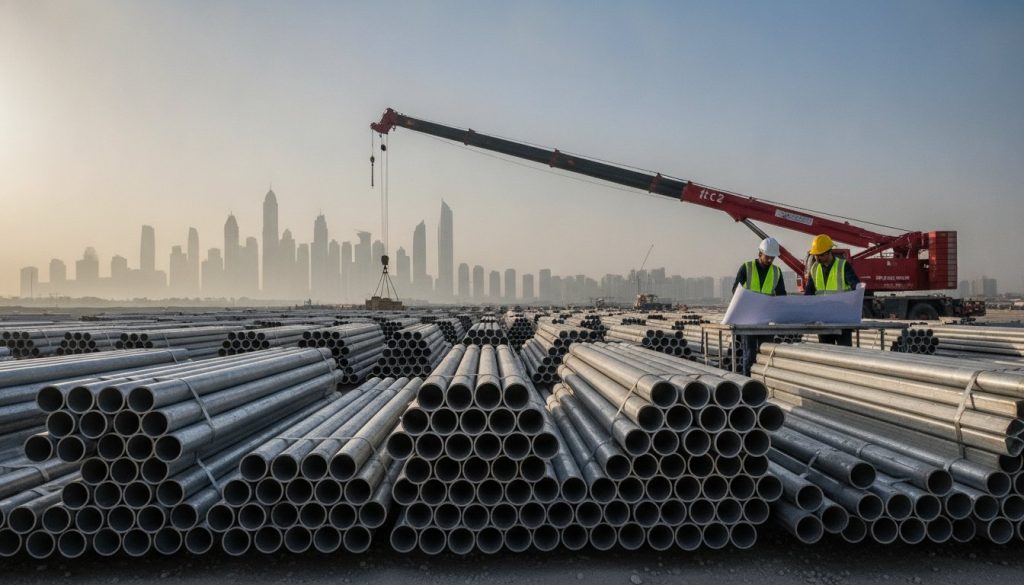
Tag: corrosion resistance

Pre-Galvanized Steel Tubes in the UAE: A 2026 Industrial Procurement Guide

Pre-Galvanized Steel Tubes in the UAE: A 2026 Industrial Procurement Guide

Can your current supply chain withstand the impact of 2026’s 10% import duties while maintaining the technical precision required for large-scale infrastructure? You’ve likely faced the frustration of inconsistent coating thickness in large batches or the logistical delays that arise when sourcing customized lengths in a market now valued at USD 2.33 billion. These challenges are amplified by the UAE’s high-salinity environments, which demand uncompromising material standards to prevent premature corrosion. Finding reliable pre galvanized steel tubes UAE projects require means balancing immediate site integration with rigorous durability benchmarks and international quality standards.

This guide offers a comprehensive technical exploration to help you select the most cost-effective tubing without compromising on EN or ASTM compliance. We’ll analyze material performance against harsh coastal conditions, detail the critical ECAS certification requirements mandated under Cabinet Resolution No. 121/2023, and demonstrate how precision cut-to-size services eliminate on-site waste. By the end of this procurement guide, you’ll have the insights needed to source high-performance materials that meet the evolving demands of the UAE industrial landscape while ensuring long-term structural integrity for every project.

Key Takeaways

  • Differentiate between the uniform 20-30 micron coating of pre-galvanized tubes and heavier hot-dip alternatives to select the optimal material for specific environmental exposure.
  • Ensure project compliance by understanding the critical distinctions between EN 10305-3/5 and ASTM A500 standards for mechanical and structural tubing applications.
  • Identify why pre-galvanized steel is the preferred choice for secondary structural members in Pre-Engineered Buildings and high-efficiency HVAC ductwork.
  • Optimize your 2026 industrial procurement strategy by sourcing high-quality pre galvanized steel tubes UAE projects require from a reliable national stockist.
  • Reduce on-site labor costs and material waste by utilizing integrated cut-to-size customization services for immediate site integration.

Understanding Pre-Galvanized Steel Tubes: Manufacturing and Material Science

Pre-galvanized steel, frequently referred to as mill-galvanized or continuous hot-dip galvanized steel, represents a specialized category of material engineered for high-precision industrial use. Unlike traditional methods where the finished product is dipped into zinc, this process involves coating the flat steel coil before it’s formed into a tube. This sequence is a primary reason why pre galvanized steel tubes UAE industries rely on offer such high dimensional accuracy and surface consistency. The result is a product that combines the structural strength of a low-carbon steel substrate with the refined protection of high-purity zinc coatings.

The chemical composition of the base metal is carefully controlled to ensure excellent weldability and formability during the manufacturing phase. Because the zinc is applied to the flat strip, the bond is exceptionally tight, preventing the coating from flaking or peeling when the steel is bent or shaped into hollow sections. To understand the foundational science of this process, one might ask, What is Galvanization? in a modern industrial context. It’s the metallurgical reaction that creates a series of zinc-iron alloy layers, providing a robust shield against the oxidative pressures common in the Middle Eastern climate.

To better understand the visual differences and manufacturing steps of this material, watch this helpful video:

The Continuous Galvanization Process

The journey of the material begins with a continuous steel strip passing through a series of automated treatment stages. First, the strip undergoes rigorous cleaning and annealing in a controlled furnace to remove impurities and prepare the surface for optimal zinc adhesion. It then enters a bath of molten zinc at high speeds. As the strip emerges, precision air knives blow off excess molten zinc to maintain a strictly controlled coating thickness. Once cooled and recoiled, the galvanized strip is moved to high-speed tube mills where it’s roll-formed and welded. This method ensures the finished tube has a smooth, bright aesthetic that’s far superior to the rougher texture of post-dipped steel.

Zinc Coating Weight and Protection

Durability for 2026 infrastructure projects is measured through specific Z-designations, which indicate the mass of the zinc coating per square meter. In the UAE, industrial procurement often focuses on standards like Z120 or the more resilient Z275, depending on the proximity to coastal areas. Zinc provides sacrificial protection by undergoing oxidation first, effectively shielding the inner low-carbon steel from structural degradation. This sacrificial anode mechanism is vital for maintaining the integrity of the tube even if the surface is scratched during transit or installation. For those looking to source these materials, you can explore the available inventory at the Al Noor Steel shop, where international standards are strictly upheld.

Pre-Galvanized vs. Hot-Dip Galvanized (HDG) Tubes: A Technical Comparison

Choosing between pre-galvanized and hot-dip galvanized (HDG) tubes is a critical decision that impacts both the immediate budget and the long-term durability of a structure. The primary technical distinction lies in the coating thickness and the application method. While HDG involves dipping finished tubes into a molten zinc bath to achieve a thickness of 60 to 100+ microns, pre-galvanized tubes feature a more precise layer of 20 to 30 microns. This thinner, more controlled application makes pre galvanized steel tubes UAE engineers specify ideal for applications where aesthetic uniformity and dimensional accuracy are paramount.

  • Surface Finish: Pre-galvanized tubes offer a smooth, bright, and silver-like appearance, whereas HDG surfaces are often rougher with a visible spangled pattern.
  • Coating Uniformity: The continuous mill process ensures that the zinc layer is consistent across the entire surface, including the interior of the tube.
  • Weldability: High-frequency induction welding is used for pre-galvanized tubes, which maintains the integrity of the coating near the seam better than post-fabrication dipping.

Evaluating Cost-Efficiency for Large Projects

For large-scale industrial projects, initial procurement costs are a major factor. Pre-galvanized materials are generally more budget-friendly because the coating is applied during the primary manufacturing stage, eliminating the logistical costs of transporting fabricated parts to a separate galvanizing plant. In the humid conditions of the UAE, these tubes perform exceptionally well in indoor environments or sheltered outdoor frameworks where they aren’t directly exposed to heavy coastal salt spray. If your project involves extensive secondary structural members, you can browse a complete inventory of certified tubes to find the right grade for your specific application.

Dimensional Precision and Tolerances

Precision engineering requires materials that adhere to strict tolerances. Because the zinc coating is applied to the flat steel strip before forming, pre-galvanized tubes maintain much tighter dimensional tolerances than their HDG counterparts. This precision is essential for Pre-Engineered Buildings (PEB) where components like purlins and girts must fit together seamlessly. When sourcing these materials, it’s vital to partner with established Hollow Section Steel Suppliers in UAE who understand the technical requirements of modern infrastructure. This accuracy reduces the need for on-site adjustments, accelerating the overall construction timeline while maintaining structural reliability.

International Standards and Compliance for UAE Procurement

Procurement excellence in 2026 hinges on a deep understanding of the regulatory framework governing material performance. When sourcing pre galvanized steel tubes UAE contractors must prioritize compliance with established international benchmarks to mitigate the risks of structural failure or premature oxidation. These standards provide a universal language for quality; they define everything from chemical composition to mechanical tolerances. While local projects historically relied on various regional codes, the modern landscape demands rigorous verification through Mill Test Certificates (MTC) to ensure full traceability from the furnace to the site.

Adherence to EN 10305-3 and EN 10305-5 is essential for hollow sections used in precision applications. These European standards specify the technical delivery conditions for welded cold-sized tubes, ensuring they meet the exact circular or square dimensions required for mechanical engineering. For broader structural use, ASTM A53 and ASTM A500 remain the dominant American benchmarks, while BS 1387 continues to serve as a traditional reference for galvanized steel pipes in water and gas applications. Selecting the correct standard isn’t just about compliance; it’s about matching the material’s mechanical properties to the specific stresses of the industrial environment. For energy and infrastructure projects that also require uncoated pipe solutions, understanding the full range of options from reliable carbon steel pipe suppliers UAE procurement teams depend on is equally essential to a resilient 2026 supply chain strategy.

ASTM A500 vs. EN 10219: Structural Compliance

Choosing between ASTM A500 and EN 10219 often depends on the specific engineering requirements of the project. ASTM A500 is an American standard frequently specified for high-rise infrastructure due to its stringent requirements for yield strength in cold-formed welded carbon steel. Conversely, EN 10219 is the European benchmark often preferred for light industrial sheds and secondary structural frameworks. Understanding these nuances is vital for maintaining Structural Steel Quality Standards UAE projects demand. Contractors should select the standard that aligns with the load-bearing calculations of their specific build to ensure safety and longevity.

Corrosion Resistance Testing (Salt Spray)

Validating the endurance of zinc coatings requires standardized testing, with ASTM B117 salt spray tests serving as the industry benchmark. This test simulates years of exposure to corrosive elements; it’s particularly relevant for the UAE’s coastal industrial zones where high salinity levels accelerate metal degradation. Interpreting these results helps engineers predict the maintenance cycles of their structures accurately. Additionally, specific regional engineering projects may require adherence to JIS (Japanese Industrial Standards), which offer specialized benchmarks for high-precision mechanical tubing. Ensuring your supplier can provide documented proof of these tests is a non-negotiable step in the 2026 procurement process.

Industrial Applications for Pre-Galvanized Tubes in the UAE

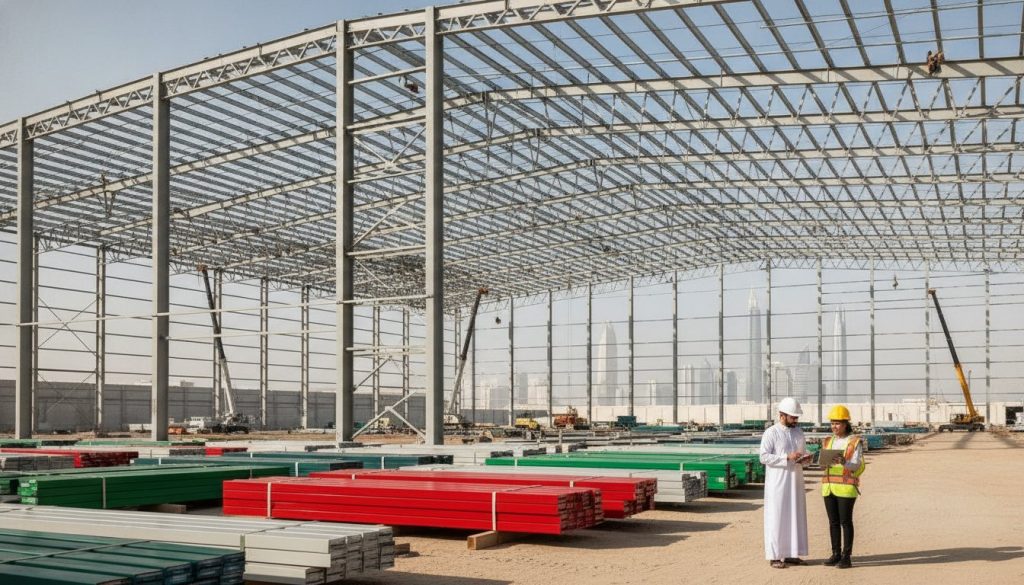
The versatility of pre galvanized steel tubes UAE industries deploy is evident across various high-stakes sectors. In Pre-Engineered Buildings (PEB), these tubes serve as essential secondary structural members, including purlins and girts. They provide the necessary lateral support to wall and roof panels without the excessive weight of hot-dip alternatives. This efficiency is vital for the rapid assembly of industrial warehouses and distribution centers that define the country’s logistical expansion in 2026. Because the zinc coating is applied before forming, the tubes maintain a high strength-to-weight ratio that simplifies both transport and installation.

Beyond structural frames, the cooling sector relies heavily on these materials for HVAC ductwork and support systems. Since UAE cooling systems operate under constant condensation stress, the uniform zinc layer prevents internal oxidation that could compromise air quality or system longevity. Similarly, the renewable energy sector utilizes these tubes for solar mounting frameworks. The material’s ability to withstand UV exposure and fluctuating humidity makes it a foundational component for the region’s expanding solar parks, where long-term durability is a non-negotiable requirement for investment security.

Structural Frameworks and Scaffolding

Architectural designs frequently incorporate square and rectangular hollow sections for both their aesthetic appeal and load-bearing capabilities. These tubes are particularly effective for temporary hoarding and fencing panels used around major development sites. Their smooth finish allows for easy branding application while providing a professional appearance that meets municipal standards. Large-scale infrastructure projects often combine these tubular sections with chequered steel plates for flooring, walkways, and platform surfaces that demand both structural rigidity and skid resistance. To ensure your project utilizes the correct material grades, consulting an established Structural Steel Supplier UAE is a prudent step for any procurement officer looking to maintain high safety benchmarks.

Mechanical and Automotive Components

In the manufacturing sector, these tubes are indispensable for conveyor systems and industrial machinery frames. The high-frequency Electric Resistance Welded (ERW) pipes maintain structural integrity even in high-vibration environments, ensuring that automated assembly lines remain operational without frequent maintenance. The automotive industry also utilizes these sections for chassis parts where a precise balance between weight reduction and corrosion resistance is mandatory. For immediate project needs, you can order certified steel tubes from a national stockist to keep your production timelines on track and minimize logistical delays.

Strategic Sourcing: Optimizing Logistics with Jabal Al Noor Steel

Success in 2026 procurement requires more than just high-quality materials; it demands a logistics partner capable of managing complex supply chains with unwavering precision. Sourcing the pre galvanized steel tubes UAE projects require from Jabal Al Noor Steel allows contractors to leverage an extensive national inventory. This centralized approach simplifies the procurement of GI, PPGI, and stainless steel from a single, established entity that has served the regional industrial sector since 2010. By consolidating your supply chain through a foundational partner, you reduce administrative burdens and ensure all materials meet the same rigorous quality benchmarks across your entire project scope.

Our commitment to industrial stability means providing more than just raw materials. We offer specialized surface treatments that enhance protection in the UAE’s harsh coastal environments, where high salinity levels can challenge standard coatings. This proactive approach to material endurance ensures that your structural frameworks maintain their integrity for decades. Whether your project involves massive energy infrastructure or specialized mechanical frames, having a reliable national stockist ensures that your supply remains steady and your standards stay high.

Cut-to-Size Customization for Structural Efficiency

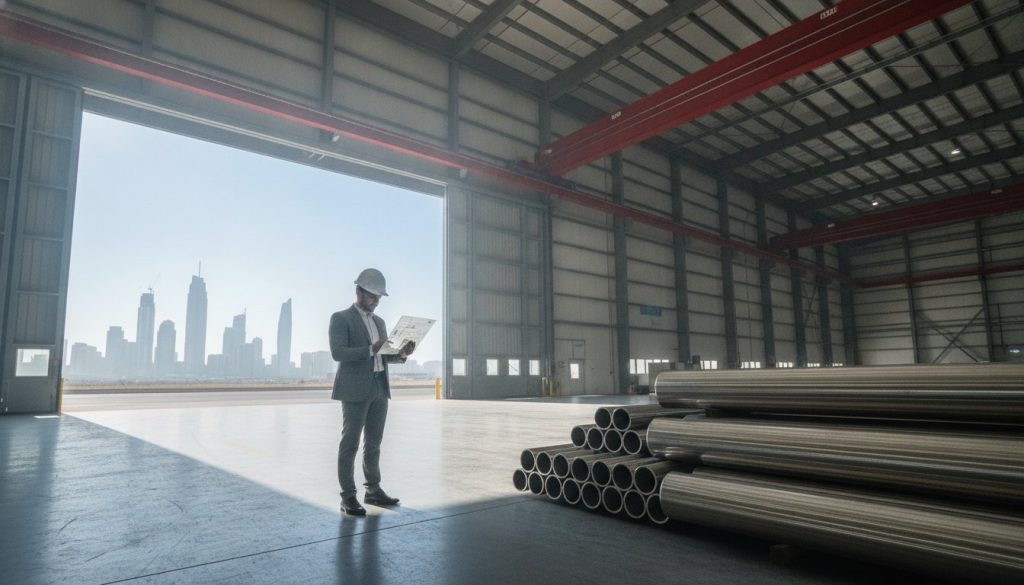
On-site labor costs and material waste represent two of the most significant drains on modern project budgets. Our precision industrial cutting services allow you to receive tubes in exact lengths tailored to your specific engineering drawings. This capability streamlines on-site logistics for large-scale infrastructure by removing the need for manual cutting and finishing at the installation site. Integrating a Cut-to-Size Steel Service in the UAE into your workflow ensures that structural components are ready for immediate integration upon arrival. It’s a strategic move that enhances efficiency while preserving the professional finish of your pre-galvanized materials.

National Delivery and Supply Chain Reliability

Navigating the complexities of Middle East steel distribution requires a partner with deep local roots and a transparent operational model. We manage bulk steel supply contracts designed to support the ambitious infrastructure goals of 2026, providing a steady flow of materials even during periods of global market fluctuation. Our national delivery network is engineered to ensure that critical components reach your site exactly when they’re needed, avoiding the delays often associated with fragmented sourcing strategies. Relying on a trusted veteran of the industry allows your team to focus on construction milestones rather than logistical bottlenecks. You can explore our full range of tubes and pipes at Jabal Al Noor Steel to find the precise specifications required for your next industrial undertaking.

Securing the Future of UAE Industrial Infrastructure

As industrial requirements evolve in 2026, the demand for high-precision, corrosion-resistant materials has never been more critical for project success. Selecting the right pre galvanized steel tubes UAE projects require depends on a deep understanding of coating thickness, international standards, and logistical efficiency. We’ve explored how technical compliance with ASTM and EN benchmarks ensures structural longevity even in the Middle East’s unique climate. By prioritizing materials that offer both aesthetic uniformity and sacrificial protection, procurement officers can significantly reduce maintenance cycles and long-term operational costs.

Jabal Al Noor Steel has been a foundational pillar of the UAE industrial sector since 2010, providing the regional expertise needed to navigate these high-stakes requirements. Our comprehensive cut-to-size and surface treatment services are designed to streamline your site integration and eliminate unnecessary waste. We maintain a steadfast commitment to operational excellence and material traceability, ensuring that every component meets the rigorous quality benchmarks your engineering demands. Ready to optimize your supply chain? Request a Quote for Pre-Galvanized Steel Tubes to secure certified materials for your next project. We look forward to supporting your vision with the precision and reliability your infrastructure deserves.

Frequently Asked Questions

What is the difference between pre-galvanized and hot-dip galvanized steel tubes?

Pre-galvanized steel is coated at the mill stage before the tube is formed; while hot-dip galvanized tubes are dipped into molten zinc after fabrication. This results in pre-galvanized tubes having a smoother, more uniform finish and tighter dimensional tolerances. While hot-dip provides a thicker coating for extreme environments; pre-galvanized is the more cost-effective choice for secondary structures and indoor applications where a bright aesthetic is preferred.

Can pre-galvanized steel tubes be welded without losing corrosion resistance?

Yes; however, the weld seam requires specific post-weld treatment to maintain its protective properties. During the manufacturing of pre galvanized steel tubes UAE suppliers provide, the seam is typically sprayed with a zinc-rich cold galvanizing compound. This process restores protection to the heat-affected zone. Without this critical step, the exposed steel at the weld would be vulnerable to oxidation; especially in the high-humidity zones common across the region.

Which international standards should I look for when buying steel tubes in the UAE?

You should prioritize EN 10305-3 and EN 10305-5 for mechanical precision or ASTM A500 for structural applications. These standards ensure the material meets specific yield strengths and chemical compositions required for industrial safety. Additionally; BS 1387 remains a common reference for galvanized pipes in the local market. Always verify that your supplier provides Mill Test Certificates to guarantee that the tubes comply with these established global benchmarks.

How long do pre-galvanized steel tubes last in outdoor environments?

The lifespan depends heavily on the coating mass and the specific environmental exposure levels. In sheltered outdoor environments or arid inland regions; these tubes can last for several decades without significant structural degradation. However; in coastal industrial zones with high salt spray, the thinner 20 to 30 micron coating may require additional surface treatments or more frequent maintenance cycles compared to heavier hot-dip galvanized alternatives that feature thicker zinc layers.

Are pre-galvanized tubes suitable for high-pressure fluid transport?

Pre-galvanized tubes are generally intended for structural and mechanical applications rather than high-pressure fluid transport. While they are excellent for HVAC ducting and low-pressure conduits; high-pressure systems typically require seamless or heavy-wall pipes manufactured under specific pressure-rated standards like ASTM A53. You should always consult with a structural engineer to ensure the tube’s wall thickness and weld integrity match the specific pressure requirements of your system. For projects requiring pressure-rated pipe solutions, reviewing a comprehensive guide to carbon steel pipe suppliers UAE energy and infrastructure projects rely on can help you identify the correct grade and specification.

What are the common sizes for pre-galvanized square hollow sections?

Common industrial sizes range from 15x15mm to 100x100mm; with wall thicknesses typically between 0.8mm and 3.0mm. Larger structural projects might utilize sections up to 200x200mm depending on the specific stock availability. These standardized dimensions allow for consistent integration into Pre-Engineered Buildings and modular frames. Sourcing from a national stockist ensures access to a wide variety of these dimensions for immediate project deployment across the industrial landscape.

Why is zinc coating weight (e.g., Z275) important for UAE projects?

Z275 indicates a zinc coating mass of 275 grams per square meter; which provides enhanced durability in corrosive environments. For many industrial projects, this higher coating weight is the standard for pre galvanized steel tubes UAE markets require to ensure long-term integrity. It offers a thicker protective barrier than Z120 or Z180; making it much more suitable for outdoor infrastructure exposed to fluctuating humidity and saline air conditions.

Does Jabal Al Noor Steel offer customization for galvanized tubes?

Yes; we provide comprehensive cut-to-size customization and specialized surface treatments for our entire range of galvanized products. Our industrial cutting services ensure that tubes are delivered in precise lengths; which significantly reduces on-site labor and material waste. By offering these value-added services alongside our extensive national inventory, we help contractors streamline their logistics and maintain high standards of structural efficiency for large-scale infrastructure and energy projects.
GI and PPGI Steel Sheets UAE: 2026 Procurement Guide

GI and PPGI Steel Sheets UAE: 2026 Procurement Guide

In the aggressive coastal humidity of the Emirates, selecting a steel sheet’s finish is not merely an aesthetic decision; it’s a critical engineering requirement for long-term structural integrity. You likely recognize that inconsistent coating thickness and corrosion from high-salinity air can compromise even the most robust industrial projects. Finding a reliable PPGI sheet supplier UAE businesses can trust means looking beyond the surface to verify substrate quality and chemical resistance. We understand that in a market where rebar prices average AED 2,384 per ton, every procurement choice must be backed by technical precision and logistical certainty.

This 2026 procurement guide provides the technical framework to ensure your materials meet the highest industrial benchmarks. We’ll examine the specific ASTM and JIS grades required for compliance with local building codes, including the nuances of the DX51D+Z standard. You’ll discover how to navigate current market shifts, such as the 10 percent customs duty on specific steel imports and the tightening ECAS certification deadlines. From selecting RAL 9002 or RAL 9010 finishes to optimizing logistical lead times, this overview secures your supply chain for the high-stakes requirements of the nation’s infrastructure and energy sectors.

Key Takeaways

  • Identify critical international standards such as ASTM A653 and JIS G3302 to ensure material compliance with 2026 UAE building codes and rigorous industrial benchmarks.
  • Assess the capabilities of a PPGI sheet supplier UAE industrial projects demand by prioritizing those with verified stock of RAL 9002 and RAL 9010 finishes.
  • Understand the technical necessity of 120 to 275 GSM coating mass for maintaining structural integrity against the high salinity and humidity characteristic of the regional climate.
  • Optimize procurement strategies by integrating value-added services like cut-to-size customization to reduce material waste and enhance logistical efficiency for nationwide projects.

Understanding GI and PPGI Steel Sheets in the UAE Market

In the UAE’s industrial sector, flat products serve as the backbone for structural cladding and manufacturing. While the term “Galvanized Iron” or GI remains widely used, it’s fundamentally a legacy designation. Modern GI and PPGI products are actually high-strength carbon steel sheets that have undergone the Galvanization process. This metallurgical treatment applies a protective zinc coating to the steel, creating a barrier against the oxidative pressures of the local climate. By replacing iron with refined steel alloys, manufacturers achieve superior tensile strength without the brittle nature of older materials.

The transition from standard GI to Pre-Painted Galvanized Iron (PPGI) reflects a broader industry shift toward specialized performance. Engineering requirements now demand more than just basic corrosion resistance. Current projects require materials that provide aesthetic consistency and enhanced thermal performance. As a leading PPGI sheet supplier UAE manufacturers rely on, we’ve seen this evolution firsthand. The modern sheet is a multi-layered system designed to withstand high UV exposure and salinity while maintaining structural integrity over decades. It’s no longer just about functional protection; it’s about optimizing the lifecycle of the entire structure.

The Anatomy of a PPGI Sheet

Understanding the layers of a PPGI sheet is essential for accurate procurement. Each component plays a specific role in the material’s overall endurance and reliability in the field:

  • Substrate layer: This is typically cold-rolled steel, which provides the necessary tensile strength and structural integrity for load-bearing applications.
  • Zinc coating: This acts as the primary sacrificial layer. It protects the underlying steel from moisture and salt-laden air, even if the surface is scratched.
  • Pre-treatment and primer: These layers are chemically applied to ensure a permanent bond between the zinc and the final topcoat, effectively preventing delamination or peeling under thermal stress.

Core Applications in National Infrastructure

The versatility of these materials makes them indispensable across various sectors of the national economy. For large-scale warehousing and factories, PPGI is the standard for industrial roofing and wall cladding. Its ability to reflect heat contributes significantly to energy efficiency in large-volume spaces. In the manufacturing sector, these sheets are essential for HVAC ducting and electrical enclosures, where precision and durability are non-negotiable. Additionally, modern architectural facades often utilize PPGI for its RAL color consistency, allowing for a uniform appearance across massive structural surfaces. For specialized requirements and specific grades, you can explore our full range of flat products at our online shop.

Technical Specifications and Material Standards for Prepainted Steel

Compliance with rigorous international benchmarks is non-negotiable for large-scale infrastructure and energy projects within the Emirates. To ensure material longevity, procurement teams must verify that products adhere to the ASTM A653/A653M standard, EN 10346, or JIS G3302. These certifications guarantee that the base metal possesses the required chemical composition and mechanical properties. Relying on a reputable PPGI sheet supplier UAE industry leaders trust ensures that every delivery is accompanied by a Mill Test Certificate (MTC). This document serves as a transparent record of the batch’s technical profile, confirming that the steel meets the specific demands of UAE building codes.

The chemical composition of the topcoat is equally vital for performance in high-UV environments. Polyester (PE) remains a cost-effective standard for many applications, yet Silicon Modified Polyester (SMP) provides enhanced resistance to chalking and fading. For projects in high-salinity coastal areas, Polyvinylidene Fluoride (PVDF) is often specified due to its superior chemical stability and color retention over extended lifecycles. Accuracy in these specifications prevents the premature degradation often seen in lower-quality imports. Similarly, piping infrastructure in these same coastal environments demands equivalent material discipline, and working with a qualified stainless steel 316 pipe supplier ensures that fluid-handling systems meet the same ASTM-verified standards required for long-term corrosion resistance.

Zinc Coating and Substrate Grades

Distinguishing between Commercial Quality (CQ) and structural grades is essential for maintaining safety margins in engineering. While CQ sheets are suitable for simple forming, structural grades offer defined yield strengths necessary for load-bearing cladding. Many contractors now opt for Galvalume substrates, which utilize a zinc-aluminum alloy to provide better thermal reflectivity compared to traditional galvanized coatings. The coating mass, measured in grams per square meter, directly dictates the duration of cathodic protection before the steel substrate is exposed to corrosive elements. Projects that also incorporate structural framing often source pre galvanized steel tubes UAE contractors rely on to maintain the same zinc-coating consistency across both flat and tubular components of the structure.

Coating Thickness and Finish Options

Industrial specifications typically require a top coat thickness of 20 to 25 microns, paired with a functional back coat of 5 to 10 microns to prevent underside corrosion. Surface finishes vary from high-gloss to matte or textured, depending on the architectural requirement. Utilizing the RAL color system ensures that batches remain uniform across large-scale developments, preventing unsightly variations in shade. As a specialized PPGI sheet supplier UAE contractors rely on, we maintain stock that meets these precise finish requirements. For projects requiring specific technical compliance, you can view our available steel grades and standards to match your project’s engineering needs.

GI vs. PPGI: Selecting the Optimal Sheet for Industrial Resilience

Selecting between Galvanized Iron (GI) and Pre-Painted Galvanized Iron (PPGI) requires a nuanced understanding of how each material reacts to the UAE’s distinct atmospheric conditions. While standard GI provides fundamental cathodic protection through its zinc layer, PPGI adds a secondary barrier of high-performance paint. This dual-layer defense is often the deciding factor for projects where longevity is a priority. In high-humidity environments, GI may eventually succumb to white rust if the zinc layer is continuously exposed to moisture without adequate ventilation. Conversely, PPGI’s topcoat seals the zinc, significantly extending the time before the base steel faces any risk of oxidation.

Thermal reflectivity represents another critical divergence in performance. In the Emirates, where ambient temperatures frequently exceed 45 degrees Celsius, the cooling load on industrial facilities is a major operational expense. Light-colored PPGI sheets, particularly in RAL 9002 or RAL 9010, reflect a substantial portion of solar radiation. This characteristic helps maintain lower internal temperatures compared to the metallic finish of standard GI. When evaluating a PPGI sheet supplier UAE firms often prioritize these reflective properties to align with national sustainability goals and energy efficiency mandates.

Environmental Factors in the UAE

The regional climate presents three primary challenges: intense UV radiation, high salinity, and sand-driven abrasion. UV exposure can lead to paint chalking, where the resin binder degrades into a white powder. To combat this, procurement teams should specify high-grade coatings like PVDF for exposed structural components. Near the coastline, salt spray accelerates corrosion, making the chemical stability of the coating essential. Additionally, the abrasive nature of desert winds requires a specific coating hardness to prevent surface scouring. Global market shifts and trade policies, as detailed in the OECD report on steel trade, continue to influence the availability of these high-performance materials in the local market.

Cost-Benefit Analysis for Contractors

While the initial capital expenditure for PPGI is higher than GI, the life-cycle cost analysis often favors the pre-painted option. The reduction in long-term maintenance and the elimination of on-site painting provide significant savings over the building’s lifespan. Contractors also benefit from the lightweight properties of corrugated profiles, which allow for faster installation and reduced structural load. Ensuring that these materials meet local building codes is paramount. You can learn more about material compliance in our Structural Steel Quality Standards UAE guide. For immediate procurement needs, our full range of resilient flat products is available at our online shop.

Strategic Procurement: Evaluating a PPGI Sheet Supplier in the UAE

Effective procurement strategies in the heavy industry sector go beyond simple price-per-ton comparisons. They require a rigorous evaluation of the logistical and technical infrastructure supporting the vendor. A reliable PPGI sheet supplier UAE industrial projects depend on must demonstrate unwavering commitment to stock consistency, particularly for high-demand finishes like RAL 9002 and RAL 9010. Lead time delays in the UAE market often stem from a lack of ready inventory for specific coating specifications, which can stall large-scale infrastructure projects. Consequently, a supplier’s warehouse capacity and their ability to secure a steady supply chain are primary selection criteria for long-term partnerships. Procurement officers managing broader material requirements can benefit from reviewing our comprehensive guide to steel suppliers in UAE, which addresses the full regulatory landscape and vendor evaluation criteria for 2026 industrial projects.

Technical support is another pillar of a strategic sourcing relationship. Sourcing teams need a partner that understands the intricate differences between ASTM A653, EN 10346, and JIS G3302 requirements. This expertise ensures that the material delivered aligns perfectly with the engineering specifications defined during the project’s design phase. By providing this level of professional guidance, a supplier helps contractors avoid the logistical and financial pitfalls of material non-compliance with UAE building codes. This authoritative expertise transforms a vendor from a simple commodity source into a foundational partner for national development.

Customization and Value-Added Services

Efficiency on the job site is often dictated by the level of preparation performed at the source. Value-added processing, such as specialized cut-to-size services, allows contractors to reduce on-site waste and labor costs significantly. By receiving sheets tailored to specific dimensions, teams can move directly to installation, improving overall project timelines. Furthermore, advanced surface treatments like shot blasting and priming offer an additional layer of protection for structural steel components that face extreme environmental exposure. Slitting and shearing capabilities are also critical for industrial applications requiring precise widths for specialized manufacturing processes, ensuring that material is ready for immediate use upon arrival.

Logistics and Quality Assurance

The integrity of a steel sheet is vulnerable from the moment it leaves the production line. National delivery reliability depends on established handling and storage protocols designed to prevent the formation of white rust on GI sheets. This oxidation occurs when moisture is trapped between stacked sheets, a common risk during transit in the humid regional climate. Robust packaging standards, including heavy-duty edge protection and moisture-barrier wrapping, are necessary to ensure a scratch-free delivery to the project site. For immediate inventory access and reliable national distribution, browse our flat steel products to see how we maintain these rigorous quality benchmarks across our entire inventory.

Jabal Al Noor Steel: Your National Partner for High-Grade Flat Products

Established in 2010, Jabal Al Noor Steel has spent over a decade refining its role within the UAE’s industrial landscape. We operate as more than a vendor; we are a foundational pillar for large-scale infrastructure and energy projects. Our reputation as a premier PPGI sheet supplier UAE relies on our unwavering commitment to operational excellence and technical proficiency. We maintain an extensive inventory of GI, PPGI, and Stainless Steel products, ensuring that national contractors have immediate access to the materials required for high-stakes engineering. By prioritizing trust and long-term partnership, we ensure that our clients receive consistent quality that reflects our deep regional expertise.
Integrated Steel Solutions

Industrial projects rarely rely on a single material type. A warehouse, for instance, requires a cohesive structural system where flat products and long products work in tandem. By sourcing PPGI sheets alongside MS beams and channels, procurement officers can ensure that the cladding and the primary frame meet identical quality benchmarks. This integrated approach simplifies the supply chain, reducing the administrative burden of managing multiple vendors. Along with this, we provide one-stop procurement for hollow sections and tubes, allowing for the seamless construction of complex engineering structures. Our ability to provide both long and flat products ensures that the structural integrity of the frame is matched by the environmental resilience of the exterior skin.

Contact and Consultation

Navigating the complexities of international steel grades requires a partner with deep regional expertise. As a dedicated PPGI sheet supplier UAE contractors trust, our team provides professional guidance on grade selection, helping you determine whether your project demands the specific chemical resistance of PVDF coatings or the standard durability of polyester finishes. We prioritize ethical conduct and transparency, ensuring that every batch complies with the rigorous standards of ASTM, EN, and JIS. This commitment to quality is matched by our logistical efficiency, supporting nationwide delivery schedules that keep your project on track. Our strategic distribution network is designed to handle the scale of modern industrial demands while maintaining the precision our collaborators expect. To streamline your procurement process, visit the Al Noor Steel Shop to request a quote for your next project and secure a steady supply of high-grade materials.

Securing Industrial Excellence for the 2026 Project Cycle

Navigating the technical requirements of the UAE industrial sector requires a disciplined approach to material selection. From verifying the coating mass of GI sheets to ensuring the UV stability of PPGI finishes, every specification directly impacts the lifecycle of your infrastructure. Choosing a partner that understands the nuances of ASTM, EN, and JIS certified steel grades is essential for maintaining compliance with evolving building codes. As a primary PPGI sheet supplier UAE manufacturers depend on, we provide the technical precision needed to mitigate risks associated with harsh coastal climates and high-salinity air. For facilities that also require corrosion-resistant piping systems in these same aggressive environments, partnering with a certified stainless steel 316 pipe supplier ensures that every component of your infrastructure meets the same rigorous material standards.

Since our establishment in 2010, we’ve focused on delivering more than just raw materials. Our comprehensive cut-to-size and surface treatment services ensure your components arrive ready for immediate application, reducing on-site waste and labor costs. By integrating your supply chain with a partner committed to ethical conduct and operational excellence, you secure the stability required for nationwide projects. We invite you to view our full inventory of GI and PPGI sheets to see how our national industrial reach can support your next engineering milestone. We look forward to building a resilient future together.

Frequently Asked Questions

What is the difference between GI and PPGI steel sheets?

GI steel sheets feature a protective zinc coating applied through the galvanization process to prevent oxidation. PPGI, or Pre-Painted Galvanized Iron, is essentially a GI sheet that has been coated with a layer of paint before fabrication. This additional layer provides enhanced corrosion resistance and aesthetic variety. While GI is often used for internal structural components, PPGI is preferred for visible cladding and roofing due to its superior environmental shielding.

How long do PPGI sheets last in the UAE climate?

The service life of PPGI sheets typically ranges from 15 to 25 years, depending on the coating chemistry and environmental exposure. High-performance coatings like PVDF offer greater resistance to the intense UV radiation and thermal fluctuations common in the Emirates. Regular maintenance and selecting the correct coating mass are essential factors in reaching these longevity benchmarks. Choosing a reliable PPGI sheet supplier UAE businesses trust ensures that the material specifications match the intended project duration.

Which RAL colors are most commonly available for PPGI in the UAE?

RAL 9002 (Grey White) and RAL 9010 (Pure White) are the most widely utilized colors across the UAE industrial sector. These shades are favored for their high solar reflectance, which helps mitigate heat absorption in large warehouses and factories. While other RAL colors are available for architectural facades, maintaining stock of these standard white tones allows for shorter lead times and consistent batch matching for nationwide infrastructure projects.

Can PPGI sheets be customized to specific lengths?

Yes, we provide comprehensive cut-to-size customization services to meet specific project dimensions. This value-added processing reduces on-site labor costs and minimizes material waste during the installation of roofing or wall cladding. By providing sheets tailored to exact engineering requirements, we help contractors streamline their supply chains and improve overall structural efficiency. Our facility utilizes precision shearing and slitting equipment to ensure that every customized sheet adheres to tight dimensional tolerances.

What are the standard thicknesses for GI sheets used in construction?

Standard thicknesses for GI sheets in the construction sector typically range from 0.3mm to 1.2mm. The specific gauge required depends on the structural application, such as HVAC ducting, electrical enclosures, or load-bearing wall panels. Thicker gauges provide increased rigidity and tensile strength for high-stakes industrial environments. It’s critical to verify that the selected thickness complies with the specific load requirements and safety margins defined by the project’s lead engineer.

Are PPGI sheets suitable for coastal industrial projects?

PPGI sheets are highly suitable for coastal industrial projects when specified with the correct protective layers. For high-salinity environments, we recommend a higher zinc coating mass and a PVDF topcoat to prevent premature corrosion. This combination provides the chemical stability needed to withstand constant salt spray and humidity. Consulting with a professional PPGI sheet supplier UAE expert ensures that the chosen material grade is robust enough for the aggressive atmospheric conditions found near the coastline.

How does the zinc coating (GSM) affect the price of GI sheets?

The zinc coating mass, measured in grams per square meter (GSM), directly influences the initial procurement cost of GI sheets. A higher GSM, such as 275, requires more raw zinc and processing time, leading to a higher price per ton compared to lower GSM options. However, this investment significantly reduces the long-term lifecycle cost by extending the material’s service life. It’s an engineering trade-off where higher upfront expenditure secures greater structural endurance in corrosive environments. Contractors sourcing complementary tubular components should also review our guide on pre galvanized steel tubes UAE projects demand, which addresses the same GSM considerations for hollow structural sections.

Do you provide Mill Test Certificates for PPGI procurement?

We provide Mill Test Certificates with every delivery to ensure full transparency and technical compliance. These documents verify the chemical composition, tensile strength, and coating thickness of the batch, confirming adherence to international standards like ASTM or JIS. MTCs are essential for quality assurance protocols and are required for material approval under UAE building codes. This documentation reinforces our commitment to maintaining high standards and providing reliable data for complex engineering and infrastructure projects.

Stainless Steel Pipe Suppliers in UAE: 2026 Procurement & Buying Guide

Stainless Steel Pipe Suppliers in UAE: 2026 Procurement & Buying Guide

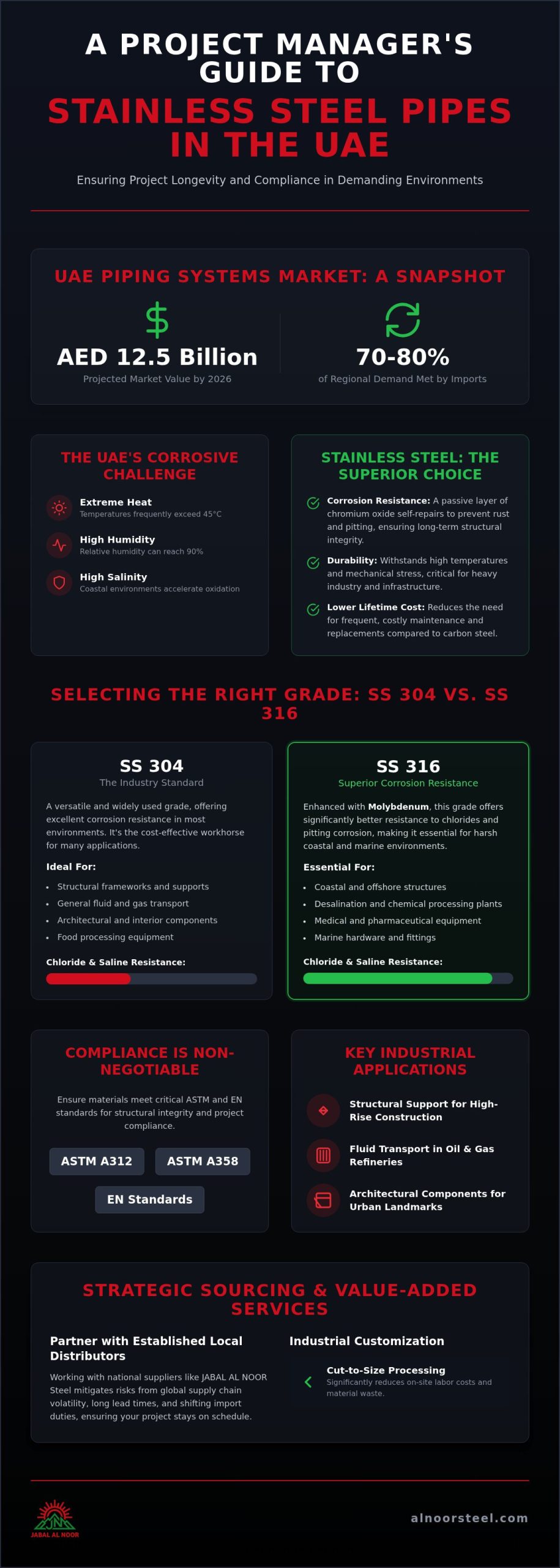
With the UAE piping systems market projected to reach a valuation of د.Ø¥ 12.5 billion by 2026, the margin for error in material procurement has never been narrower. Project managers often find that the lowest initial quote leads to the highest long-term cost when non-compliant materials fail in our aggressive coastal environments. Identifying the right stainless steel pipe suppliers UAE is no longer just a logistics task; it’s a critical risk management strategy for any large-scale infrastructure or energy project. The stakes are high, particularly as 70% to 80% of the region’s demand continues to be met through international imports.

You likely understand that securing ASTM-certified materials is non-negotiable for maintaining structural integrity, yet managing lead times and shifting import regulations remains a complex challenge. This article provides a comprehensive guide to selecting high-grade stainless steel pipes that withstand the UAE’s specific industrial pressures. We’ll examine the essential 2026 procurement standards, the logistical benefits of pre-processed steel, and the criteria for identifying supply partners who prioritize technical proficiency over simple volume. By the end, you’ll have a clear roadmap to secure a reliable supply chain that protects your project’s schedule and quality benchmarks.

Key Takeaways

  • Understand why stainless steel is the preferred choice over carbon steel for mitigating corrosion in the UAE’s harsh coastal and industrial environments.
  • Learn to differentiate between Grade 304 and Grade 316 to ensure you select the most cost-effective yet durable option from stainless steel pipe suppliers UAE.
  • Identify the critical ASTM and EN standards, such as ASTM A312 and A358, required to maintain compliance and structural integrity in national infrastructure projects.
  • Discover how industrial customization services like cut-to-size processing can significantly reduce on-site labor costs and material waste.
  • Gain insights into establishing long-term partnerships with established distributors to secure a stable, efficient, and high-quality national supply chain.

Stainless steel is an iron-based alloy containing at least 10.5% chromium, providing the essential durability required for the UAE’s most demanding industrial environments. In a region defined by rapid urban expansion and critical energy needs, these pipes serve as the literal circulatory system for national infrastructure. Identifying reliable stainless steel pipe suppliers UAE is a prerequisite for project success, as the market for piping systems is projected to reach approximately د.Ø¥ 12.5 billion by 2026. This growth is fueled by a shift toward materials that offer long-term value over low initial procurement costs.

The current supply landscape is heavily influenced by international trade dynamics, with 70% to 80% of the UAE’s piping demand met by overseas manufacturers. Sourcing from established national stainless steel pipe suppliers UAE like JABAL AL NOOR Steel provides a necessary buffer against global supply chain volatility. These partners maintain extensive local inventories of tubes and pipes, ensuring that large-scale projects aren’t stalled by long lead times or shifting import duties. You can view the available range and technical specifications through our product inventory.

To better understand the nuances of selecting a supply partner in this region, watch this helpful video:

While carbon steel remains a common material in less demanding sectors, it’s often insufficient for the UAE’s unique environmental challenges. The combination of extreme heat, high humidity, and coastal salinity accelerates oxidation in standard alloys. Stainless steel’s inherent properties make it the superior choice for ensuring structural longevity without the need for frequent, costly replacements. It’s a strategic investment in the endurance of the nation’s foundational systems.

Key Applications in Heavy Industry

Heavy industry in the Emirates relies on stainless steel for its versatility and strength. Its applications are diverse, spanning multiple critical sectors:

  • Structural Support: Providing the load-bearing framework for massive construction projects and high-rise developments in Dubai and Abu Dhabi.
  • Fluid Transport: Moving corrosive liquids and gases within oil refineries, chemical processing plants, and desalination facilities.
  • Architectural Components: Serving as both functional and aesthetic elements in modern urban landmarks where exposed steel must resist environmental wear.

Why Material Integrity Matters

The failure of a single piping component can lead to catastrophic operational downtime or safety hazards. In the UAE, materials must endure temperatures that frequently exceed 45°C alongside relative humidity levels that can reach 90%. This resistance is primarily due to a thin, invisible passive layer of chromium oxide that forms on the surface to prevent further oxidation. Without this protection, the high salinity of the Arabian Gulf would quickly compromise structural integrity, leading to pitting and eventual system failure. Selecting the correct grade is therefore a technical necessity rather than a preference.

Selecting the Right Grade: SS 304 vs. SS 316 for Industrial Use

Technical precision in material selection is the cornerstone of industrial longevity. When consulting with stainless steel pipe suppliers UAE, the primary decision usually involves choosing between the 300-series austenitic grades. While these alloys share a similar foundational structure of chromium and nickel, their performance under the UAE’s specific environmental stressors differs significantly. Choosing the wrong grade doesn’t just lead to surface rust; it can result in catastrophic structural failure through localized corrosion known as pitting.

The distinction lies in the chemical composition. Grade 304 is the global standard for versatility, but it lacks the chemical reinforcements necessary for high-salinity environments. Grade 316, conversely, includes an addition of 2% to 3% molybdenum. This specific element creates a robust barrier against chloride-induced corrosion, which is a constant threat in industrial zones located near the Arabian Gulf. You can explore our full range of certified grades by visiting our technical product inventory.

Grade 304: The Versatile Standard

Grade 304 remains the most widely used stainless steel in the world due to its excellent balance of strength and formability. It’s an ideal choice for indoor industrial applications, architectural cladding in inland areas, and structural supports where direct exposure to seawater is not a factor. Its high weldability allows for the creation of complex piping configurations without compromising the integrity of the joints. For many projects, this grade offers the most cost-effective solution for maintaining hygiene and moderate corrosion resistance.

For those evaluating broader material types beyond stainless alloys, understanding Industrial Steel Pipe Sourcing: MS vs GI Options can provide additional context on cost-performance ratios for non-critical environments. However, in the high-humidity conditions of the Emirates, the 18% chromium and 8% nickel content of Grade 304 serves as a reliable baseline for endurance.

Grade 316: The Marine-Grade Solution

In the UAE, “marine-grade” isn’t a marketing term; it’s a technical requirement for survival. Grade 316 is the mandatory choice for offshore structures, desalination plants, and any piping systems within five kilometers of the coastline. The molybdenum content specifically targets the vulnerability of the chromium oxide layer to chloride ions. Without this protection, salt-laden air can penetrate the metal’s surface, creating microscopic pits that compromise the entire pipe’s pressure rating.

While the initial procurement cost from stainless steel pipe suppliers UAE may be higher for Grade 316, the long-term return on investment is undeniable. It drastically reduces the frequency of maintenance cycles and eliminates the need for premature replacements. In heavy industry, where operational downtime can cost thousands of Dirhams per hour, the reliability of Grade 316 provides the industrial stability that modern infrastructure demands.

Essential Standards and Compliance for UAE Infrastructure Projects

Adherence to rigorous technical standards distinguishes leading stainless steel pipe suppliers UAE from generic distributors. In large-scale infrastructure projects, the consequences of material non-compliance extend beyond immediate project delays; they compromise long-term safety and federal regulatory approval. Most procurement officers in the UAE prioritize American Society for Testing and Materials (ASTM) standards, specifically ASTM A312 for seamless and welded austenitic stainless steel pipes. For larger diameters or heavy-wall applications, ASTM A358 governs electric-fusion-welded pipes. These benchmarks ensure that every linear meter of steel can withstand the specific pressure and temperature ratings required by UAE municipal authorities.

Sourcing pipes that meet these criteria requires a transparent supply chain. Reliable suppliers don’t just provide metal; they provide documentation. Mill Test Certificates (MTC) are the primary tool for verifying that a batch of steel matches the specified chemical and mechanical properties. In the UAE, major industrial entities often require MTCs that conform to EN 10204 Type 3.1 or 3.2, providing an audited trail from the furnace to the final delivery site in Dubai or Abu Dhabi.

Verifying Material Certification

Understanding how to interpret an MTC is a vital skill for any procurement specialist. A valid certificate must detail the precise percentages of chromium, nickel, and molybdenum, as these directly affect the pipe’s corrosion resistance. It also records mechanical tests, including tensile strength and yield strength. Traceability is equally important. Each pipe should bear a heat number that corresponds directly to its MTC. If you’re also managing carbon steel requirements, reading our guide on ERW Steel Pipe Suppliers in the UAE can help you standardize certification processes across different material types.

International Standard Mapping

The UAE market often sees a convergence of global engineering standards. While ASTM is dominant, European (EN) standards like EN 10217-7 are frequently specified in projects led by EU-based engineering firms. Standardizing procurement across these frameworks ensures that components from different international sources remain compatible. For specialized machinery, Japanese Industrial Standards (JIS) might also apply. Leading stainless steel pipe suppliers UAE possess the technical expertise to map these international equivalents, ensuring that a project’s mechanical integrity remains consistent regardless of the standard used by the original equipment manufacturer.

Stainless Steel Pipe Suppliers in UAE: 2026 Procurement & Buying Guide

Value-Added Services: Customization and Surface Treatments

Sourcing from stainless steel pipe suppliers UAE involves more than just selecting grades. For large-scale industrial contracts, the ability to receive material that’s ready for immediate installation is a significant operational advantage. Integrated processing services transform raw inventory into project-ready components, allowing engineering teams to focus on assembly rather than fabrication. This shift from bulk procurement to precision supply helps mitigate the rising costs of on-site labor and material waste. It’s a strategic move that enhances both efficiency and accuracy.

Precision is the hallmark of professional steel distribution. When pipes are processed in a controlled factory environment, the dimensional accuracy is far superior to what can be achieved with portable on-site equipment. This level of exactness is essential for complex fluid transport systems where even a millimeter of deviation can compromise the integrity of a welded joint or a flange connection. By consolidating these services, contractors can maintain tighter control over their project timelines and quality benchmarks.

Industrial Cut-to-Size Customization

Utilizing advanced industrial machinery, JABAL AL NOOR Steel provides exact cut-to-size services for all stainless steel tubes and pipes. Whether the project requires short, specialized lengths for manifold systems or long-form sections for structural frames, custom cutting ensures that every piece arrives according to the technical drawing. This service significantly reduces on-site logistics by eliminating the need for heavy cutting machinery and the management of scrap metal. Contractors can streamline their schedules, knowing that the components are ready for immediate fit-out. It simplifies the supply chain and ensures that on-site teams can maintain a steady, productive pace.

Advanced Surface Treatments

While stainless steel is inherently resistant to corrosion, specific industrial applications require additional surface preparation. Surface treatments such as shot blasting remove microscopic impurities, creating a uniform finish that’s ideal for high-spec architectural projects. For pipes intended for extreme environments or those requiring additional coating, industrial priming serves as a critical preparatory step. These treatments also protect the material during transit and storage in the UAE’s high-humidity conditions, ensuring that the passive layer remains intact until the system is commissioned. Aesthetic consistency is also maintained, which is vital for visible structural elements in modern urban developments.

Optimizing the supply chain requires a partner that understands the high-stakes nature of the UAE’s infrastructure sector. By consolidating procurement and processing, businesses can reduce the number of touchpoints in their logistics chain, leading to faster turnaround times and lower overall project costs. To discuss your specific requirements for precision cutting or specialized finishes, you can explore our customizable steel pipe inventory.

Strategic Sourcing: Why Partner with JABAL AL NOOR Steel?

Selecting from the pool of stainless steel pipe suppliers UAE requires more than a simple comparison of price-per-tonne. It demands a partnership with a distributor that understands the high-stakes requirements of the nation’s energy and infrastructure sectors. Since 2010, JABAL AL NOOR Steel has operated as a foundational pillar within the regional market, providing the industrial stability necessary for large-scale procurement. We’ve built our reputation on a commitment to ethical conduct and technical precision, ensuring that the materials we supply contribute to the long-term structural integrity of every project we support.

Our operational scale allows us to maintain a diverse and comprehensive inventory of tubes, pipes, and hollow sections. This depth of stock is critical for mitigating the risks associated with global supply chain volatility and fluctuating import tariffs. By prioritizing a national delivery network that serves Dubai, Abu Dhabi, Sharjah, Ajman, and the Northern Emirates, we ensure that critical materials arrive at your site with methodical timing. This logistical efficiency is a primary reason why we are considered among the most reliable stainless steel pipe suppliers UAE for contractors managing tight project schedules.

A Dependable Partner for Large-Scale Projects

Success in the oil, gas, and construction sectors depends on transparent communication and a predictable supply chain. We’ve spent over a decade refining our procurement processes to meet the exacting standards of the region’s largest engineering firms. Our team provides a knowledgeable guide through the complexities of material selection, ensuring that every specification is met with absolute accuracy. For projects that require a broader range of structural components, our expertise also extends to related materials, as detailed in our guide on Hollow Section Steel Suppliers in UAE. This interconnected approach allows us to serve as a single, steady point of contact for diverse engineering requirements.

Secure Your Material Supply

Engineering challenges in the Emirates often demand more than standard inventory. We specialize in providing customized solutions that go beyond basic distribution, incorporating the precision processing and surface treatments discussed earlier in this guide. Whether your project requires high-grade austenitic pipes for a desalination plant or specialized structural frames for a modern urban landmark, our inventory is managed to provide both variety and depth. We maintain a high register of quality benchmarks, ensuring that your procurement remains compliant with both international standards and local municipal regulations. To secure the materials your next project requires, you can browse our full range of stainless steel pipes and request a quote from our technical sales team today.

Securing the Integrity of UAE Infrastructure

Achieving long-term structural endurance in the Emirates requires a commitment to material precision and rigorous certification. As industrial requirements become more complex through 2026, the importance of selecting high-grade alloys that meet strict ASTM and EN standards cannot be overstated. By working with established stainless steel pipe suppliers UAE, you ensure that your procurement strategy accounts for both environmental durability and logistical efficiency. This proactive approach mitigates the risks of corrosion failure and project delays in our high-stakes industrial landscape.

JABAL AL NOOR Steel provides the industrial stability your projects require through precision cut-to-size services and a dependable national delivery network. We prioritize transparent communication and technical excellence, allowing you to focus on the execution of large-scale infrastructure and energy works without the risk of material non-compliance. Our decade of expertise ensures that your supply chain remains as robust as the structures you build.

Explore our industrial stainless steel inventory at the JABAL AL NOOR Shop to secure the high-performance materials your next project demands. We’re ready to support your vision with the quality and reliability that the UAE’s industrial landscape requires.

Frequently Asked Questions

What are the most common stainless steel pipe grades used in the UAE?

The most common stainless steel pipe grades used in the UAE are 304, 316, and 316L. Grade 304 serves as the standard for general industrial applications, while 316 and its low-carbon variant, 316L, are preferred for their superior corrosion resistance in marine and offshore environments. These austenitic grades provide the foundational durability required for the region’s diverse infrastructure projects and critical fluid transport systems.

How do I choose between seamless and welded stainless steel pipes?

Choosing between seamless and welded pipes depends primarily on the pressure and temperature requirements of your specific application. Seamless pipes are manufactured without a weld seam, making them the ideal choice for high-pressure environments in oil and gas refineries. Welded pipes offer a more cost-effective solution for structural frames and standard fluid transport. Leading stainless steel pipe suppliers UAE provide technical guidance to ensure your selection aligns with ASTM A312 or A358 standards.

Can stainless steel pipes be customized to specific lengths before delivery?

Yes, stainless steel pipes can be customized to specific lengths through industrial cut-to-size services before they are dispatched to your site. This customization ensures exact dimensional accuracy and significantly reduces on-site labor costs and material waste. By receiving project-ready components, contractors can streamline their installation schedules and maintain tighter control over their logistical requirements for large-scale infrastructure works across the Emirates.

What is the difference between Grade 304 and Grade 316 for coastal projects?

Grade 316 is the mandatory choice for coastal projects due to its molybdenum content, which provides essential resistance to chloride-induced pitting. Grade 304 lacks this chemical reinforcement and is susceptible to rapid corrosion in the UAE’s high-salinity marine environments. While 304 is suitable for inland or indoor applications, Grade 316 ensures the long-term structural integrity of offshore structures and desalination plants located near the Arabian Gulf.

Do you provide Mill Test Certificates with stainless steel pipe orders?

Mill Test Certificates (MTC) are provided with every order to ensure full traceability and compliance with international quality benchmarks. These documents, typically conforming to EN 10204 Type 3.1, verify the chemical composition and mechanical properties of the specific steel batch. This level of documentation is non-negotiable for contractors who must demonstrate material integrity to municipal authorities and federal regulators during the project approval process.

What standards govern the manufacturing of stainless steel pipes in the UAE?

The manufacturing and procurement of stainless steel pipes in the UAE are primarily governed by ASTM (American) and EN (European) standards. ASTM A312 is the most widely cited standard for seamless and welded pipes, while ASTM A358 covers larger diameter electric-fusion-welded pipes. Adhering to these international frameworks ensures that every component is compatible with global engineering specifications and meets the region’s rigorous safety and performance requirements.

How does the UAE climate affect the lifespan of stainless steel piping?

The UAE’s extreme heat, high humidity, and coastal salinity create a highly corrosive environment that can significantly reduce the lifespan of inferior materials. Stainless steel’s chromium oxide passive layer provides the necessary protection against these conditions, preventing rapid oxidation. Choosing the correct grade from reputable stainless steel pipe suppliers UAE is essential for ensuring that piping systems remain operational for decades without requiring premature and costly replacements.

What value-added services should I look for in a steel supplier?

You should prioritize suppliers that offer a comprehensive suite of value-added services, including precision cut-to-size customization and surface treatments like shot blasting or priming. A reliable partner should also possess a robust national delivery network and provide transparent technical documentation for all materials. These services shift the focus from simple material supply to an integrated solution that reduces on-site fabrication challenges and optimizes your project’s overall procurement budget.