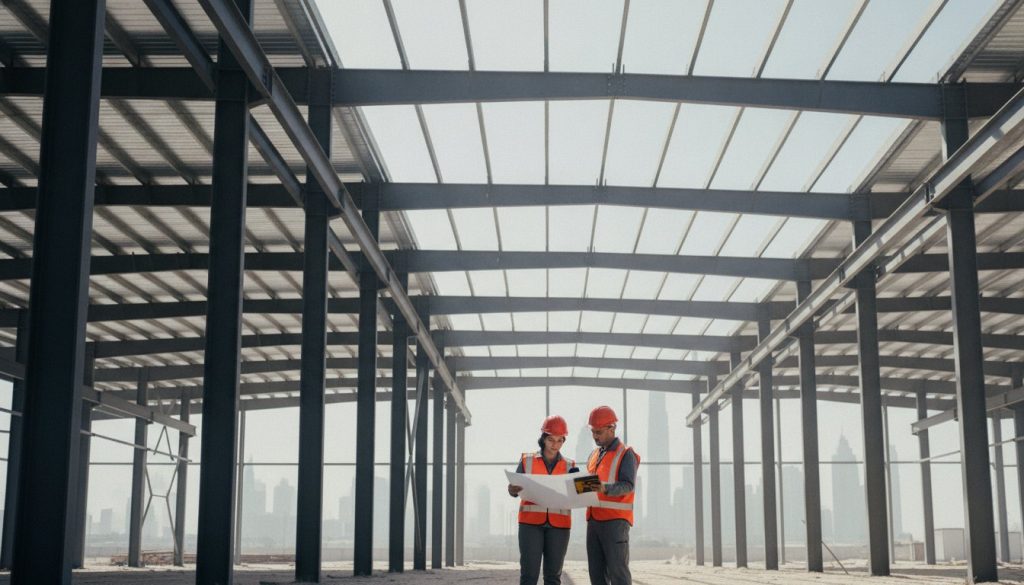
What if the difference between a project’s structural failure and its long-term endurance isn’t found in the architectural blueprints, but in the specific chemical composition and geometric precision of its steel? For professionals managing heavy industry infrastructure, the choice of steel profiles for engineering projects represents a critical intersection of material science and logistical reality. You recognize that standard lengths often lead to excessive material wastage, while inconsistent supply of international grades like ASTM or EN can stall even the most robust timelines. These operational hurdles, combined with the persistent threat of corrosion in harsh industrial environments, demand a more methodical approach to procurement.
We understand that maintaining rigorous engineering safety standards requires a partner who values precision as much as you do. This technical case study reveals how strategic selection and customization of steel profiles ensure structural integrity while optimizing logistical efficiency. We’ll explore how utilizing specific grades such as ASTM A572 Grade 50, coupled with advanced surface treatments and cut-to-size customization, significantly reduces on-site fabrication time and secures long-term value for bulk orders. By the end of this analysis, you’ll see how a streamlined supply chain and adherence to the latest AISC standards directly impact the durability and efficiency of large-scale engineering works.
Key Takeaways
- Learn to evaluate cross-sectional properties, such as the moment of inertia and section modulus, to ensure material selection aligns with specific load and stress requirements.
- Discover how strategic customization and advanced surface treatments for steel profiles for engineering projects mitigate material wastage and prevent corrosion in harsh industrial environments.
- Understand the structural advantages of a hybrid approach, combining Universal Beams and Hollow Sections, to optimize the load-bearing capacity of complex industrial frameworks.
- Gain insights into streamlining project timelines by integrating cut-to-size services and logistical planning into the early stages of procurement.
- Identify the key technical benchmarks and international standards, such as ASTM and EN grades, required to maintain compliance in large-scale infrastructure developments.
The Role of Structural Steel Profiles in Modern Engineering Projects
Structural steel profiles serve as the essential load-bearing skeleton for the vast majority of industrial infrastructure. These components provide the necessary rigidity and strength to withstand immense gravitational and lateral forces. The evolution of engineering requirements has transitioned from basic support structures to highly complex, high-tensile frameworks that prioritize weight optimization without compromising safety. Selecting the correct Structural steel configuration is no longer just a procurement task; it’s a fundamental engineering decision that dictates the project’s long-term endurance.
In the context of modern industrial applications, the use of specialized steel profiles for engineering projects has become standard practice. This shift is driven by the need for material traceability and rigorous grade certification. In high-stakes sectors like oil and gas or large-scale energy infrastructure, using non-certified materials introduces unacceptable risks. Every beam or channel must be traceable to its mill of origin. This ensures that the chemical composition and mechanical properties align perfectly with the structural design requirements specified by the engineers.
Foundational Profiles: Beams, Channels, and Angles
The primary inventory used across the UAE industrial landscape consists of several critical shapes, each serving a distinct mechanical purpose. MS Beams, including H-beams, I-beams, and Universal Beams, remain the primary choice for horizontal load distribution. Their geometry is specifically designed to resist bending under heavy vertical loads. Structural channels complement these by providing lateral stability and essential support in secondary frameworks or as functional cladding supports. Angle bars offer immense versatility. They’re the preferred choice for bracing, complex trusses, and critical connection points where two surfaces meet at a right angle.
Meeting International Engineering Standards
Compliance with global benchmarks is a non-negotiable requirement for ensuring structural safety and project longevity. Standards like EN 10025 and ASTM A36 define the essential quality parameters for yield strength and weldability. For instance, ASTM A36 is widely utilized for its excellent structural properties in bolted or welded constructions. Additionally, JIS standard profiles are frequently integrated into regional designs that follow Japanese engineering methodologies. Maintaining these benchmarks ensures that every component performs predictably under stress. For a deeper look at these requirements, consult our Structural Steel Quality Standards UAE guide to understand how these certifications impact your procurement strategy.
Technical Selection: Matching Steel Profiles to Load and Stress Requirements
Selecting the appropriate geometry for structural members requires a rigorous analysis of cross-sectional properties. Engineers primarily focus on the moment of inertia and the section modulus to determine how a profile will react under specific stress conditions. The moment of inertia quantifies a shape’s resistance to bending and deflection, while the section modulus indicates the strength of the cross-section relative to its depth. The American Institute of Steel Construction (AISC) provides the technical framework for these calculations, ensuring that the chosen steel profiles for engineering projects meet the necessary safety margins for their intended spans. Precision in these calculations prevents structural over-design, which can lead to unnecessary costs and excessive weight.
Optimizing the weight-to-strength ratio is vital for reducing foundation loads in large-scale infrastructure. The choice of steel profiles for engineering projects involves more than just selecting a shape; it’s about matching material chemistry to mechanical demand. Several factors influence this selection process:
- Design Spans: The distance between supports dictates the required depth and weight of the profile to prevent sagging.
- Dead Loads: The cumulative weight of the permanent structural elements must be supported without compromising the factor of safety.
- Dynamic Stressors: Environmental forces such as wind, seismic activity, and vibration from heavy machinery require profiles with high fatigue resistance.
Optimizing with Hollow Sections
Square, rectangular, and circular hollow sections are increasingly preferred for architectural engineering and space frames due to their structural efficiency. Their primary engineering advantage lies in superior torsional resistance. Unlike open sections, hollow profiles provide uniform strength across multiple axes, making them ideal for columns and members subjected to multi-directional loading. These sections also offer a smaller surface area, which reduces the volume of protective coatings required. For more information on sourcing these specific components, refer to our guide on Hollow Section Steel Suppliers in UAE.
Selecting High-Grade Materials for Stress-Heavy Zones
In environments where structural demands exceed the capacity of standard mild steel, specifying high-strength alloys becomes necessary. ASTM A572 Grade 50 is frequently used in stress-heavy zones because it offers a higher yield strength without a proportional increase in weight. This grade is essential for projects requiring long spans or heavy equipment support where reducing the overall tonnage is a priority. While general-purpose frameworks often utilize standard MS, specialized industrial environments may require stainless steel to combat extreme corrosion. You can browse our full inventory of certified structural materials to find the exact grade required for your technical specifications.
Engineering Optimization Through Custom Processing and Surface Treatments
The transition from technical selection to physical implementation represents a critical phase in the lifecycle of any infrastructure project. While choosing the correct grade is vital, the logistical efficiency of steel profiles for engineering projects is often determined in the processing warehouse. Receiving project-ready components significantly reduces on-site fabrication errors and accelerates assembly timelines. By shifting the complex work of cutting and coating from the construction site to a controlled industrial environment, engineers can maintain higher quality benchmarks while simultaneously lowering operational costs.
Receiving steel that is already prepared for immediate installation offers a distinct economic advantage. It eliminates the need for specialized cutting machinery and large-scale coating setups at the project location. This reduction in on-site labor and equipment requirements translates directly into a safer work environment and a more predictable project schedule. The synergy between material procurement and value-added processing ensures that the structural integrity established during the design phase is preserved through to the final assembly.
Precision Cut-to-Size Services
Integrating exact-length beams and columns into the procurement process is a strategic move that directly impacts the project’s bottom line. When profiles are delivered according to precise cut lists derived from engineering CAD designs, the scrap rate drops significantly. This precision eliminates the need for on-site disposal of offcuts and reduces the associated costs of material wastage. Factory-controlled tolerances ensure that every connection point aligns perfectly, minimizing the need for corrective on-site welding or secondary cutting. This level of accuracy is essential for maintaining the structural integrity of high-tensile frameworks where even minor deviations can lead to stress concentrations. Procuring custom length steel beams UAE suppliers provide allows engineering teams to integrate factory-precision cutting directly into the supply chain, achieving zero-waste efficiency from the outset. For a comprehensive overview of how this process transforms supply chain efficiency, see our guide on cut to size steel service UAE procurement practices.
Surface Preparation: Shot Blasting and Priming
The longevity of a structure in harsh industrial environments depends heavily on the quality of its initial surface preparation. Shot blasting is the most effective method for removing mill scale and rust, which are the primary catalysts for sub-film corrosion. This process provides a clean, textured surface that is scientifically optimized for coating adhesion. For a detailed technical overview, see our guide on Steel Plate Shot Blasting in the UAE.
Following the cleaning process, applying a high-quality primer is essential to protect the freshly exposed steel from oxidation. Priming serves as a critical foundation for high-performance industrial coatings, ensuring they remain bonded under extreme thermal and mechanical stress. Our Steel Surface Priming in UAE technical guide explains how this synergy between material grade and surface treatment extends the service life of structural components. By receiving steel that is already shot-blasted and primed, engineering teams can focus on assembly rather than environmental protection, resulting in a more streamlined and reliable construction process.
Case Analysis: Solving Structural Challenges in Industrial and Infrastructure Projects
Heavy industrial warehouse construction frequently encounters structural bottlenecks where conventional design choices lead to excessive material use or restrictive interior clearances. In recent technical evaluations of large-scale facilities, engineers identified that over-reliance on a single profile type often results in inefficient load paths. To address this, many projects are now adopting a hybrid profile approach. By integrating Universal Beams for primary spans with Hollow Sections for columns and secondary supports, designers can maximize interior volume while minimizing the total tonnage of steel profiles for engineering projects.
This strategic integration doesn’t just improve aesthetics; it delivers measurable results. Implementing this hybrid methodology has allowed some projects to achieve a 15% reduction in total steel weight without compromising the safety margins required by the 2024 International Building Code (IBC). Jabal Al Noor Steel serves as a foundational pillar in these scenarios, providing the technical expertise and inventory depth necessary to facilitate such complex procurement requirements. You can source high-performance steel profiles from our extensive inventory to begin optimizing your own structural frameworks.
Infrastructure Resilience in Harsh Climates
Coastal engineering projects across the UAE present a unique challenge: mitigating the relentless impact of high salinity and humidity. Structural integrity can be quickly compromised if standard carbon steel is left unprotected in these environments. The implementation of GI (Galvanized Iron) and Stainless Steel profiles for exposed elements has proven to be the most effective solution for long-term resilience. These materials provide an inherent barrier against oxidation, significantly extending the service life of national infrastructure. By selecting corrosion-resistant grades from the outset, engineering teams reduce the frequency of maintenance cycles and ensure the enduring stability of public works.
Streamlining Logistics for National Contracts
Coordinating the supply of steel profiles for engineering projects across multiple sites requires a sophisticated logistical framework. Bulk delivery for national contracts often fails when stockists lack the necessary regional reach or inventory volume. A successful strategy relies on leveraging a centralized inventory and a robust national distribution network to maintain project momentum. This approach facilitates just-in-time delivery, ensuring that heavy structural components arrive exactly when the site team is ready for installation. By eliminating on-site storage bottlenecks and maintaining a consistent supply of certified grades, contractors can avoid the costly delays that often plague large-scale infrastructure developments.
Strategic Procurement: Sourcing and Logistics for Large-Scale Engineering
The success of large-scale infrastructure depends as much on supply chain stability as it does on structural design. Sourcing steel profiles for engineering projects at this magnitude requires a stockist with a comprehensive regional inventory and the logistical capacity to support multi-phase developments. A procurement failure during the sourcing stage can trigger a cascade of delays, impacting everything from on-site labor schedules to the financial viability of the contract. Lead engineers and procurement officers must prioritize partners who demonstrate technical proficiency through rigorous certification and transparent documentation management.
Managing large-scale contracts involves more than simple transactions. It requires a partner who understands the nuances of bulk supply, providing the necessary credit facilities and detailed documentation that heavy industry demands. Jabal Al Noor ensures operational excellence by acting as a steady, dependable link in the industrial chain, prioritizing long-term partnership and precision over aggressive marketing. This grounded approach provides the industrial stability required for projects that form the backbone of national infrastructure.
Managing Bulk Steel Supply Chains
Ensuring material availability for phase-based engineering projects is a logistical challenge that requires meticulous planning and deep stock reserves. When a project moves from foundation work to structural framing, the specific grades and profiles must be ready for immediate dispatch to prevent momentum loss. A reliable supply chain is built on several foundational pillars:
- Transparent Documentation: Every delivery must be accompanied by Mill Test Certificates (MTC) to verify that the chemical composition and mechanical properties align with design specs.
- Phase-Specific Inventory: Maintaining a vast stock of ASTM A36, S235JR, and Grade 50 ensures the right material is available for the right phase of construction.
- Logistical Coordination: Coordinating heavy-load transport across the UAE requires a deep understanding of regional transport regulations and specific site access constraints.
Selecting a Dependable Industrial Partner
Regional expertise is a vital asset when navigating the specific industrial requirements of the UAE. A dependable partner doesn’t just deliver materials; they provide the technical assurance that every component meets the rigorous quality benchmarks the region upholds. Building a long-term partnership with an established entity ensures consistency in material quality and ethical conduct, which are the cornerstones of successful infrastructure projects. It’s about finding a veteran guide that understands the high-stakes requirements of the energy and construction sectors.
As the industry moves toward more complex and high-tensile frameworks, the need for a transparent and reliable supply partner becomes even more pronounced. By choosing a veteran of the industrial landscape, you secure a foundation of precision and logistical efficiency. You can optimize your engineering project with Jabal Al Noor Steel by accessing our comprehensive inventory and value-added processing services.
Securing the Future of Industrial Infrastructure
Achieving structural excellence in heavy industry requires a precise alignment of material science, custom fabrication, and logistical foresight. We’ve explored how matching cross-sectional properties to specific load demands prevents over-design while ensuring absolute safety. Integrating factory-controlled surface treatments and cut-to-size services further optimizes on-site timelines by delivering project-ready components. These efficiencies are fundamental to maintaining the rigorous standards required for large-scale infrastructure and energy developments.
The strategic procurement of steel profiles for engineering projects serves as the final, critical step in ensuring long-term structural endurance. As an ISO-compliant structural steel stockist with a national distribution network across the UAE, Jabal Al Noor provides the industrial stability your projects demand. Our comprehensive value-added processing services ensure that every beam, channel, and hollow section arrives ready for immediate installation. We invite you to explore our full inventory of engineering steel profiles to secure a dependable partner for your next development. We look forward to supporting your vision with precision and operational excellence.
Frequently Asked Questions
What are the most common steel profiles used in UAE engineering projects?
The most common steel profiles for engineering projects in the UAE include MS Beams, structural channels, angle bars, and hollow sections. Engineers frequently specify Universal Beams and Columns for primary load distribution due to their superior bending resistance. Additionally, square and rectangular hollow sections are widely utilized for architectural supports and space frames. These profiles are typically sourced in international grades such as ASTM A36 or S235JR to ensure compliance with regional safety standards.
How does cut-to-size customization benefit heavy engineering contractors?
Receiving custom lengths through cut to size steel service UAE providers directly reduces material wastage and on-site fabrication time. By utilizing beams and columns at precise lengths derived from CAD designs, contractors eliminate the need for secondary cutting and disposal of offcuts. This precision minimizes assembly errors and allows for a more predictable construction schedule. It’s an essential strategy for optimizing project budgets and ensuring that structural components fit perfectly within complex industrial frameworks without requiring extensive modifications.
Why is shot blasting necessary for structural steel profiles?
Maintaining structural integrity in harsh environments requires shot blasting to remove mill scale, rust, and contaminants from the steel surface. This process creates a clean, textured profile that is essential for the superior adhesion of industrial coatings and primers. Without proper preparation, protective layers can fail prematurely, leading to sub-film corrosion and weakened frameworks. It ensures that the steel can withstand environmental stressors while maintaining its load-bearing capacity over an extended service life.
Which steel grade is best for high-load industrial frameworks?
For frameworks subjected to extreme stress, ASTM A572 Grade 50 is the preferred choice due to its high yield strength and excellent weight-to-strength ratio. This grade allows engineers to support immense loads with less total steel tonnage, which can reduce foundation requirements and overall material costs. While standard mild steel is sufficient for general-purpose supports, Grade 50 provides the necessary mechanical properties for long-span structures and heavy equipment platforms facing significant dynamic stress.
How do hollow sections compare to open beams in structural engineering?
While open beams are highly efficient for vertical load distribution across horizontal spans, hollow sections offer superior torsional resistance and multi-axial strength. These profiles provide uniform strength that makes them ideal for columns and bracing in space frames. Their closed geometry also results in a smaller surface area, which can reduce the cost and volume of protective coatings required for environmental protection in industrial settings, offering a distinct advantage over standard beams.
Can Jabal Al Noor provide international standard certifications for all profiles?
Yes, we provide comprehensive Mill Test Certificates (MTC) and international standard certifications for our entire inventory. As an ISO-compliant stockist, we ensure that every batch of steel meets the rigorous chemical and mechanical benchmarks defined by JIS, EN, and ASTM standards. This transparency is vital for maintaining material traceability and ensuring that all steel profiles for engineering projects align perfectly with the technical specifications required by structural consultants and local authorities.
What surface treatments are recommended for steel profiles in coastal areas?
In coastal environments, we recommend a combination of shot blasting, high-performance priming, and the use of GI or stainless steel profiles. Galvanized steel provides an inherent sacrificial layer that protects against the high salinity and humidity characteristic of coastal regions. For carbon steel components, applying a robust epoxy or polyurethane coating over a shot-blasted and primed surface is essential to prevent rapid oxidation and extend the maintenance cycles of the infrastructure.
How does Jabal Al Noor manage bulk delivery for national engineering projects?
We manage bulk delivery through a sophisticated national distribution network and a centralized inventory system that ensures material availability for phase-based projects. Our logistical framework is designed to coordinate heavy-load transport across the UAE, facilitating just-in-time delivery to multiple sites simultaneously. This approach prevents on-site storage bottlenecks and maintains project momentum by ensuring that certified structural components arrive exactly when the installation teams are ready to proceed with assembly.